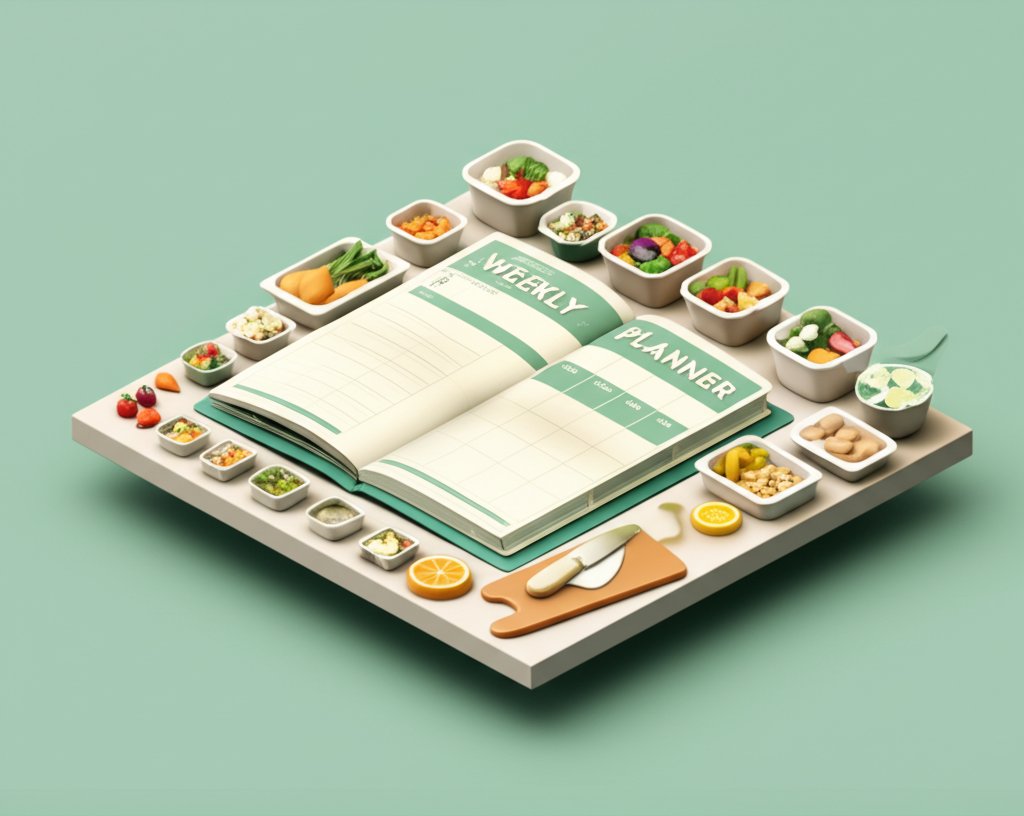
That sinking feeling on a Sunday afternoon—the one where the week ahead feels like a chaotic scramble for meals—is all too common. You know planning would help, but staring at a blank calendar is overwhelming. A meal prep journal is the structured, intuitive tool that transforms this weekly dread into a confident, repeatable system. It’s more than a list; it’s your kitchen’s command center, a log of what works, what your family loves, and what makes your life easier.
This isn’t just about writing down “tacos” for Tuesday. It’s about creating a living document that gets smarter every week, helping you refine your process, cut down on food waste, and finally get ahead of the dinner-time rush.
At a Glance: Your Journaling Takeaways
- Go Beyond Basic Planning: Understand how a journal creates a feedback loop that simple planners lack.
- Choose the Right Tool: Compare physical formats and layouts to find a journal that fits your life.
- Master Your First Week: Follow a 5-step playbook to go from a blank page to a complete, prepped weekly menu.
- Dodge Common Pitfalls: Learn how your journal helps you avoid over-planning, food boredom, and wasted groceries.
- Build a Personal Cookbook: Discover the long-term power of your journal as a curated collection of your own successful recipes.
Your Journal is Your Kitchen Command Center
Many people start their meal planning journey with a simple notebook or a digital app, and that’s a great first step. But the true power of a dedicated meal prep journal lies in its ability to be both a forward-looking plan and a backward-looking record. A simple planner tells you what you intend to eat. A journal helps you learn from what you actually ate.
Think of it this way:
- A planner is the architect’s blueprint—the ideal design.
- A journal is the builder’s logbook—it includes the blueprint but also notes on real-world adjustments, material successes, and lessons for the next project.
This distinction is crucial. When you track not just the plan but the outcome, you build a powerful feedback loop. You start noticing patterns. Maybe every time you plan a complex meal for a Wednesday, it gets skipped for takeout because everyone is too tired. Your journal makes this pattern obvious, prompting you to schedule a 30-minute skillet meal for Wednesdays instead.
While a comprehensive meal planner book is the perfect framework to Streamline Meals, Cut Stress, a dedicated journal takes this organization to the next level. It creates the data you need to stop guessing and start building a system that’s uniquely tailored to your life.
Choosing the Right Tool for Your Kitchen Counter
Not all meal prep journals are created equal. The right format and layout can mean the difference between a tool you use daily and one that gathers dust. Based on the principles of effective planning, here’s what to look for.
Physical Format: Hardcover, Spiral, or Notepad?
The physical construction of your journal impacts how you’ll use it.
- Spiral-bound: This is often the most practical choice. It lays completely flat on the counter, making it easy to reference while you’re chopping vegetables or consulting your grocery list. The pages turn easily, allowing you to flip between your weekly plan and your inventory lists.
- Hardcover/Softcover Book: These journals feel more permanent and are excellent for archiving. A sturdy hardcover protects your notes for years. The main drawback is that they don’t always stay open on their own, which can be frustrating in a busy kitchen.
- Notepad Style: These often feature tear-away pages and a magnet on the back to stick to the fridge. They excel at the “plan and shop” stage but are less effective for long-term journaling and reflection, as you’re discarding the pages each week.
The Layout That Works for You, Not Against You
A clear, intuitive layout is non-negotiable. Look for these key elements, which are standard in well-designed 52-week journals:
- A Full 7-Day Spread: You need to see your entire week at a glance to spot potential conflicts or opportunities for using leftovers.
- Dedicated Meal Sections: Each day should have distinct, lined spaces for breakfast, lunch, dinner, and snacks. This structure prevents your plan from becoming a jumbled, unreadable list.
- An Integrated Grocery List: The most efficient journals have a dedicated space for your shopping list right on the weekly spread. Bonus points if it’s perforated so you can tear it out and take it to the store. A pro-tip from culinary experts is to manually group your list items by store section (e.g., Produce, Dairy, Pantry) to make your shopping trip faster.
- The “Journaling” Extras: These features are what elevate a planner to a journal:
- Notes Section: A simple, lined space on each weekly page to write down feedback. “Kids loved the lemon chicken,” “Double the rice next time,” or “Marinade was too salty.”
- Pantry/Freezer Inventory: A page or section to track what you already have. This is a game-changer for reducing food waste and saving money.
- Health Trackers: Spaces to log water intake, daily goals, or other wellness metrics can help you connect your food choices to your overall health objectives.
From Blank Page to Executed Plan in 5 Steps
Ready to fill out your first week? Don’t just start listing random meals. Follow this strategic process to build a plan that’s realistic, delicious, and easy to execute.
1. The Brain Dump (Theme Your Week)
Before writing a single thing in your journal, take five minutes to assign a loose theme to each night. This fights decision fatigue. Your themes could be based on cuisine (“Taco Tuesday,” “Italian Wednesday”) or cooking method (“Slow-Cooker Monday,” “Grill Night Friday”). This simple framework makes filling in the blanks much easier.
2. Plot Your “Anchor” Meals (Dinners First)
Dinners are usually the most complex meal, so plan them first. Look at your family’s schedule for the week.
- Case Snippet: Mark knows his daughter has soccer practice until 7 PM on Thursdays. That’s a terrible night for a complicated recipe. In his journal, he pencils in “Slow-Cooker Chili” for every Thursday. It’s a low-effort, high-reward meal that’s ready when they walk in the door.
3. Build Out Breakfasts, Lunches, and Snacks
Now, fill in the rest. The key here is efficiency. - Lunch: Plan to use dinner leftovers. If you made chili for dinner, a portion of that is lunch for the next day. Write “Leftover Chili” in the lunch slot.
- Breakfast: Keep it simple and repeatable. Think overnight oats, yogurt with granola, or smoothies. You don’t need a different gourmet breakfast every day.
- Snacks: List healthy grab-and-go options like apples, nuts, or cheese sticks.
4. Craft The Strategic Grocery List
With your menu complete, walk through it day by day and list every ingredient you need. - First, “shop” your kitchen: Check your journal’s pantry and freezer inventory list. Cross off anything you already have.
- Then, build your list: In the journal’s grocery section, write down what’s left. Group items by store aisle (all produce together, all canned goods together). This saves you from running back and forth across the store.
5. The Post-Mortem (The Real Journaling)
This is the step most people skip, but it’s the most important. At the end of the week, take 10 minutes to review. - Did you stick to the plan? If not, why?
- Which meals were a hit? Which were a miss?
- Use the “Notes” section to capture your thoughts. A simple “This was a perfect 30-minute meal!” or “Needs more garlic” is invaluable data for future you.
Sidestep These Common Meal Prep Traps
Enthusiasm can sometimes lead to common mistakes. Here’s how a meal prep journal acts as your safety net.
| Common Trap | The Problem | How Your Journal Solves It |
|---|---|---|
| Overly Ambitious Planning | You plan seven brand-new, gourmet recipes for your first week, leading to burnout by Tuesday. | Your journal’s weekly review will show a pattern of abandoned plans. You’ll quickly learn to balance one new recipe with 4-5 trusted, simple favorites. |
| Ignoring Your Real Schedule | You plan a meal that takes an hour to cook on a night you have only 30 minutes between work and a meeting. | Your journal forces you to map your meals against your actual calendar. You can see the busy nights coming and plan accordingly with quick meals or leftovers. |
| Food Boredom | You fall into a rut, making the same rotation of chicken and broccoli every week because it’s easy. | Your journal becomes a personal recipe index. When you feel uninspired, you can flip back a few months and rediscover a meal you loved but forgot about. |
| Wasting Food & Money | You buy a bunch of fresh cilantro for one recipe, and the rest wilts in the fridge. | The act of planning forces you to think holistically. You can plan another meal that week that also uses cilantro, ensuring none goes to waste. The inventory list prevents you from buying duplicates. |
Your Meal Prep Journal FAQ
Here are quick answers to some of the most common questions about using a meal prep journal.
Q: Can’t I just use a regular notebook?
A: Absolutely, but a dedicated journal provides crucial structure. Pre-printed sections for each day, meal slots, and organized grocery lists save you the time and mental energy of creating a layout from scratch. This built-in framework ensures you don’t forget key components of a successful plan.
Q: Is a digital app better than a physical journal?
A: This comes down to personal preference. A physical journal offers a focused, tactile, screen-free experience. The physical act of writing can improve memory and commitment to the plan. Plus, there are no pop-up notifications or app updates to distract you from the simple task of planning your meals.
Q: How much time should I spend on my journal each week?
A: A focused 20-30 minutes on a Sunday is usually all it takes for the entire weekly plan and grocery list. After that, it’s just a minute or two each day to jot down notes. This small upfront investment saves you countless “What’s for dinner?” decision-making moments throughout the week.
Q: What if my plans change mid-week?
A: Life happens! A journal isn’t a rigid contract. If you get a last-minute dinner invitation, simply cross out your planned meal and write down what you did instead. Make a note of why. This is valuable information—it helps you build more flexibility and realistic backup options into future plans.
Your Long-Term Strategy for Meal Prep Mastery
After just a month or two, your meal prep journal transforms. It’s no longer just a schedule; it’s a curated archive of your culinary life. It’s a personalized cookbook filled with recipes you’ve tested and approved, complete with notes on how to make them perfect for your family.
Feeling stuck? Flip back to last October and see what you were making. Need a guaranteed win for a busy week? Find a week you marked as “easy and delicious” and repeat it. This is how you achieve mastery—by building on a foundation of your own proven successes.
Your Quick-Start Guide to Journaling
- Get a Journal: Choose a spiral-bound one with a clear weekly layout to start.
- Plan Just Three Dinners: Don’t overwhelm yourself. Start with three anchor meals for the upcoming week.
- Make a Mini Grocery List: Build a shopping list based only on those three meals.
- Write One Note: After one of the meals, jot down a single thought. “Perfect amount,” or “A bit bland, add more spice.”
- Repeat and Build: Next week, try planning four dinners. The week after, five. Small, incremental progress is the key to a lasting habit.
The goal isn’t to create a flawless, unchangeable plan from day one. The goal is to start. Yourmeal prep journalis a tool for progress, not perfection. It turns the chaotic task of feeding yourself and your family into a calm, thoughtful, and ultimately rewarding system. Open it up, make your first entry, and begin building a less stressful, more delicious week.

- Master Vegan Freezer Meal Prep to Simplify Your Busy Schedule - June 18, 2026
- Vegan Freezer Cooking Simplifies Healthy Meals on Busy Nights - June 17, 2026
- Vegetarian Freezer Recipes for Effortless Meal Prep and Delicious Dinners - June 16, 2026