That sinking feeling at 5 p.m. is all too familiar: what’s for dinner? The mental gymnastics of trying to invent a meal from a random assortment of groceries often ends in takeout. A dedicated meal planner journal is your strategic tool to end this daily chaos, transforming mealtime from a source of stress into a moment of calm control. It’s more than just a notebook; it’s a system for planning what you’ll eat, what you’ll buy, and how you’ll prep, saving you time, money, and mental energy every single week.
At a Glance: What You’ll Learn
- Anatomy of a Powerful Planner: Discover the essential features that separate a high-impact meal planner journal from a simple notebook.
- Choosing Your Format: Decide between a physical or digital journal to best match your lifestyle and planning habits.
- The 4-Step Weekly Ritual: Master a simple, repeatable process to fill out your journal effectively in under an hour.
- Seamless Integration: Learn how to connect your meal plan, pantry inventory, and shopping list for maximum efficiency.
- Avoid Common Pitfalls: Sidestep the mistakes that cause most people to abandon their meal planning efforts.
More Than a Notebook: What Defines a Great Meal Planner Journal?
Scribbling meal ideas on a sticky note that gets lost is one thing. Using a structured system is another. A true meal planner journal is designed with purpose-built sections that guide you through a logical process, from initial idea to a cooked meal on the table.
The Weekly Spread: Your Command Center
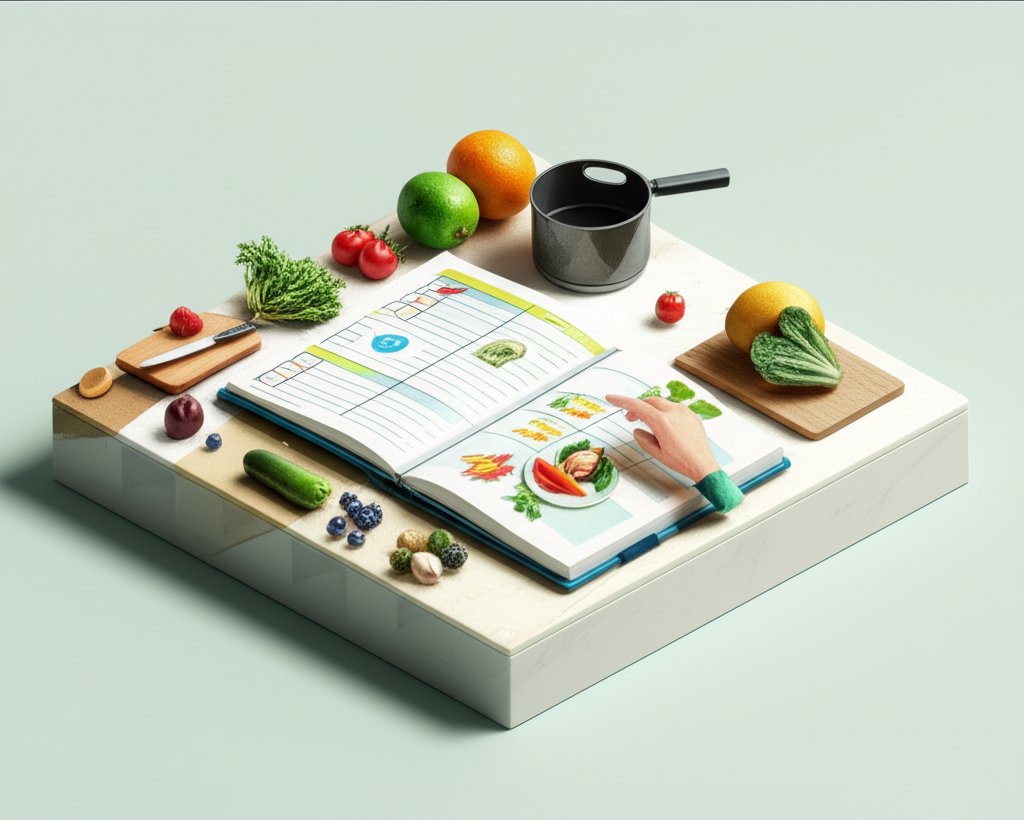
The heart of any meal planner journal is the weekly layout. This is typically a two-page spread that gives you a bird’s-eye view of the entire week. Most include dedicated boxes for each day, often broken down into Breakfast, Lunch, and Dinner. This visual map prevents you from planning three heavy meals in a row or forgetting about that evening meeting on Wednesday that requires a quick, 20-minute dinner. It’s your primary dashboard for the week ahead.
The Integrated Shopping List: Stop Forgetting the Essentials
This feature is a game-changer. A great journal includes a shopping list section directly alongside your weekly plan. As you decide on “Chicken Tacos” for Tuesday, you can immediately jot down “tortillas, avocado, cilantro” on the list. This direct connection eliminates the frantic pre-store scramble of trying to reverse-engineer a list from your meal ideas. Many planners even feature perforated shopping lists that you can tear out and take with you.
The “Pantry & Freezer Inventory” Section: Shop Smarter
How many times have you bought a can of crushed tomatoes only to find you already had three? An inventory section solves this. Before you plan, you take a quick stock of what you already have in your pantry, fridge, and freezer. This simple habit, encouraged by a dedicated space in your journal, has two massive benefits:
- It cuts down on food waste by forcing you to use what you own.
- It saves you money by preventing you from buying duplicates.
The Prep Plan: Your Secret to a Stress-Free Week
This is where the “streamlining” happens. The prep section is your space to outline tasks you can do ahead of time, usually on a Sunday. By looking at your weekly menu, you can identify repeatable tasks.
- Meal: Chicken stir-fry on Monday, Fajitas on Thursday.
- Prep Task: Chop bell peppers and onions for both meals.
- Meal: Salads for lunch.
- Prep Task: Wash and chop lettuce, cook a batch of quinoa, make a jar of vinaigrette.
This small step transforms your weeknights. Instead of starting from scratch, you’re simply assembling pre-prepped components.
Choosing Your Perfect Planning Partner: Physical vs. Digital Journals
The debate between pen-and-paper and digital apps is ongoing, and the right answer depends entirely on your personality and lifestyle.
The Case for a Physical Journal
There’s a certain power in the tactile process of writing things down. A physical meal planner journal, like those detailed by Barnes & Noble or independent creators, offers a focused, distraction-free experience. You aren’t tempted by a notification or another open browser tab.
It lives on your kitchen counter, a constant and visible reminder of the plan. This makes it a central hub for the entire household. A family member can glance at it and know what’s for dinner—or even start the prep—without having to ask you. For many, this tangible record becomes a satisfying archive of successful meals and weeks well-managed.
- Mini-Scenario: For Alex, a parent juggling work and kids’ activities, the physical journal became essential. On busy evenings, their partner could open the book, see “Sheet Pan Sausage & Veggies,” and get it in the oven. The shared visibility removed Alex as the bottleneck for dinner.
The Appeal of a Digital Journal or App
Digital tools offer flexibility and convenience. You can access your plan from your phone while at the grocery store or from your work computer during your lunch break. Features often include the ability to link directly to online recipes, easily duplicate favorite meals for future weeks, and automatically generate a shopping list from your chosen recipes. If you’re comfortable with technology and love hyperlink efficiency, a digital solution might be your best fit.
The Hybrid Approach: Best of Both Worlds
You don’t have to choose just one. Many people find success with a hybrid system. Use a digital tool like Pinterest or a recipe app to gather ideas and inspiration. Once you’ve decided on the week’s lineup, transfer the final, committed plan into your physical meal planner journal. This gives you the creative freedom of the digital world combined with the focused, tangible execution of a physical book.
The 4-Step Weekly Ritual to Master Your Meal Planner Journal
A journal is only as good as the habit you build around it. Follow this simple, four-step process each week—ideally at the same time, like Sunday morning with a cup of coffee—to make meal planning a sustainable practice.
Step 1: The ‘Shop Your Kitchen’ Audit (15 Minutes)
Before you even think about what you want to eat, look at what you have to eat. Grab your journal and open it to the inventory page.
- Check the Fridge: What produce needs to be used up? Is there leftover chicken from Friday?
- Scan the Pantry: What grains, canned goods, and spices are on hand?
- Peek in the Freezer: Do you have frozen ground beef or a bag of shrimp?
Jot down key items. This list becomes the foundation of your plan, ensuring you build meals around ingredients you already paid for.
Step 2: The ‘Calendar & Cravings’ Brainstorm (15 Minutes)
Now, turn to the weekly spread. First, look at your actual life schedule for the coming week.
- Late work meeting on Tuesday? That’s a perfect night for leftovers or a 30-minute meal.
- Kids have soccer practice on Thursday? Plan something you can eat in shifts.
- Quiet Friday night? Maybe that’s the time to try a more involved recipe.
Next, factor in cravings. Ask your family for requests. This buy-in makes everyone more excited about the week’s meals. Pencil in rough ideas for each day, starting with the ingredients you need to use up from your inventory.
Step 3: The ‘Recipe & Ingredient’ Lockdown (20 Minutes)
With your rough ideas in place, it’s time to get specific. Firm up the recipes. If “pasta” is on the list for Wednesday, decide if it’s “Spaghetti and Meatballs” or “Creamy Lemon Pasta.”
As you confirm each meal, go to your integrated shopping list and write down every ingredient you don’t have. Meticulously cross-reference this with your inventory list from Step 1. This crucial connection is a core principle to Streamline Your Weekly Meals and is the single most effective way to prevent buying what you don’t need.
Step 4: The ‘Prep & Execute’ Blueprint (10 Minutes)
Finally, flip to your prep-plan section. Look at your finalized menu and think about efficiencies. What can you do now to make your future self’s life easier?
- Batch Cook Grains: Cook a large pot of rice or quinoa for the week.
- Chop Produce: Dice onions, slice bell peppers, and wash lettuce.
- Mix Sauces: Whisk together a salad dressing or a marinade.
- Portion Snacks: Divide nuts, fruits, or veggies into grab-and-go containers.
This doesn’t have to take hours. Even 30-60 minutes of focused prep can radically change the flow of your weeknights.
Avoiding Common Journaling Pitfalls
Even with the perfect journal, you can stumble. Here’s how to avoid the most common traps.
| Pitfall | The Problem | The Solution |
|---|---|---|
| Overly Ambitious Planning | You plan seven complex, brand-new recipes, get overwhelmed by Tuesday, and order pizza. | Start Small. Plan just 3-4 dinners for your first few weeks. Build in nights for leftovers, takeout, or “fend for yourself” meals. |
| Forgetting to Use It | The beautiful journal sits in a drawer, unused after an enthusiastic first week. | Make It a Visible Habit. Keep the journal on the kitchen counter. Anchor your planning session to an existing routine you enjoy. |
| The Plan is Too Rigid | You feel like a failure if you don’t stick to the plan exactly, so you abandon it altogether. | Use a Pencil (or an Erasable Pen). Think of your plan as a guide, not a contract. It’s okay to swap days or make a last-minute change. |
| Ignoring the Inventory | You jump straight to planning fun new meals without checking what you already have. | Make Step 1 Non-Negotiable. The “Shop Your Kitchen” audit is the biggest money-saving and waste-reducing part of the process. Never skip it. |
Quick Answers: Your Meal Planner Journal FAQs
Q: How is a meal planner journal different from a regular notebook?
A: Structure. A dedicated meal planner journal provides guided sections for weekly menus, integrated shopping lists, pantry inventories, and prep plans. This framework walks you through a proven process, preventing the “blank page paralysis” that often comes with a standard notebook.
Q: How many weeks should a good journal cover?
A: Most commercially available planners offer 52 weeks of layouts, providing a full year of organization. As noted in product descriptions for popular journals, this year-long format is standard and helps establish a long-term habit. Some smaller or digital versions may offer six-month increments.
Q: Do I need to plan breakfast, lunch, and dinner?
A: Absolutely not. Customize the journal to fit your life. If breakfast is always oatmeal and lunch is usually leftovers, you might only plan dinners. The goal is to solve your specific pain points. Use the structure as a tool, not a strict rulebook.
Q: What if I don’t follow my plan perfectly?
A: That’s completely normal and expected! Life happens. The purpose of the plan isn’t 100% compliance; it’s to reduce decision fatigue. When things go sideways, you have a default option to fall back on. Having a plan for five out of seven nights is a huge win compared to having no plan at all.
Your First Step to a Calmer Kitchen
Adopting a meal planner journal isn’t about adding another chore to your list. It’s a one-time investment of about an hour a week that pays you back with less stress, more money in your wallet, and healthier, more enjoyable meals every day. It’s the difference between reacting to your day and intentionally designing it.
You don’t even need a fancy journal to start. Before you buy anything, grab a single sheet of paper this weekend. Divide it into four sections: a quick inventory of your fridge, a 7-day meal grid, a shopping list, and a few prep tasks. Run through the 4-step ritual. See how a little bit of structure can transform kitchen chaos into a predictable, manageable system.

- Master Vegan Freezer Meal Prep to Simplify Your Busy Schedule - June 18, 2026
- Vegan Freezer Cooking Simplifies Healthy Meals on Busy Nights - June 17, 2026
- Vegetarian Freezer Recipes for Effortless Meal Prep and Delicious Dinners - June 16, 2026