Of all the promises of a plant-based lifestyle, the frantic 6 PM scramble for a healthy, satisfying dinner isn’t usually on the list. That’s where the magic of a well-stocked freezer comes in, and mastering the art of creating delicious vegan recipes to freeze is a skill that transforms chaotic weeknights into moments of calm. Unlike their omnivorous counterparts, vegan ingredients have their own rules for freezing, and knowing them is the key to avoiding mushy beans and watery sauces.
This guide is your playbook for turning your freezer into a treasure chest of ready-to-heat, flavor-packed vegan meals. We’ll move beyond just lists of recipes and dive into the science and strategy of making food that tastes just as incredible on day 60 as it did on day one.
At a Glance: Your Vegan Freezer Meal Toolkit
- Master the Ingredients: Learn which vegan staples (like lentils, tofu, and seitan) are freezer all-stars and which (like raw potatoes and creamy sauces) require special handling.
- Prevent Textural Nightmares: Discover the techniques to avoid mushy pasta, separated sauces, and grainy vegetables for good.
- Adopt a “Blueprint” Approach: Get versatile frameworks for chilis, curries, and burgers that you can adapt with ingredients you already have.
- Perfect Your Process: Follow a step-by-step guide from smart preparation and cooling to proper storage and reheating for maximum flavor.
- Fix Common Problems: Get quick answers for why your frozen meals might taste bland and how to revive them with simple “finishing touches.”
The Vegan Freezer Advantage: More Than Just a Timesaver
Stocking your freezer is a well-known strategy for saving time and money. While the core principles are universal—and you can Discover vegetarian freezer meals with our broader guide—a vegan approach offers unique benefits. It allows you to make expensive or time-consuming specialty ingredients, like homemade seitan or complex cashew-based sauces, in big batches, maximizing your effort and your budget.
A freezer full of pre-made components—like cooked quinoa, marinated tempeh, or black bean burger patties—also makes spontaneous, healthy meals a reality. It’s not just about complete meals; it’s about having the building blocks ready to go, which is a game-changer for anyone committed to a plant-based diet without spending hours in the kitchen every night.
The Building Blocks: What Freezes Beautifully (and What Doesn’t)
Success with vegan recipes to freeze starts with understanding how different ingredients react to the cold. Ice crystals are the enemy of good texture; they expand and rupture the cell walls of food, which is why a frozen strawberry will never have the same snap as a fresh one. The goal is to choose ingredients with robust structures that can withstand this process.
The All-Stars of the Vegan Freezer
These are the reliable workhorses of your freezer cooking. They maintain excellent texture and flavor after a deep freeze and thaw.
| Ingredient | Why It Works Well | Pro Tip |
|---|---|---|
| Lentils & Beans | Their low water and high protein/fiber content helps them hold their shape. | Cook from scratch for the firmest texture. If using canned, rinse them well to remove excess sodium and starchy liquid. |
| Tofu & Tempeh | Freezing gives firm or extra-firm tofu a chewier, meatier texture that absorbs marinades beautifully. Tempeh freezes flawlessly. | Press tofu thoroughly to remove water before freezing. Cut into cubes or planks for easy use later. |
| Seitan | This high-protein wheat gluten is incredibly durable and freezes and reheats with almost no change in its satisfyingly chewy texture. | Freeze it in a bit of broth or marinade to keep it from drying out. |
| Hearty Grains | Quinoa, farro, barley, and wild rice have a sturdy structure that holds up well. | Slightly undercook them. They will finish cooking during the reheating process, preventing a mushy final product. |
| Hardy Vegetables | Root vegetables (carrots, sweet potatoes), winter squash, corn, and peas all freeze exceptionally well once cooked in a dish. | For veggies like broccoli or green beans, blanching them (a quick boil followed by an ice bath) before freezing is best if you’re freezing them plain. |
| Tomato-Based Sauces | The acidity and low water activity in tomato sauces make them perfect candidates for freezing. | Let the flavors meld by making the sauce a day before you plan to freeze it. The taste often improves. |
The Caution List: Freeze with Care or Avoid Altogether
These ingredients can be tricky. They don’t always emerge from the freezer in their best form, but with the right technique, some can be salvaged.
- Creamy Sauces: Sauces made with coconut milk can separate, though a vigorous whisk while reheating often brings them back together. Full-fat versions fare better. Cashew cream freezes better but may need re-blending. Potato-thickened sauces are a definite no—they become a gummy, watery mess.
- Potatoes: Never freeze raw potatoes; they develop a sweet, grainy texture and a dark color. Cooked potatoes do much better, especially when part of a larger dish like a stew or curry, but they can still become a bit watery on their own.
- High-Water Content Veggies: Cucumbers, radishes, lettuce, and raw tomatoes will turn into a limp, watery mess. Their cell walls are too delicate to survive freezing. Cooked tomatoes in a sauce are fine, but don’t expect to freeze a fresh salsa.
- Fully Cooked Pasta & White Rice: Freezing fully cooked, plain pasta or white rice is a recipe for mush. It’s always better to freeze the sauce separately and cook the pasta or rice fresh. If you must include it in a casserole, undercook it significantly.
- Avocado: While technically possible, frozen and thawed avocado has a slimy texture and brownish color. It’s only suitable for use in a smoothie or a heavily blended sauce—never for slicing on toast.
Your Vegan Freezer Playbook: From Prep to Plate
A successful freezer meal isn’t just about the recipe; it’s about the process. Following these steps ensures your food is safe, delicious, and easy to use.
Step 1: Choose Your Recipe Wisely
The best vegan recipes to freeze are dishes where the ingredients meld together. Think “one-pot” wonders.
- Soups, Stews, and Chilis: These are the undisputed champions. Their liquid base protects the ingredients from freezer burn, and their flavors often deepen after freezing.
- Curries: Lentil, chickpea, and hearty vegetable curries freeze beautifully. Reheat on the stovetop and finish with fresh cilantro and a squeeze of lime to wake up the flavors.
- Casseroles and Bakes: A lentil shepherd’s pie or a black bean enchilada casserole are perfect. The Pro Move: Assemble the entire dish but do not bake it before freezing. This “freeze-then-bake” method results in a much fresher-tasting final product.
- Burgers, “Meatballs,” and Loaves: Veggie burgers and lentil meatballs are ideal for batch prepping. Once formed, they can be frozen and cooked directly from their frozen state.
A Tale of Two Casseroles: Imagine you’re making a vegan lasagna. You’ll prepare the tofu ricotta and the lentil bolognese. You’ll assemble the layers with uncooked lasagna noodles. The moisture from the sauces will cook the noodles perfectly when you bake the dish from frozen. This prevents the dreaded mushy-noodle syndrome.
Step 2: The Art of Cooling and Packing
This step is non-negotiable for quality and safety.
- Cool Completely: Never put hot food directly into the freezer. It raises the ambient temperature, partially thawing other items and creating a safety risk. More importantly for quality, it causes steam to get trapped, which turns into large, texture-destroying ice crystals. Let dishes cool on the counter for an hour, then finish cooling in the fridge before they go into the freezer.
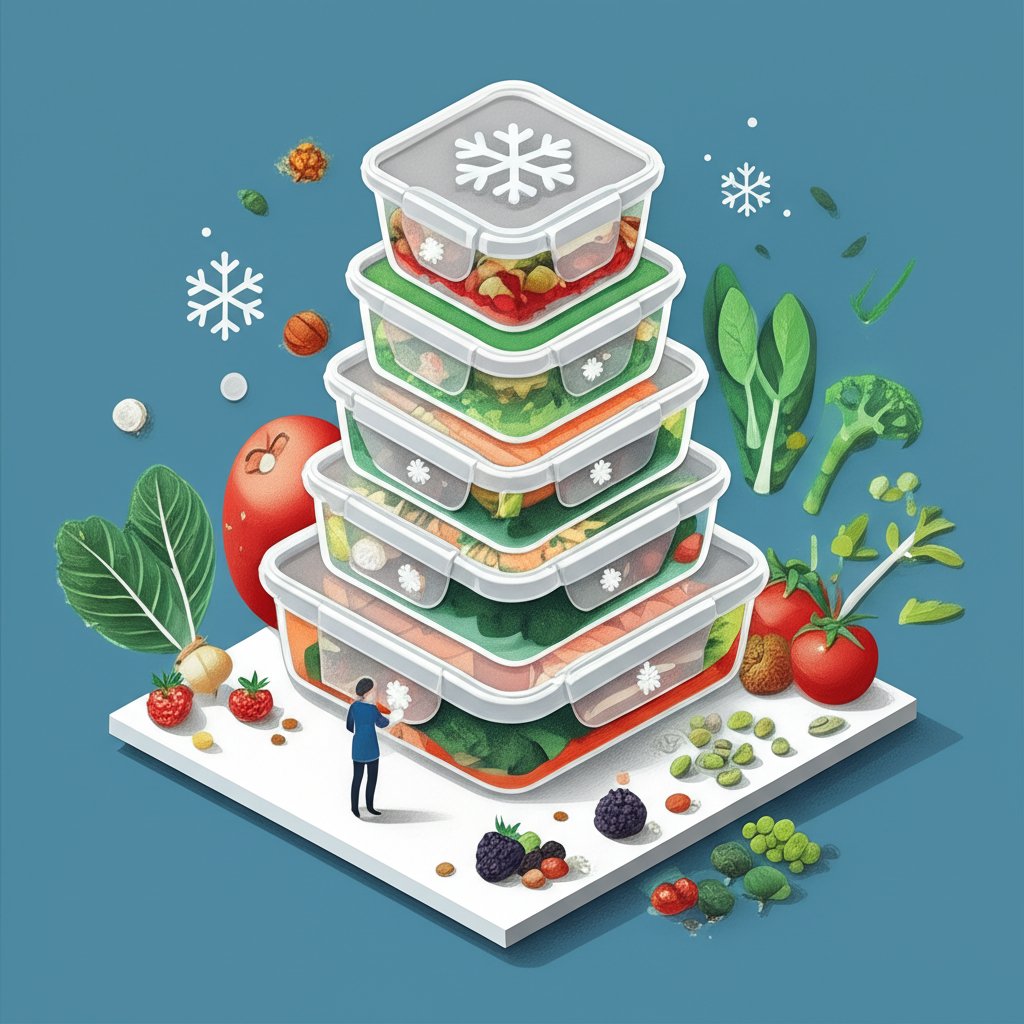
- Portion and Package Smartly: Choose your container based on the meal.
- For liquids (soups, curries): Use silicone trays like Souper Cubes® to freeze perfect single-serving blocks. Once frozen solid, pop them out and store them in a larger, reusable freezer bag. This saves a ton of space.
- For casseroles: Use freezer-to-oven safe glass or disposable aluminum foil pans. This lets you go straight from the freezer to the oven (with a slight temperature adjustment).
- For solids (burgers, burritos): Wrap each item individually in parchment paper or plastic wrap first. Then, place the wrapped items into a larger freezer bag. This “double wrapping” prevents them from sticking together and provides an extra barrier against freezer burn.
- Banish Air and Label Everything: Air is the enemy; it causes freezer burn. Squeeze as much air as possible out of bags. For containers, press a piece of parchment paper directly onto the surface of the food before lidding. Always label with the dish name, date frozen, and simple reheating instructions. Your future self will thank you.
Step 3: Thawing and Reheating for Peak Flavor
How you bring your meal back to life is just as important as how you froze it.
| Meal Type | Best Thawing & Reheating Method | The Finishing Touch |
|---|---|---|
| Soups, Stews, Chilis, Curries | Thaw in the fridge overnight. Reheat gently on the stovetop, adding a splash of vegetable broth or water to loosen it up. | A swirl of coconut yogurt, a handful of fresh parsley or cilantro, a squeeze of lemon or lime juice. |
| Casseroles & Bakes | Thaw in the fridge overnight for even cooking. Bake covered with foil for the first 2/3 of the time, then uncovered to brown the top. (Add ~15-20 mins to original bake time). | Add vegan cheese shreds in the last 10 minutes of baking. Top with fresh herbs or a sprinkle of nutritional yeast. |
| Burgers & “Meatballs” | No thawing needed! Cook directly from frozen on the stovetop, in the oven, or in an air fryer. Just add a few extra minutes to the cooking time. | Serve on a fresh bun with crisp lettuce, tomato, and your favorite sauce. |
| Burritos | For a soft burrito, wrap in a damp paper towel and microwave. For a crispy one, bake in the oven or use an air fryer. | Serve with fresh salsa, guacamole, or vegan sour cream. |
Quick Answers to Common Freezer Questions
Q: Can I freeze a recipe that has vegan cheese in it?
A: You can, but it’s usually better not to. Many vegan cheeses, especially shreds, can become dry or have a strange texture after being frozen and reheated in a dish. The best practice is to freeze the meal without the cheese and sprinkle it on fresh during the last few minutes of reheating.
Q: My frozen chili tastes a bit flat. What went wrong?
A: Nothing! Freezing has a tendency to dull the flavor of certain spices and herbs. This is completely normal. The secret is to re-season after reheating. A pinch of salt, an extra dash of cumin, or a splash of apple cider vinegar can instantly brighten the entire dish. Think of reheating as the final step of cooking, not just warming up.
Q: How long do vegan freezer meals actually last?
A: For optimal taste and texture, aim to consume your meals within 2 to 3 months. While they are generally safe to eat for up to 6 months if stored correctly, you will start to notice a significant decline in quality after the 3-month mark.
Q: What is freezer burn and is it dangerous?
A: Freezer burn is essentially dehydration. It happens when moisture escapes from the food and comes into contact with the cold, dry air of the freezer, leaving behind discolored, leathery patches. While it’s not harmful or unsafe to eat, it completely ruins the texture and flavor of the affected areas. The best defense is a good offense: use airtight containers and remove as much air as possible.
Your First Vegan Freezer Cook-Up
Ready to reclaim your weeknights? Don’t try to fill your entire freezer in one weekend. Start small and build momentum.
- Pick One Blueprint: This week, choose one category that sounds appealing. Let’s say it’s the Hearty Red Lentil Curry.
- Shop and Prep: Make a double or triple batch of the recipe. While it simmers, get your containers ready. Label them before you fill them.
- Cool and Store: Follow the cool-down rule without fail. Let the curry cool on the counter, then in the fridge, before portioning it into your freezer-safe containers or bags.
- Enjoy the Payoff: The next time you have a busy day, simply pull a portion from the freezer, reheat it, and serve with some quick-cooking rice or naan.
By investing just a few hours one day, you’ve given your future self the gift of a delicious, stress-free, and wholesome vegan meal. That’s a win in any cookbook.

- Master Vegan Freezer Meal Prep to Simplify Your Busy Schedule - June 18, 2026
- Vegan Freezer Cooking Simplifies Healthy Meals on Busy Nights - June 17, 2026
- Vegetarian Freezer Recipes for Effortless Meal Prep and Delicious Dinners - June 16, 2026