That dreaded 1 PM feeling—the energy slump, the brain fog, the siren song of the office vending machine. It’s often the result of a lunch that missed the mark. Crafting a midday meal that fuels you without weighing you down can feel like a full-time job, but a smart macro friendly lunch meal prep strategy is the secret weapon for reclaiming your afternoons, hitting your fitness goals, and saving a surprising amount of time and money. It’s not about eating boring, bland chicken and broccoli; it’s about building a system that delivers flavor and function, week after week.
This guide moves beyond just listing recipes. We’ll break down the frameworks and strategies the pros use to make macro-focused lunches a sustainable, delicious part of their routine.
At a Glance: What You’ll Learn
- The “PFC” Blueprint: A simple framework for building a balanced macro lunch every time.
- Component Prepping: The mix-and-match method to avoid eating the same meal five days straight.
- Storage Mastery: Practical tips to keep prepped lunches fresh, crisp, and appetizing all week.
- Three Actionable Meal Structures: Including a 20-minute sheet pan meal, a no-soggy salad jar, and a zero-cook power box.
- Troubleshooting Hunger: Why your “healthy” lunch might be leaving you hungry and how to fix it.
Why Your Midday Meal is a Decisive Moment
Lunch isn’t just a pit stop; it’s the pivot point of your day. A meal heavy in refined carbs and low in protein can send your blood sugar on a roller coaster, leading to that classic afternoon crash and cravings for more sugar. Conversely, a macro-balanced lunch provides a steady release of energy, keeping you sharp, focused, and satisfied.
This balanced approach is the core of effective nutrition. Getting your macros right at lunch is a cornerstone of a successful fitness plan, whether your goal is fat loss, muscle gain, or simply maintaining a healthy lifestyle. While our complete guide to Delicious macro meal prep recipes covers every meal of the day, mastering the midday meal provides the most immediate impact on your energy and productivity.
The “PFC” Blueprint: Your Foundation for Every Lunch
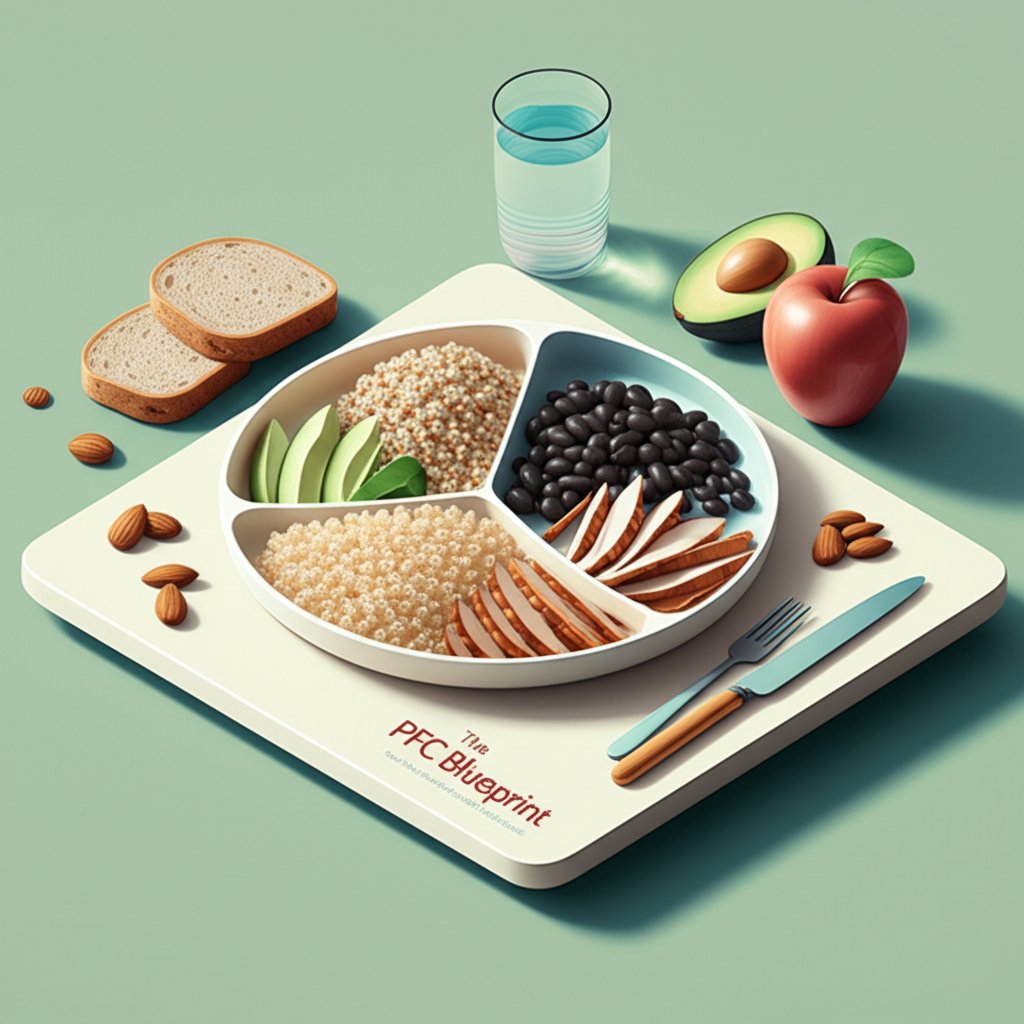
Forget complicated macro calculators for a moment. The most effective macro-friendly lunches are built on a simple, memorable principle: Protein, Fiber, and a smart Carb (PFC). This ensures satiety, stable energy, and a wide range of micronutrients.
Think of it as a simple checklist for your lunch container:
- Pick a Lean Protein (The Anchor): Protein is the most satiating macronutrient, meaning it keeps you feeling full longer. It’s also crucial for muscle repair and maintenance. Aim for a palm-sized portion.
- Fill with Fiber (The Volume): Non-starchy vegetables add volume, fiber, and essential vitamins for very few calories. They fill you up and support digestive health. Aim for 1-2 fist-sized portions.
- Add a Smart Carb (The Fuel): Complex carbohydrates provide sustained energy for your brain and body. They digest slowly, preventing energy spikes and crashes. Aim for a cupped-hand-sized portion.
- Include a Healthy Fat (The Finisher): Fats are essential for hormone production and nutrient absorption. They also add flavor and contribute to feeling full.
Here’s how this blueprint looks in practice:
| Category | Goal | Examples |
| :— | :— | :— |
| Lean Protein | Keeps you full, builds muscle | Grilled chicken breast, ground turkey, salmon, hard-boiled eggs, Greek yogurt, tofu, chickpeas, black beans |
| Fiber (Veggies) | Adds volume, nutrients, low-cal | Spinach, bell peppers, broccoli, cauliflower rice, zucchini noodles, cucumbers, tomatoes |
| Smart Carbs | Sustained energy, gut health | Quinoa, sweet potatoes, brown rice, whole-wheat couscous, oats, apples |
| Healthy Fats | Satiety, hormone health | Avocado, olive oil dressing, nuts, seeds, feta cheese, hummus |
By ensuring each meal has an element from these categories, you automatically create a balanced, macro-friendly lunch without obsessive tracking.
Choose Your Strategy: The “All-in-One” vs. “Mix-and-Match” Method
The biggest hurdle in meal prep isn’t the cooking; it’s the boredom. Eating the exact same thing for five consecutive days can crush anyone’s motivation. This is where choosing the right prep strategy becomes more important than the specific recipe.
The All-in-One Method: Grab-and-Go Simplicity
This is classic meal prep: you cook one large batch of a single recipe and portion it out into five identical containers.
- Best for: People with extremely limited time or those who value convenience above all else.
- Pros: Ultra-efficient. Cook once on Sunday, and you don’t think about lunch again all week.
- Cons: High risk of flavor fatigue by Thursday. Certain ingredients don’t hold up well for 4-5 days.
Case Snippet:
Anna, a nurse working 12-hour shifts, uses the All-in-One method. Every Sunday, she makes a big batch of Turkey Taco Bowls with cauliflower rice, black beans, and corn. It takes her under an hour, and her lunch is a no-brainer during a hectic week. She embraces the repetition for the sheer convenience.
The Component Prep Method: Your Key to Delicious Variety
Instead of complete meals, you prep individual ingredients. This is the secret to staying consistent without getting bored. You cook a few proteins, a few carbs, and chop a bunch of veggies. Each morning, you assemble a different meal in minutes.
- Best for: Anyone who craves variety and wants to avoid feeling like they’re on a restrictive diet.
- Pros: Incredible flexibility. Prevents boredom by allowing you to create different flavor combinations daily.
- Cons: Requires 3-5 minutes of assembly each morning.
Case Snippet:
*David, a remote worker who easily gets tired of food, is a Component Prep devotee. On Sunday, he’ll grill a pack of chicken thighs, cook a pot of quinoa, roast a tray of broccoli and bell peppers, and mix a lemon-tahini dressing.
- Monday: He makes a quinoa bowl with chicken and roasted veggies.
- Tuesday: He puts the chicken and veggies over a bed of spinach for a hearty salad.
- Wednesday: He combines the quinoa and veggies, adds chickpeas from a can, and calls it a Mediterranean bowl.
Your Lunch Prep Playbook: 3 Actionable Meal Structures
Ready to put this into practice? Here are three versatile, macro-friendly lunch meal prep structures you can use this week, based on popular and effective recipes.
1. The 20-Minute Sheet Pan Wonder (Low-Carb, High-Protein)
This is the ultimate All-in-One meal. Minimal cleanup, maximum efficiency.
- The Blueprint: Protein + Veggies + Seasoning, all roasted on one pan.
- Step 1: Prep. Preheat your oven to 400°F (200°C). Chop 1.5 lbs of boneless, skinless chicken thighs (or breasts) into bite-sized pieces. Chop 2-3 large bell peppers and 1 large onion into strips.
- Step 2: Season. In a large bowl, toss the chicken and veggies with 1-2 tablespoons of olive oil and a packet of fajita or taco seasoning. Spread evenly on a baking sheet.
- Step 3: Roast. Bake for 18-22 minutes, or until the chicken is cooked through and the vegetables are tender-crisp.
- Step 4: Portion. Divide the mixture among 3-4 meal prep containers. Serve with a side of cauliflower rice and a lime wedge to squeeze over before eating.
2. The No-Soggy Salad Jar (Customizable & Fresh)
The key to a prepped salad that isn’t a slimy mess by lunchtime is strategic layering. This is a perfect use for your component-prepped ingredients.
- The Blueprint: Build your salad upside down in a wide-mouth mason jar.
- Layer 1 (Bottom): Dressing. Pour 2-3 tablespoons of your favorite vinaigrette. This keeps it away from the greens.
- Layer 2: Hard Veggies. Add sturdy ingredients that won’t get soggy, like chopped carrots, cucumbers, or chickpeas.
- Layer 3: Grains/Carbs. Spoon in your pre-cooked quinoa, couscous, or sweet potato cubes.
- Layer 4: Protein. Add your diced grilled chicken, hard-boiled eggs, or tofu.
- Layer 5 (Top): Greens & Delicate Items. Pack the jar to the top with spinach, arugula, or mixed greens. Add any nuts, seeds, or feta cheese here.
- To Eat: Simply shake the jar vigorously to distribute the dressing, then pour it into a bowl.
3. The No-Cook Protein Power Box (Ultimate Speed)
For days when you have zero time to cook, this “adult lunchable” is a macro-friendly lifesaver.
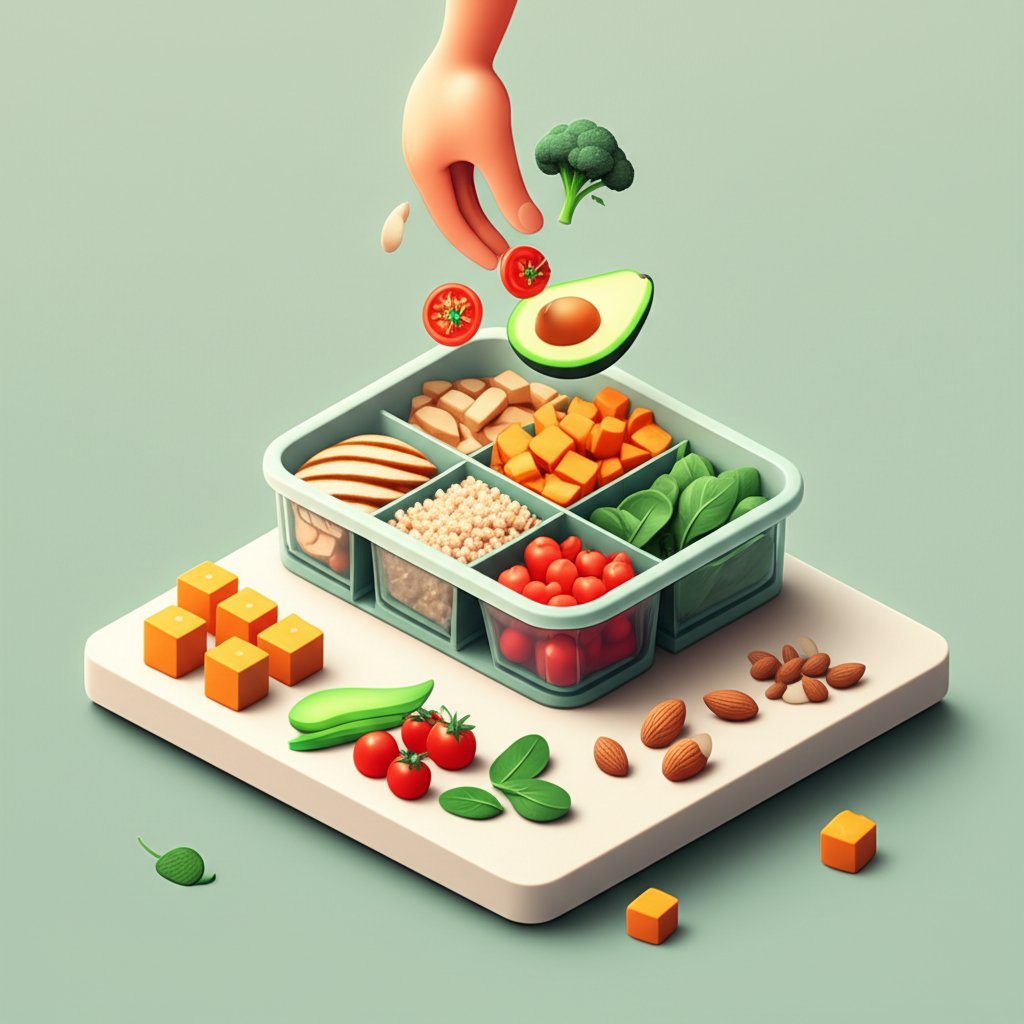
- The Blueprint: Assemble a bento-style box with balanced components.
- Compartment 1 (Protein): 4-5 slices of rolled-up lean turkey or ham, or two hard-boiled eggs.
- Compartment 2 (Fat & Protein): A small handful of almonds or a single-serving pack of guacamole.
- Compartment 3 (Fiber & Carbs): Baby carrots, cucumber slices, or bell pepper strips.
- Compartment 4 (Extra Fuel): A high-protein Greek yogurt cup or a few whole-grain crackers with a tablespoon of hummus.
Common Questions About Macro-Friendly Lunch Prep
How do I keep my prepped chicken from getting dry?
This is the most common complaint. First, choose chicken thighs over breasts when possible; their higher fat content keeps them moist. If you use breasts, try brining them for 30 minutes before cooking or slightly undercooking them, as they will cook a bit more during reheating. Storing chicken with a sauce, salsa, or a drizzle of olive oil also helps lock in moisture.
Can I really prep lunches for a full 5-day work week?
Most cooked meals are at their best quality and safety within 3-4 days when stored in the fridge. For Day 5, you have two great options: prep a meal that freezes well (like a chili, soup, or curry) and pull it out Thursday night, or plan for a super-fast No-Cook Protein Box on Friday.
My “healthy” lunches leave me hungry. What am I doing wrong?
You’re likely missing a key satiety component. The most common culprit is a salad that’s all vegetables with a low-fat, high-sugar dressing. Re-evaluate using the “PFC” blueprint. Did you include enough protein? Is there a source of healthy fat, like avocado or nuts? Adding a half-cup of chickpeas or a hard-boiled egg can make a world of difference.
Isn’t meal prep expensive?
It’s a common misconception. While the initial grocery bill might seem larger than a single takeout order, the cost per meal is drastically lower. A week of prepped lunches often costs the same as just two purchased lunches. Buying ingredients like chicken, beans, and grains in bulk offers significant savings over time.
Your First Step to a Better Lunch Week
The goal is not to become a perfect meal prepper overnight. It’s to build a sustainable habit. Looking at a week’s worth of lunches can feel overwhelming, so start smaller.
This week, pick just ONE strategy.
- If you crave simplicity: Make the Sheet Pan Wonder. It will cover your lunch for three days, and you’ll immediately feel the benefit of having a delicious, ready-to-go meal.
- If you crave variety: Try Component Prepping. Just cook a batch of chicken and a pot of quinoa. See how you can use those two ingredients to build different bowls and salads for a few days.
Start there. Master one small part of the process, and you’ll build the momentum to make macro friendly lunch meal prep a seamless, energizing part of your life.

- Master Vegan Freezer Meal Prep to Simplify Your Busy Schedule - June 18, 2026
- Vegan Freezer Cooking Simplifies Healthy Meals on Busy Nights - June 17, 2026
- Vegetarian Freezer Recipes for Effortless Meal Prep and Delicious Dinners - June 16, 2026