Embarking on a 1000 calorie diet menu plan 7 days can feel like a direct path to hitting your short-term weight loss goals. It’s a strategy built on a significant calorie deficit, designed to deliver noticeable results quickly. But before you clear out your pantry, it’s crucial to understand that this approach is a high-intensity sprint, not a long-term marathon. It demands precision, a focus on nutrition, and a clear understanding of the rules of the road.
This guide breaks down the what, why, and how of a 7-day, 1000-calorie plan. We’ll go beyond just listing meals and dive into the strategy required to make it effective and, most importantly, safe.
At a Glance: Your 1000-Calorie Week
Here’s what you’ll find in this detailed guide:
- The Big Picture: Understand if a very low-calorie diet is appropriate and safe for your specific situation.
- The 7-Day Blueprint: A complete day-by-day menu with approximate calorie counts to eliminate guesswork.
- Strategic Eating: Learn which foods are your best friends for staying full and nourished on minimal calories.
- Safety First: Critical guidelines on hydration, exercise, and listening to your body to avoid common pitfalls.
- Common Questions Answered: Get clear, no-nonsense answers to the most frequent concerns about this diet.
Is This Intense Diet Right for You?
A 1000-calorie diet is classified as a Very Low-Calorie Diet (VLCD). The principle is simple: by consuming far fewer calories than your body burns, you force it to tap into stored fat for energy, leading to weight loss. People can lose anywhere from 2 to 5 pounds in a week, though results vary based on starting weight, metabolism, and activity level.
However, this aggressive deficit comes with a major caution: it is not sustainable or healthy for the long term. A VLCD should only be followed for a short period and ideally under the guidance of a doctor or registered dietitian. This is to prevent potential risks like nutrient deficiencies, muscle mass loss, and a significant slowdown of your metabolism.
Who should absolutely avoid this diet?
- Pregnant or breastfeeding women
- Teenagers or individuals still growing
- Athletes or those with high physical activity demands
- Anyone with a history of an eating disorder
- Individuals with medical conditions like heart or kidney issues unless directed by a physician.
The goal here isn’t just to cut calories but to maximize the nutritional value of every single bite. While this plan focuses on severe restriction for weight loss, it’s a stark contrast to building 1000-calorie meals for bulking, which strategically prioritizes an energy surplus for muscle gain and high performance.
The Building Blocks of a 1000-Calorie Day
When calories are scarce, food quality becomes paramount. You can’t afford to “spend” your calories on empty, processed foods. Your focus must be on nutrient-dense options that provide satiety, vitamins, and minerals.
- Protein is Your Priority: Lean protein helps you feel fuller for longer and is crucial for minimizing muscle loss during weight loss. Aim to include a source with every meal.
- Examples: Skinless chicken breast, fish (cod, salmon, tuna), eggs, Greek yogurt, cottage cheese, legumes.
- Fiber Fills You Up: Non-starchy vegetables are your best friend. They are low in calories but high in fiber and water, adding bulk to your meals and keeping you satisfied.
- Examples: Spinach, kale, broccoli, cauliflower, bell peppers, zucchini, green beans.
- Don’t Fear Healthy Fats: A small amount of healthy fat is essential for hormone function and nutrient absorption. It also contributes to feeling full.
- Examples: A quarter of an avocado, a small handful of almonds, or a teaspoon of olive oil.
- Choose Carbs Wisely: Opt for small portions of high-fiber, complex carbohydrates that provide sustained energy.
- Examples: 1/3 cup of brown rice or quinoa, one slice of whole-grain bread.
Your 7-Day Blueprint for a 1000-Calorie Plan
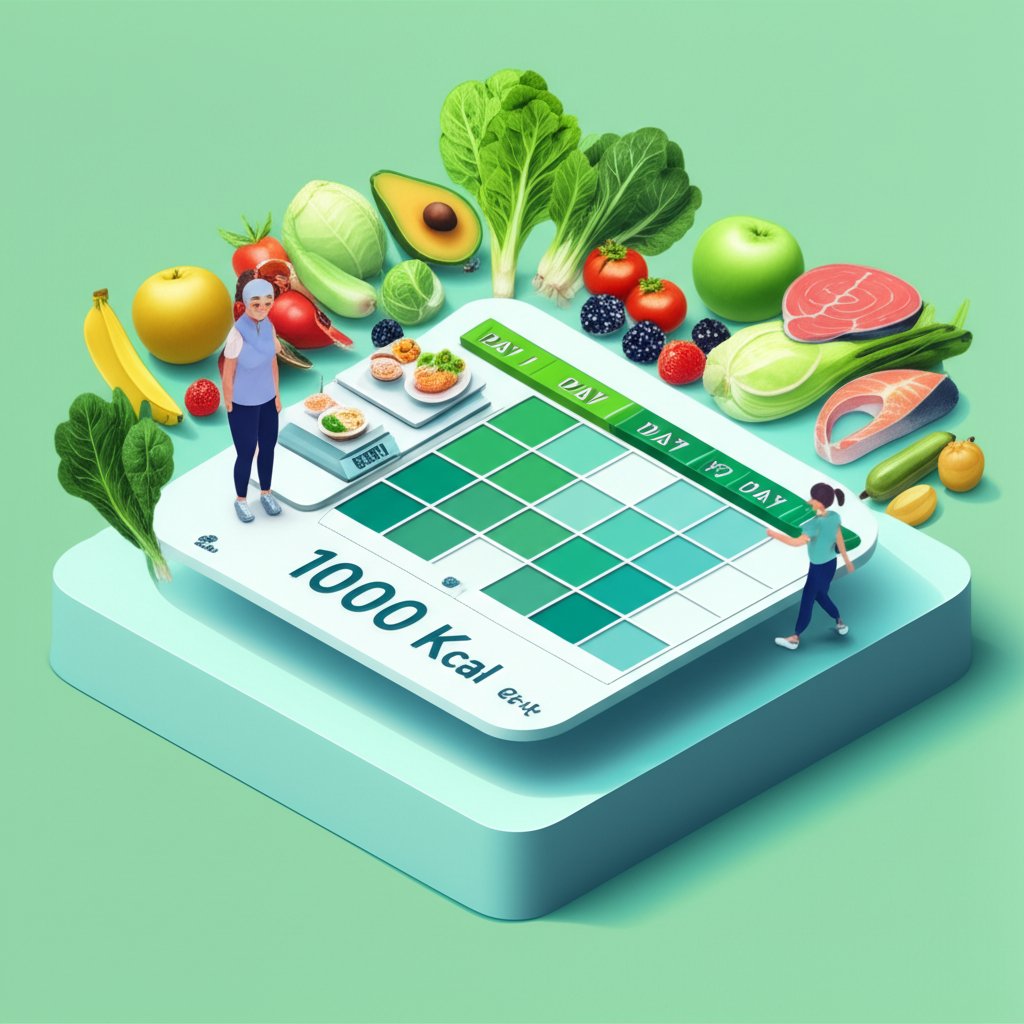
Here is a sample menu designed to be balanced, nutrient-dense, and satisfying. Portion sizes are key—a food scale can be an invaluable tool for accuracy. Remember to drink plenty of water throughout the day.
Day 1: Protein-Powered Start
- Breakfast (240 cal): 1 cup fat-free cottage cheese mixed with 1 cup of blueberries.
- Lunch (290 cal): 4 oz grilled chicken breast over 2 cups of mixed greens with a lemon-herb vinaigrette, served with 1 cup of steamed green beans.
- Snack (78 cal): 1 medium hard-boiled egg.
- Dinner (350 cal): 4 oz baked cod with ½ cup roasted cherry tomatoes and 1 cup of steamed asparagus drizzled with 1 tsp olive oil.
- Daily Total: ~958 calories
Day 2: Flavorful & Filling
- Breakfast (242 cal): 2 scrambled eggs with a handful of spinach and 1 oz feta cheese, served with 1 cup of sliced strawberries.
- Lunch (316 cal): Large spinach salad topped with 3 oz of canned tuna (in water), ½ cup of chickpeas, and chopped cucumber and bell peppers. Use 2 tbsp of light vinaigrette.
- Snack (100 cal): ½ cup plain non-fat Greek yogurt.
- Dinner (312 cal): 1 cup of black bean soup topped with 1 tbsp of plain Greek yogurt and a sprinkle of cilantro.
- Daily Total: ~970 calories
Day 3: Hearty & Wholesome
- Breakfast (290 cal): ½ cup of old-fashioned oats (cooked with water) topped with ¼ cup of mixed berries and 5 chopped almonds.
- Lunch (300 cal): Turkey wrap using one 8-inch whole-wheat tortilla, 3 oz of lean turkey breast, lettuce, tomato, and 1 tbsp of hummus.
- Snack (100 cal): 1 small apple with 1 tsp of peanut butter.
- Dinner (320 cal): 4 oz lean sirloin steak (trimmed of fat), grilled, with 1 medium grilled zucchini and 1 cup of sautéed mushrooms.
- Daily Total: ~1,010 calories
Day 4: Fresh & Vibrant
- Breakfast (197 cal): Smoothie made with ½ cup unsweetened almond milk, ½ cup plain non-fat Greek yogurt, ½ cup frozen mango, and a handful of spinach.
- Lunch (316 cal): Leftover 1 cup of black bean soup from Day 2 with a side salad (2 cups mixed greens, 1 tbsp light dressing).
- Snack (161 cal): 1 cup of fat-free cottage cheese with ½ cup raspberries.
- Dinner (336 cal): 4 oz grilled salmon fillet seasoned with dill and lemon, served with 1 cup of roasted Brussels sprouts.
- Daily Total: ~1,010 calories
Day 5: Simple & Satisfying
- Breakfast (206 cal): 1 whole-grain pancake topped with ½ cup of plain Greek yogurt and a sprinkle of cinnamon.
- Lunch (289 cal): Large vegetable salad with 3 oz of grilled chicken, loaded with cucumbers, tomatoes, and bell peppers. Use a light vinaigrette.
- Snack (194 cal): 1 cup of air-popped popcorn and 1 cup of grapes.
- Dinner (296 cal): 1 cup of lentil soup with a side of 1 cup steamed broccoli.
- Daily Total: ~985 calories
Day 6: Comforting & Clean
- Breakfast (288 cal): 2 hard-boiled eggs with 1 cup of steamed spinach and 1 small orange.
- Lunch (317 cal): ½ medium baked sweet potato topped with ½ cup of black beans and 2 tbsp of salsa.
- Snack (77 cal): 1 small apple.
- Dinner (296 cal): Chicken and vegetable stir-fry with 3 oz of chicken breast and 2 cups of mixed vegetables (broccoli, bell peppers, snap peas) using 1 tbsp of low-sodium soy sauce.
- Daily Total: ~978 calories
Day 7: Balanced Finish
- Breakfast (271 cal): 1 slice of whole-grain toast topped with ½ mashed avocado and a sprinkle of red pepper flakes.
- Lunch (289 cal): Leftover chicken and vegetable stir-fry from Day 6.
- Snack (194 cal): ½ cup of non-fat Greek yogurt with 5 almonds and a drizzle of honey (½ tsp).
- Dinner (279 cal): Low-calorie vegetable lasagna (one serving, approx. 250g) made with zucchini noodles instead of pasta.
- Daily Total: ~1,033 calories
Quick Answers to Common Questions
Got questions? You’re not alone. Here are some straightforward answers to help you navigate this plan.
Q: How much weight can I actually lose in 7 days?
A: Most people can expect to lose between 2-5 pounds. This initial loss is often a combination of water weight and fat. Individual results depend heavily on your starting weight, body composition, and metabolism.
Q: Will I feel hungry all the time?
A: You will likely experience some hunger, especially in the first few days as your body adjusts. To combat this, focus on protein and fiber at every meal, stay exceptionally well-hydrated, and spread your meals out to keep blood sugar stable.
Q: Can I exercise on this diet?
A: Strenuous exercise is not recommended. Your body doesn’t have enough fuel for intense workouts, which can lead to dizziness, fatigue, and potential injury. Stick to light activities like walking, gentle stretching, or yoga.
Q: Is it safe to follow this diet for more than a week?
A: No. Following a 1000-calorie diet long-term is not considered safe without strict medical supervision. It can lead to severe nutrient deficiencies, slow your metabolism, and cause significant muscle loss, making it harder to keep the weight off later.
Q: What about coffee and tea?
A: Black coffee and unsweetened tea are perfectly fine and contain minimal calories. They can also help with energy levels and suppress appetite slightly. Just be sure to avoid adding sugar, cream, or sweetened milks.
Your Next Step Is a Conversation
This 1000 calorie diet menu plan 7 days is a powerful but demanding tool for a short-term goal. It’s a reset, not a lifestyle. The real key to lasting success lies in what you do after the seven days are over. Transitioning to a more sustainable, balanced diet of around 1500-1800 calories (or whatever your calculated maintenance level is) is essential to prevent rebound weight gain.
Before you start, the most critical step is to assess if this is right for you. Consider this plan a blueprint, but the final approval should come from a healthcare professional who understands your personal health history. Your journey to a healthier weight should always prioritize safety and well-being above all else.

- Master Vegan Freezer Meal Prep to Simplify Your Busy Schedule - June 18, 2026
- Vegan Freezer Cooking Simplifies Healthy Meals on Busy Nights - June 17, 2026
- Vegetarian Freezer Recipes for Effortless Meal Prep and Delicious Dinners - June 16, 2026