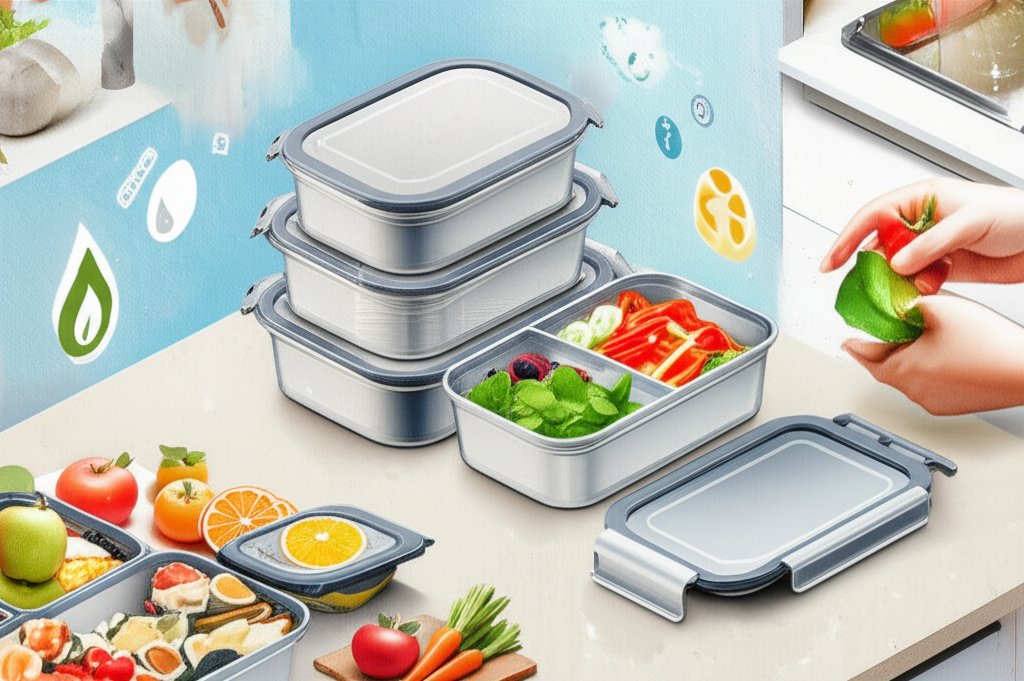
That perfectly prepped batch of chili you were saving for a busy weeknight is now a block of ice crystals and disappointment. If you’re tired of plastic containers cracking in the cold or leaching unwanted chemicals into your food, it’s time to consider the robust, long-term solution: stainless steel freezer containers. They are a game-changer for anyone serious about meal prep, waste reduction, and food safety.
But not all steel containers are created equal for the harsh environment of your freezer. Choosing the right one involves understanding a few key details that make the difference between a perfectly preserved meal and a warped, leaky mess.
At a Glance: Your Takeaways
- Why Steel Beats the Cold: Understand how stainless steel’s durability, non-toxic nature, and thermal conductivity make it superior to plastic and glass for freezing.
- Decoding the Details: Learn to identify the right type of steel (304 vs. 316) and the best lid style (silicone vs. steel) for your specific needs.
- Mastering the Method: Get a step-by-step playbook for freezing food in steel to prevent expansion damage and freezer burn.
- Safe Thawing Practices: Discover the correct, safe ways to defrost your meals without damaging the container or your microwave.
- Make a Confident Choice: Use a simple framework to select the perfect stainless steel freezer containers for everything from soups to casseroles.
Beyond the Hype: Why Stainless Steel Excels in the Freezer
While many materials can hold food, the sub-zero environment of a freezer exposes their weaknesses. This is where stainless steel truly shines, outperforming its common counterparts in several critical ways.
While these benefits are true for general kitchen use, as we cover in our complete Stainless Food Storage Guide, they become even more critical in the extreme environment of a freezer.
Durability That Outlasts the Cold
Plastic becomes brittle and prone to cracking at low temperatures. A slight drop on the kitchen floor can shatter a frozen plastic container, ruining your meal and creating a mess. Glass is also at risk of thermal shock—cracking if there’s a sudden temperature change.
Stainless steel, on the other hand, is exceptionally durable. It won’t crack, chip, or shatter in the freezer. This means your investment lasts for years, if not a lifetime, making it a far more sustainable and economical choice in the long run.
A Non-Toxic, Non-Porous Barrier
Growing concerns about chemicals like BPA, BPS, and phthalates leaching from plastics into food are valid, especially when food is stored for long periods. Stainless steel is an inert material. It doesn’t react with food, impart any metallic taste, or leach chemicals, ensuring your frozen meals are as pure as the day you made them.
Furthermore, its non-porous surface prevents it from absorbing food odors or stains. The ghost of last month’s curry won’t haunt this week’s marinara sauce, a common complaint with plastic containers.
Rapid Freezing for Better Food Quality
Stainless steel is an excellent thermal conductor. This means it transfers heat (or in this case, cold) much more efficiently than plastic or glass. Your food freezes faster, which is key to preserving its quality.
Faster freezing creates smaller ice crystals. Smaller ice crystals do less damage to the food’s cellular structure, resulting in better texture and flavor when you finally thaw and reheat it.
Not All Steel Is Created Equal: Decoding the Specs
When you start shopping, you’ll see terms like “18/8” or “304 grade.” These aren’t just marketing jargon; they tell you about the quality and composition of the container, which directly impacts its performance in the freezer.
The Workhorse: 18/8 (304) Stainless Steel
This is the most common type of food-grade stainless steel, and for good reason. The “18/8” refers to its composition: 18% chromium and 8% nickel. Chromium provides rust and corrosion resistance, while nickel enhances its durability. For over 95% of freezer applications—storing soups, stews, grains, prepped vegetables, and leftovers—304-grade steel is the perfect choice. It’s robust, safe, and reliable.
The Premium Pick: 18/10 (316) Stainless Steel
You might occasionally see 316-grade, or “marine grade,” steel. It’s similar to 304 but includes a small amount of an element called molybdenum. This addition provides superior resistance to corrosion from salts and acids.
Is it necessary for your freezer? Usually not, but it’s a worthwhile upgrade if you plan on long-term freezing of highly acidic foods like tomato-based sauces or brines. The extra protection ensures the container remains pristine for decades, no matter what you store in it.
The Lid Dilemma: Silicone vs. Stainless Steel
The lid is just as important as the container body. It’s your primary defense against freezer burn and leaks. The two most common options each have distinct advantages.
| Feature | Food-Grade Silicone Lids | Stainless Steel Lids |
|---|---|---|
| Seal | Excellent; often creates a leak-proof, airtight seal. | Good, but rarely 100% leak-proof without a silicone gasket. |
| Flexibility | Flexible and easy to put on/take off, even when cold. | Rigid. Can be difficult to remove when frozen shut. |
| Durability | Very durable but can tear or degrade over many years. | Indestructible; will last as long as the container. |
| Plastic-Free | No, but a safe, inert plastic alternative. | Yes, the ultimate plastic-free option. |
| Cleaning | Can sometimes absorb odors or oils; may require deeper cleaning. | Easy to clean, non-porous, and odor-resistant. |
| Practical guidance: If you need a truly leak-proof container for transporting soups or stews to the freezer, a model with a high-quality silicone lid is your best bet. For a completely plastic-free kitchen and maximum longevity, an all-steel container is ideal, provided you handle liquids with care. |
Shape and Size: Matching the Container to the Meal
Think about how you’ll use the containers. Rectangular and square shapes are champions of efficiency, stacking neatly to maximize precious freezer space. They’re perfect for solid foods like lasagna, casseroles, meatloaf, or portions of rice and grains.
Round containers are excellent for liquids like soups, stocks, and sauces. The lack of corners makes scooping out the contents easier. A mix of shapes and sizes—from small 8oz containers for single servings of pesto to large 64oz ones for family-sized chili—will create a versatile and organized freezer system.
Your Step-by-Step Guide to Flawless Freezing in Steel
Using stainless steel freezer containers requires a slightly different approach than plastic. Follow these steps to ensure your food stays fresh and your containers stay in perfect condition.
- Cool Food Completely. This is the most important rule. Never pour hot or even warm food directly into a stainless steel container and place it in the freezer. The rapid temperature change can create condensation and excessive ice crystals. Worse, it can warm up surrounding frozen items, creating a food safety risk. Let food cool to room temperature, or ideally, chill it in the fridge first.
- Leave Adequate Headspace. All liquids, from water to soup, expand when they freeze. If you fill a container to the brim with liquid and seal it, that expansion has nowhere to go. This can warp the container, pop the lid off, or even damage the container’s seams. As a rule of thumb, leave at least a ½-inch of headspace for thick stews and a full 1-inch for thin liquids like broth.
- Ensure a Tight Seal. Before sealing, press down on the lid to push out as much excess air as possible. Air is the enemy in the freezer—it’s what causes freezer burn. A tight seal locks moisture in and keeps air out.
- Label Everything. Your future self will thank you. Use a dry-erase marker directly on the steel lid or a piece of masking tape on the container body. Always include the name of the dish and the date it was frozen.
Case Snippet: The Bone Broth Method
After simmering a large batch of bone broth, I let it cool completely on the counter, then chill it overnight in the fridge. The next day, I pour the chilled broth into several 32oz stainless steel containers, being careful to leave a full inch of headspace at the top. I label each lid with “Beef Broth” and the date using a dry-erase marker. They stack perfectly in the chest freezer, ready for quick, healthy meals.
Avoiding Common Mistakes with Stainless Steel Freezer Containers

A little knowledge goes a long way in preventing common mishaps.
The Headspace Hazard: Preventing Warped Containers
It bears repeating: failing to leave enough headspace for liquids is the number one cause of problems. The immense pressure from expanding ice can permanently bulge the bottom of a container or pop the lid off, exposing your food to freezer burn. Always err on the side of leaving more space, not less.
The Thawing Trap: How to Safely Defrost
Under no circumstances should you ever put the metal container in a microwave. It is a fire hazard and will destroy your appliance.
The best and safest ways to thaw food are:
- In the Refrigerator: Plan ahead and move the container from the freezer to the fridge 24-48 hours before you need it.
- In a Cold Water Bath: For faster thawing, submerge the sealed container in a bowl of cold water, changing the water every 30 minutes.
- Transfer the Contents: Once partially thawed, you can often pop the frozen block of food out and transfer it to a microwave-safe or oven-safe dish for reheating.
Quick Answers to Common Questions
Can stainless steel freezer containers go in the microwave?
No, the stainless steel body must never go in the microwave. It can cause dangerous arcing and damage the appliance. Some silicone lids are microwave-safe for reheating food after it has been transferred to a different dish, but you must check the manufacturer’s instructions.
Will food get freezer burn in stainless steel?
Freezer burn is caused by air exposure, not the container material itself. A well-sealed stainless steel container with minimal air inside is one of the best defenses against freezer burn. The key is a tight lid and proper filling technique.
How do I prevent food from sticking to the container?
For most foods like soups and stews, this isn’t an issue. Once slightly thawed, the contents will release easily. For items like baked goods or casseroles that you want to remove cleanly, you can line the bottom and sides of the container with parchment paper before filling.
Are they dishwasher safe?
Most high-quality stainless steel container bodies are perfectly safe for the top or bottom rack of the dishwasher. Lids, especially those with silicone gaskets, often last longer and maintain a better seal if they are hand-washed. Always default to the manufacturer’s care instructions.
Making Your Choice: A Quick Decision Framework
Ready to upgrade your freezer storage? Use this simple guide to pick the right stainless steel freezer containers for your kitchen.
- If you freeze a lot of soups, broths, and liquids…
- Prioritize containers with leak-proof silicone lids. A secure, airtight seal is non-negotiable. Round shapes can also make for easier scooping.
- If you are an avid meal prepper with solids and casseroles…
- Focus on stackable, rectangular containers. They will maximize your freezer space and keep everything organized and accessible.
- If your goal is a 100% plastic-free kitchen…
- Choose an all-steel container with a matching steel lid. Be extra mindful of leaving generous headspace for any liquids to prevent pressure buildup.
- If you frequently store high-acid or very salty foods long-term…
- Consider investing in containers made from 316-grade stainless steel. While 304 is excellent, 316 offers the ultimate peace of mind against corrosion.
By investing in the right set of stainless steel freezer containers and using them correctly, you’re not just organizing your freezer—you’re choosing a safer, more sustainable, and more delicious way to store food for the long haul.

- Master Vegan Freezer Meal Prep to Simplify Your Busy Schedule - June 18, 2026
- Vegan Freezer Cooking Simplifies Healthy Meals on Busy Nights - June 17, 2026
- Vegetarian Freezer Recipes for Effortless Meal Prep and Delicious Dinners - June 16, 2026