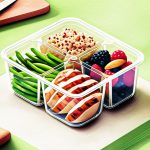
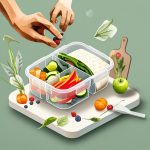
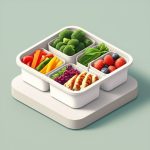
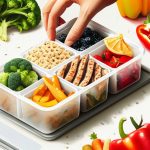
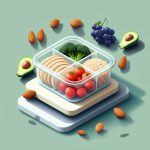
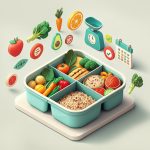
That frustrating lunchtime Tetris—juggling a separate container for your salad, another for your leftover chicken, and a third for your fruit—is a familiar struggle. The result is often a bulky, disorganized lunch bag with a high risk of leaks. A quality bento box stackable system transforms that chaos into a single, elegant tower, ensuring your meal arrives just as pristine as when you packed it. It’s a simple concept that unlocks a new level of meal prep efficiency and on-the-go convenience.
At a Glance: Your Stacking Bento Guide
- Understand Stacking Mechanisms: Learn the difference between interlocking tiers, clip-on latches, and elastic bands to find the most secure fit for your needs.
- Choose the Right Material: We’ll compare the pros and cons of BPA-free plastic, stainless steel, and glass for durability, weight, and heating options.
- Master Leak-Proof Packing: Discover the “bottom-up” packing method and strategic tier usage to keep wet and dry ingredients separate and your lunch bag clean.
- Match Tiers to Your Meals: See how a two-tier is perfect for a sandwich and side, while a three-tier can handle complex, deconstructed meals.
- Maintain Your Investment: Get practical tips for cleaning and care to prevent stains, odors, and warping.
The Anatomy of a Truly Secure Stackable Bento
Not all stackable bento boxes are created equal. The magic lies in the details of how the layers connect and seal. A flimsy connection can lead to spills, while a poorly designed seal will doom your crispy crackers to a soggy fate.
How the Tiers Connect
The connection mechanism is the backbone of your bento. It’s what keeps your carefully packed meal from becoming a jumbled mess in transit.
- Interlocking Rims: Some designs feature a subtle lip on the bottom of one tier that nests snugly into the lid of the one below it. These are often held together by a single elastic band. This style is minimalist and light but offers the least security against shifting.
- Clip-On Latches: This is the most common and often most secure method. Sturdy clips on the sides of the top tier clamp down, holding the entire stack together under pressure. Look for latches that provide a satisfying “click” and are integrated into the lid’s structure, not just flimsy add-ons.
- Screw-Top Tiers: More common in round, “tiffin-style” stackable containers, these tiers screw into one another. This provides an excellent seal, making them ideal for saucy or liquid-heavy foods like curries and stews.
Gaskets: The Unsung Hero of a Leak-Proof Lunch
That thin, removable ring of silicone inside the lid of each tier is the single most important feature for preventing leaks. A good gasket creates an airtight seal when the lid is closed, locking in moisture and freshness. When choosing a bento box stackable model, inspect the gasket. It should be thick, flexible, and fit perfectly into its groove without easily popping out.
Choosing Your Material: A Practical Comparison
The material of your bento box dictates its weight, durability, and how you can heat your food. Each has distinct advantages depending on your lifestyle and lunch habits. Once you’ve chosen your ideal container, you can focus on what goes inside. For a complete framework on planning your meals, you can Master Stacking Bento meals with a solid prep strategy that elevates your lunch game.
The Everyday Workhorse: BPA-Free Plastic
Modern, high-quality plastics (like Tritan) are the go-to for a reason. They are lightweight, generally affordable, and often microwave and dishwasher-safe, offering maximum convenience. They come in a vast array of colors and configurations. The primary downsides are their potential to stain from vibrant foods like tomato sauce or turmeric and their tendency to retain strong odors over time.
The Durable & Sleek Choice: Stainless Steel
For those looking to avoid plastic, stainless steel is a fantastic alternative. It’s virtually indestructible, won’t stain or absorb odors, and keeps food tasting pure. Many steel bento boxes are also available with insulated tiers, which can keep food hot or cold for a few hours. The main trade-off is that you absolutely cannot put it in the microwave, and it’s typically heavier than plastic.
The Pure & Pristine Option: Glass
Glass offers the purest food storage experience. It’s non-porous, so it will never stain or hold odors, and you can see exactly what’s inside. It’s also microwave, dishwasher, and even oven-safe (base only). The significant drawbacks are its weight and fragility. A multi-tier glass bento can be quite heavy to carry, and a drop can be catastrophic.
| Feature | BPA-Free Plastic | Stainless Steel | Glass |
|---|---|---|---|
| Weight | Lightweight | Medium | Heavy |
| Durability | Good (can scratch) | Excellent | Poor (can break) |
| Microwave-Safe | Usually (check label) | No | Yes (base only) |
| Dishwasher-Safe | Usually (top rack) | Yes | Yes |
| Stain/Odor Resistance | Fair | Excellent | Excellent |
| Best For | Daily commuters, kids, maximum convenience | Durability, plastic-free living, non-heated meals | Office lunches, reheating, purity of taste |
The Art of Stacking: A Practical Playbook for Perfect Meals
Owning a bento box stackable container is one thing; packing it effectively is another. A little strategy goes a long way in ensuring your lunch is delicious, fresh, and structurally sound.
The “Bottom-Up” Packing Method
The golden rule of stacking is to place the heaviest, sturdiest, and least-crushable foods in the bottom tier. This creates a stable base for the entire stack. Lighter, more delicate items belong in the top tiers.
- Bottom Tier: Ideal for dense grains (rice, quinoa), hearty stews, pasta dishes, or leftover stir-fries.
- Middle Tier(s): Perfect for proteins (grilled chicken, tofu), roasted vegetables, or sturdy fruits.
- Top Tier: Reserved for delicate items like leafy greens, crackers, bread, or light snacks that could be crushed.
Strategic Separation: Using Tiers to Your Advantage
The true power of a stackable system is keeping components separate until you’re ready to eat. This prevents sogginess and preserves the intended texture of each food.
- Scenario 1: The Ultimate Salad
- Bottom Tier: Pack your protein, like chickpeas or sliced steak, along with chopped, hearty vegetables like cucumbers and bell peppers.
- Top Tier: Fill with delicate leafy greens like spinach or arugula.
- Sauce: Use a dedicated small, leak-proof sauce container (many bento boxes come with one) that nests inside one of the tiers. At lunchtime, you pour the dressing over the greens, add the base ingredients, and shake.
- Scenario 2: The Hot & Cold Combo
- Bottom Tier (Insulated Steel): Fill with hot soup, chili, or a warm grain bowl.
- Top Tier (Non-Insulated): Pack a side salad, a dinner roll, or some crackers. The separation ensures your salad stays crisp and your crackers don’t turn to mush from the steam.
- Scenario 3: The Deconstructed Taco Bowl
- Bottom Tier: A bed of rice and seasoned ground turkey or black beans.
- Middle Tier: Shredded lettuce, chopped tomatoes, and onions.
- Top Tier: Shredded cheese and a small container of salsa or guacamole. This keeps every ingredient distinct and fresh until you combine them just before eating.
Quick Answers to Common Stacking Questions
Q: Are all bento box stackable layers interchangeable?
Not usually. Most stackable bento systems are designed as a set. The top lid is shaped differently from the intermediate lids (which also serve as the base for the tier above). While you might be able to use a two-tier box as a single tier, you generally cannot mix and match tiers between different sets or brands.
Q: Can I put a stackable bento box in the dishwasher?
Most can go in the dishwasher, but always check the manufacturer’s instructions. A common best practice is to place plastic bases and lids on the top rack to prevent warping from the heating element. It is often recommended to hand-wash the silicone gaskets and lids to prolong their lifespan and sealing capability.
Q: How do I prevent my food from getting soggy in a stacked bento?
Separation is key. Never place wet ingredients directly next to dry, crispy ones. Use your tiers to isolate them. For things like sandwiches, pack condiments separately. For salads, keep the dressing apart until mealtime. You can also use silicone muffin liners within a tier to create smaller, sealed-off compartments for juicy fruits or sauces.
Q: Is a two-tier or three-tier bento box better?
This depends entirely on your appetite and meal complexity. A two-tier is perfect for a standard main and a side (e.g., sandwich and fruit, or rice and protein). A three-tier offers greater flexibility for larger or more complex meals, allowing you to separate a main course, a vegetable side, and a snack or dessert. If you’re unsure, some models are modular, allowing you to use two or three tiers as needed.
Your Quick-Start Guide to Choosing the Right Box
Feeling ready to pick one out? Use this simple decision guide to find your perfect match.
- If you prioritize portability and microwave convenience…
- Your best bet is a high-quality, BPA-free bento box stackable system. Look for one with robust side-clip latches and thick silicone seals.
- If you are committed to a plastic-free lifestyle and need durability…
- Choose a stainless steel model. Consider one with at least one insulated tier if you enjoy warm meals but don’t have access to a microwave.
- If you reheat meals at an office and prioritize pure taste…
- A glass bento is ideal, as long as you can manage the extra weight. Ensure it has a vented, leak-proof lid for safe microwaving.
Embracing a stackable bento system is more than just buying a new lunchbox. It’s an investment in organized, enjoyable meals that save you time, reduce waste from single-use containers, and give you complete control over your nutrition. By choosing the right materials and mastering a few simple packing techniques, you can transform your daily lunch from a chore into a moment of satisfying, well-ordered calm.

- Divided Meal Storage Containers Make Meal Prep Efficient and Simple - February 14, 2026
- Separated Lunch Containers Keep Different Foods Fresh and Organized - February 13, 2026
- Divided Containers Simplify Meal Prep for Busy Individuals - February 12, 2026