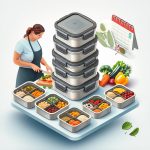
Tired of the same old chicken, broccoli, and rice? If your meal prep routine has you stuck in a flavor rut, it’s time to explore the vibrant, dynamic world of Korean meal prep. This isn’t about boxing up five identical bland meals. It’s a smarter approach focused on prepping versatile components that you can mix and match all week, ensuring every meal feels fresh, exciting, and deeply satisfying.
The secret lies in preparing building blocks—a flavorful marinated protein, a batch of perfect rice, and a few delicious side dishes (banchan)—that come together in minutes for a complete, balanced meal.
At a Glance: Your Path to Flavorful Weekdays
- Master Component Prepping: Learn to prepare core ingredients like rice, marinades, and sauces in batches instead of entire meals.
- The “One Protein, Many Ways” Method: Discover how to use a single marinated protein to create a variety of different dishes throughout the week.
- Unlock the Power of Banchan: Find out which essential Korean side dishes are perfect for making ahead to add instant variety and nutrition.
- Smart Storage & Freezer Strategies: Get practical tips for storing prepped components and full meals to maintain maximum freshness and flavor.
- Build a Meal in Minutes: Understand the simple “rice + protein + banchan” formula that makes assembling a delicious Korean meal effortless.
The Core Philosophy: Why Korean Meal Prep Works So Well
Traditional Korean cuisine is built on the principle of harmony (Eum and Yang), balancing a spectrum of flavors—salty, sweet, spicy, and sour—and textures in a single meal. This philosophy naturally lends itself to a more flexible style of meal prep.
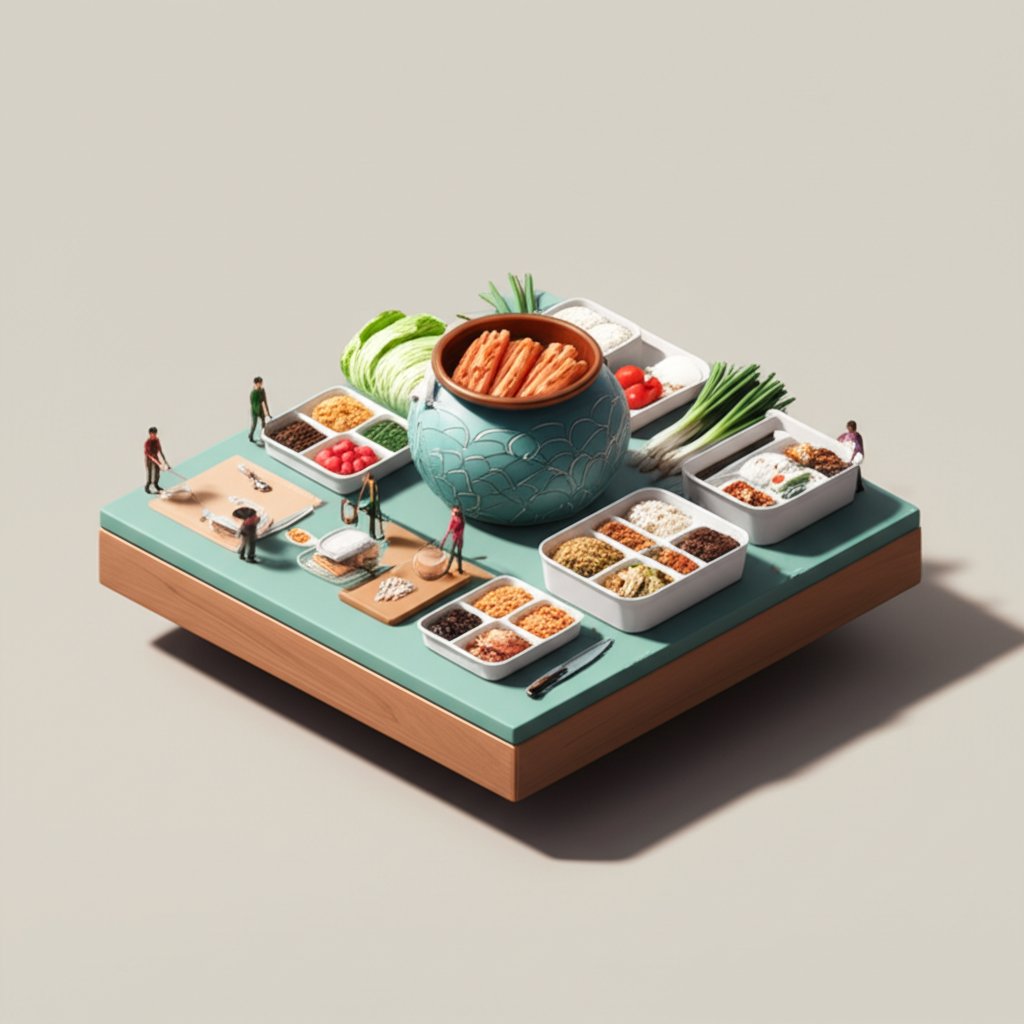
Instead of creating five identical Tupperware meals, you prep the elements of a meal. A typical Korean dinner table includes:
- Bap (Rice): The foundational starch.
- Guk/Jjigae (Soup/Stew): A comforting, often broth-based dish.
- Main Dish: Usually a marinated and cooked protein like grilled beef or spicy pork.
- Banchan (Side Dishes): A variety of small vegetable, meat, or seafood dishes that add layers of flavor, texture, and color.
By prepping these components separately, you give yourself the freedom to assemble different combinations each day. This modular approach is the key to avoiding meal prep fatigue and is a cornerstone of an effective routine. For a complete overview of how these pieces fit into a weekly schedule, our comprehensive Korean Meal Prep Guide provides a fantastic starting framework.
Your Korean Meal Prep Starter Kit: The Building Blocks
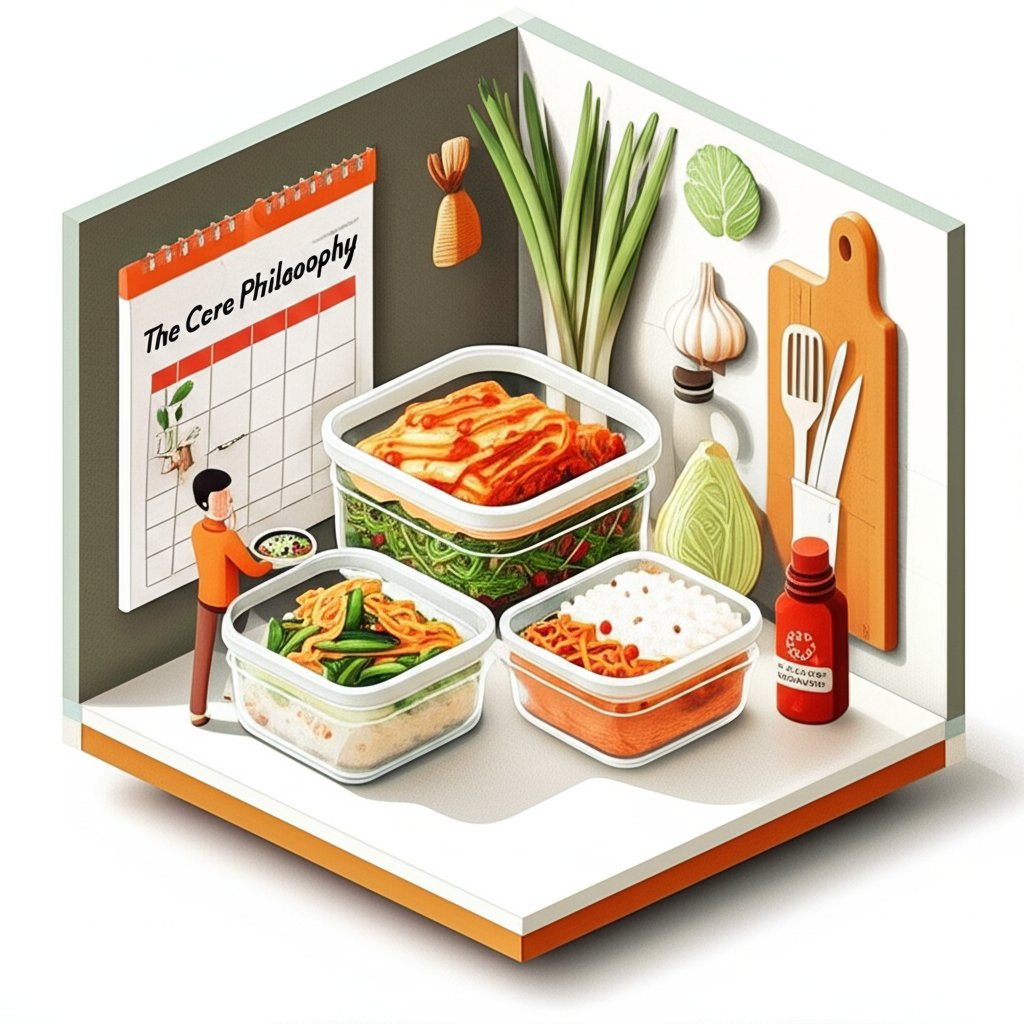
Success starts with prepping the right fundamentals. Focus your Sunday prep session on these three categories, and you’ll have everything you need for a week of incredible meals.
Master Your Grains: Beyond Plain White Rice
Perfectly cooked rice is the heart of a Korean meal. Cooking a large batch at the start of the week is the single most important step you can take.
Leftover, day-old rice that has firmed up in the fridge is actually superior for making fried rice (bokkeumbap), as the separated grains stir-fry without getting mushy.
- Pro Tip: For extra nutrients and a beautiful color, try making heukmi-bap by adding a tablespoon or two of black “forbidden” rice to your white short-grain rice before cooking.
- Storage: Once cooked and cooled, portion the rice into individual airtight containers. A quick 60-90 seconds in the microwave is all it takes to have perfectly steamed rice ready to go.
The Main Event: Marinate-Once, Eat-All-Week Proteins
Here’s where you get the biggest return on your time. Instead of cooking all your protein at once, focus on the marinade. A versatile, savory-sweet marinade can be used for multiple types of protein.
A Classic Bulgogi-Style Marinade (for ~2 lbs of meat):
- 1/2 cup soy sauce
- 1/4 cup mirin (or water with 1 tbsp sugar)
- 2 tbsp sesame oil
- 4-5 cloves garlic, minced
- 1 small onion, grated or finely chopped
- 2 tbsp brown sugar or honey
- 1 tsp black pepper
Your Game Plan:
- Prep the Meat: Thinly slice beef (sirloin, ribeye), pork (shoulder, loin), or chicken (thighs).
- Marinate: Divide the meat and marinade into freezer-safe bags. You could do one bag of beef and one of pork using the same marinade.
- Store: Lay the bags flat in the freezer. This saves space and allows the meat to thaw incredibly fast on a busy weeknight. Cook one portion to keep in the fridge for the first 1-2 days.
This method gives you ready-to-cook, flavor-packed protein that can be pan-fried, grilled, or broiled in under 10 minutes.
Banchan: The Secret to Endless Variety
Banchan are the small side dishes that transform a simple bowl of rice and meat into a true feast. They are the ultimate weapon against meal-prep boredom. Prepping just 2-3 of these on a Sunday can completely change your weekday meals.
Here are a few essential categories of prep-friendly banchan:
| Banchan Type | Description | Examples | Fridge Life |
|---|---|---|---|
| Fresh & Quick Namul | Blanched or lightly stir-fried vegetables seasoned simply. | Seasoned Spinach (Sigeumchi-namul), Bean Sprout Salad (Kongnamul-muchim) | 2-3 Days |
| Braised & Savory Jorim | Ingredients simmered in a sweet and savory soy-based sauce. | Braised Potatoes (Gamja-jorim), Braised Black Beans (Kongjang) | 5-7 Days |
| Stir-Fried Bokkeum | Quick stir-fries that hold up well in the fridge. | Stir-fried Fish Cakes (Eomuk-bokkeum), Stir-fried Anchovies (Myeolchi-bokkeum) | 4-5 Days |
| Fermented & Pickled | The long-lasting staples that add a tangy, funky kick. | Kimchi, Pickled Radish (Daikon) | Weeks to Months |
| Start by making one from each of the first three categories. The variety in flavor and texture will make every meal feel unique. |
A Practical Playbook: Building Your Week of Meals
Let’s see how this component-based system works in practice.
Your Sunday Prep Session (1 Hour):
- Grains: Cook a large pot of short-grain rice. Let cool and portion into containers.
- Protein: Marinate 1 lb of thinly sliced pork shoulder in the bulgogi-style sauce. Place in a container in the fridge.
- Banchan:
- Make Seasoned Spinach (Sigeumchi-namul).
- Make Stir-fried Fish Cakes (Eomuk-bokkeum).
- (And of course, have store-bought or homemade kimchi on hand).
How You’ll Assemble Meals All Week: - Monday Dinner: Heat a pan over high heat. Cook a portion of the marinated pork for 5-7 minutes until caramelized. Serve with a bowl of microwaved rice and all three banchan. (Time: 10 minutes)
- Tuesday Lunch: Chop up leftover pork. Make a quick deopbap (rice bowl) by topping a bowl of rice with the pork, some kimchi, and a fresh fried egg. Drizzle with a little sesame oil. (Time: 8 minutes)
- Wednesday Dinner: Use the remaining marinated pork to make Kimchi Fried Rice. Sauté chopped kimchi in a pan, add the pork, then stir in your day-old rice and a splash of kimchi juice. (Time: 12 minutes)
In just one hour of prep, you’ve set yourself up for three distinct, delicious, and fast meals.
Freezer-Focused Korean Meal Prep: Your Future Self Will Thank You
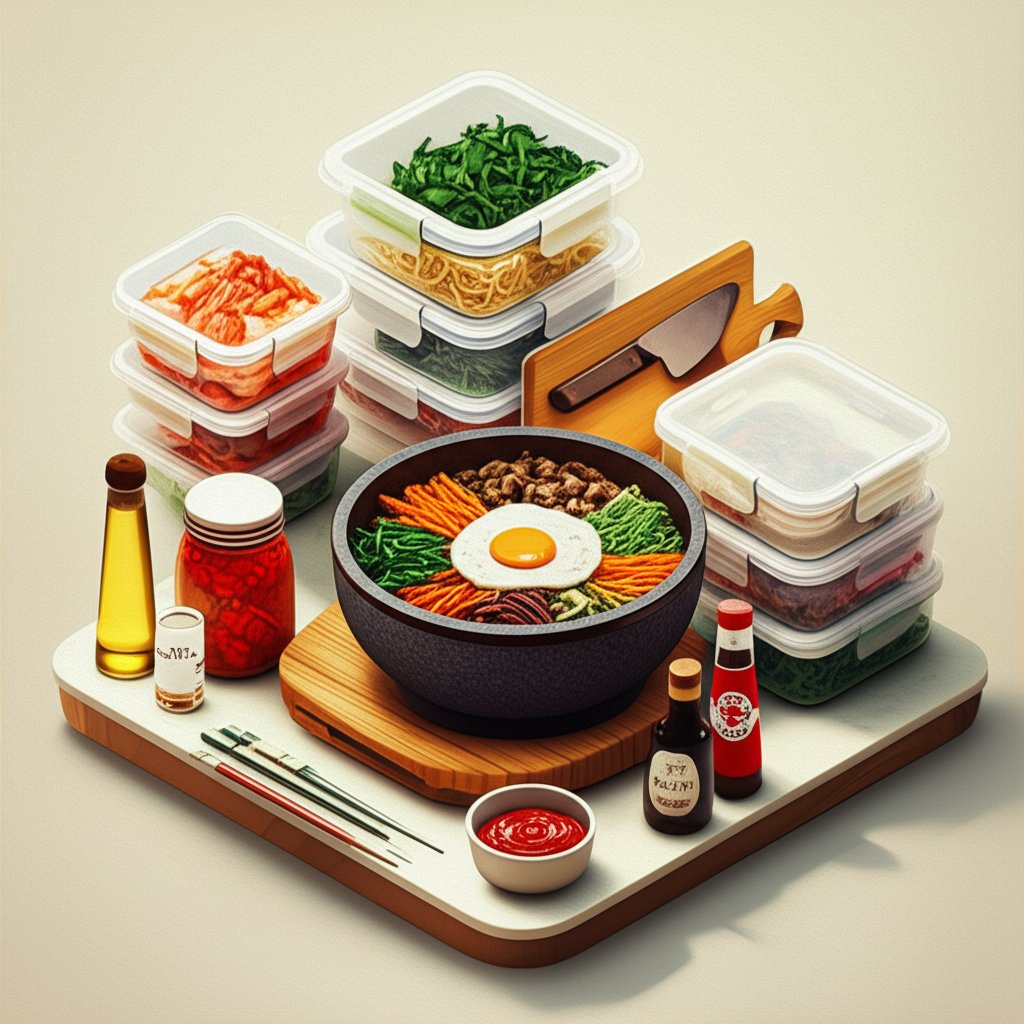
Some Korean dishes are practically designed to be made in a large batch and frozen. This is the ultimate gift to your future, stressed-out self.
Meals Designed for the Freezer
The golden rule of freezing is to cool everything completely before packing it. Use freezer-safe bags (with the air pressed out) or airtight containers, and always label with the dish and the date.
Freezer-Friendly Recipe: Kimchi Fried Rice Base
This recipe is a fantastic way to use up older, more sour kimchi, which has the best flavor for cooking.
- Ingredients:
- 2 cups kimchi, chopped, plus 3 tbsp of its juice
- 2 cups cooked, day-old rice
- 1 tbsp gochugaru (Korean chili flakes)
- 1 tbsp sugar
- 1 tbsp soy sauce
- 2 tbsp sesame oil
- 3 tbsp cooking oil
- Instructions:
- In a bowl, mix the chopped kimchi with the gochugaru, sugar, and soy sauce.
- Heat the cooking oil in a large skillet or wok over medium-high heat. Add the seasoned kimchi and cook, stirring, for about 2-3 minutes until fragrant.
- Add the rice to the skillet, breaking it up with your spoon. Stir-fry, mixing everything thoroughly, for about 4-5 minutes.
- Turn off the heat and stir in the sesame oil and kimchi juice.
- Spread the fried rice on a baking sheet to cool completely. Once cool, portion into freezer bags.
- To Reheat: You can microwave it directly from frozen (3-4 minutes, stirring halfway) or thaw and pan-fry. It’s perfect on its own or as a base for adding bacon, spam, or a fried egg.
Other fantastic freezer candidates include mandu (dumplings) and savory pancakes like kimchi-jeon or pajeon (scallion pancakes). Freeze them in a single layer on a baking sheet before transferring to a bag to prevent sticking.
Quick Answers to Common Korean Meal Prep Questions
Q: Won’t my food get boring eating the same thing all week?
A: That’s the beauty of the banchan system! While your main protein might be consistent for a few days, having three to four different side dishes to choose from completely changes the meal’s overall flavor profile and texture. One day your meal is savory and earthy with spinach, the next it’s tangy and spicy with kimchi and pickled radish.
Q: How do I keep my prepped vegetables from getting soggy?
A: For blanched vegetables like spinach (sigeumchi-namul), the key is to gently but firmly squeeze out as much water as possible after blanching and rinsing. This prevents them from becoming watery in the fridge. For cucumber salads, salting the cucumbers for 15-20 minutes first draws out excess moisture before you rinse and dress them.
Q: Do I need to shop at a Korean grocery store?
A: For the most authentic and best-tasting results, a trip to a Korean or well-stocked Asian market is highly recommended. Foundational ingredients like gochujang (fermented chili paste), doenjang (fermented soybean paste), gochugaru (chili flakes), and good-quality sesame oil are non-negotiable. Many large US supermarkets now have decent international aisles, but the variety and quality at a specialty store will be far superior.
Q: How long do homemade banchan last in the fridge?
A: It depends on the type. Freshly made namul (seasoned vegetables) are best consumed within 3 days. Braised or simmered dishes (jorim) and stir-fries (bokkeum) can easily last 5-7 days. Pickled and fermented items like kimchi can last for months, developing deeper flavor over time.
Your First Korean Meal Prep: A Simple Action Plan
Feeling inspired? Don’t get overwhelmed. Start small and build from there. Here is your simple plan for this week.
- Pick Your Protein & Marinade: Grab some thinly sliced pork or chicken. Mix up the simple bulgogi-style marinade mentioned above and let the meat soak up that flavor.
- Cook Your Rice: Make enough rice for at least three meals. Let it cool and store it in the fridge.
- Make Two Easy Banchan: Start with seasoned spinach (sigeumchi-namul)—it takes less than 10 minutes. Then try a simple stir-fried fish cake (eomuk-bokkeum), another 10-minute wonder.
- Assemble and Enjoy: For your first meal, simply pan-fry some of the marinated meat, heat up your rice, and serve it with a scoop of each banchan.
That’s it. You’ve just executed a successful Korean meal prep. By embracing this flexible, component-based approach, you’ll find your weekdays are not only easier but also infinitely more delicious.

- Steel Containers for Food Offer Versatile and Fresh Everyday Storage - March 4, 2026
- Metal Meal Prep Containers Are a Lasting Investment for Everyday Use - March 3, 2026
- Healthy Meal Plans for Busy Professionals to Conquer Your Week - March 2, 2026