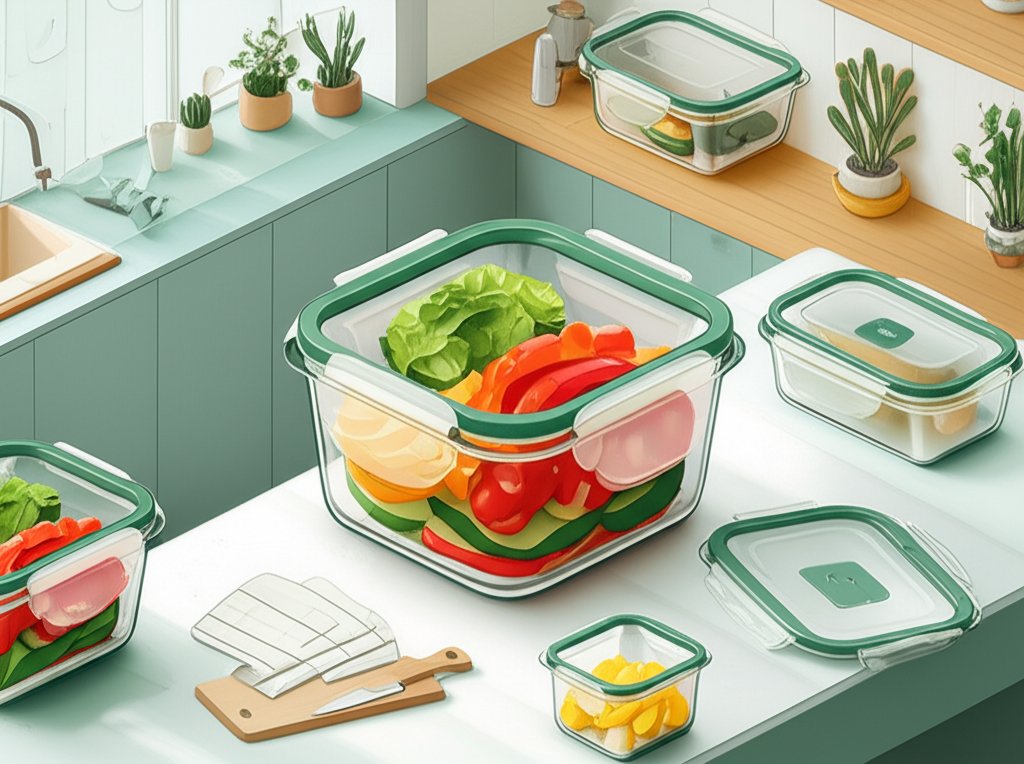
Warped plastic lids that no longer snap shut. That faint, permanent stain from last week’s tomato sauce. The lingering scent of garlic that just won’t wash out. If this sounds familiar, you’ve hit the limits of plastic food storage. Investing in a set of glass lid storage containers isn’t just an upgrade; it’s a completely different approach to keeping food pure, fresh, and ready for anything—from the freezer’s chill to the oven’s heat.
These containers offer a seamless, non-reactive environment for your meals. By pairing a durable glass base with a crystal-clear glass lid, you eliminate the primary point of failure and chemical concern found in most food storage: the plastic top. It’s the closest you can get to a completely pure, long-lasting solution.
At a Glance: What You’ll Learn
- The Purity Advantage: Why a glass-on-glass seal is superior for preventing stains, odors, and chemical leaching.
- Two Types of Lids: The critical difference between oven-safe borosilicate lids and impact-resistant tempered glass lids.
- Anatomy of a Perfect Seal: How silicone gaskets and locking tabs work together to create a truly leak-proof system.
- Safe Handling Practices: Master the dos and don’ts of moving containers between temperature extremes to ensure longevity.
- Glass vs. Plastic Lids: A clear, practical comparison to help you decide which lid type best fits your lifestyle.
Beyond the Base: The Purity of an All-Glass System
We often focus on the glass base of a storage container, but the lid is where most problems start. Plastic lids can absorb stubborn odors from curries or soups, develop unsightly stains from sauces, and warp in the dishwasher. Over time, scratches can harbor bacteria, and concerns about chemicals like BPA and PFAS are always top of mind, especially when reheating food.
A glass lid storage container solves these issues at the source.
- Stain and Odor Proof: Glass is non-porous. It will not hold onto the color of your bolognese or the scent of your leftover salmon. A simple wash restores it to a pristine, like-new condition every time.
- Chemical-Free Contact: With a glass lid, your food only touches glass, even when it’s filled to the brim. This provides peace of mind that no unwanted chemicals are leaching into your meal, particularly when microwaving.
- Unmatched Durability and Clarity: Unlike plastic that clouds, scratches, and warps, a glass lid maintains its crystal clarity for years. You can easily see what’s inside without opening the container, and it will never lose its shape or sealing ability due to heat.
Think of it as the ultimate “what you see is what you get” storage. The food you packed stays pure, and the container itself remains untarnished, meal after meal.
Understanding the Glass on Top: Borosilicate vs. Tempered Lids
While the container base is almost always made from durable borosilicate glass, the material used for the lid can vary. This is a crucial detail that dictates how you can use the container. Understanding the properties of that base material is foundational; our complete Borosilicate glass storage guide offers a deep dive into why it’s the gold standard for thermal performance.
Here, we’ll focus on the two main types of glass used for the lids themselves: borosilicate and tempered.
Borosilicate Lids: The Oven-Safe Champion
Borosilicate glass is engineered to withstand rapid and extreme temperature changes, a property known as thermal shock resistance. A container with a borosilicate lid is a true all-in-one workhorse.
- Key Feature: Can typically go directly from the refrigerator or freezer into a preheated oven (always without the plastic locking clips).
- Best For: People who want to bake, reheat, and serve in the same dish. Think shepherd’s pie, lasagna, or baked oatmeal that you can prep, store, cook, and bring to the table without changing containers.
- Consideration: This is a premium feature and often comes at a higher price point. It’s less common than tempered glass lids.
Tempered Lids: The Durable Day-to-Day Choice
Tempered glass is created by heating and then rapidly cooling the glass, which makes it much stronger and more shatter-resistant than standard glass. If dropped, it’s designed to break into small, dull-edged pieces rather than sharp shards.
- Key Feature: Excellent durability against drops, bumps, and impacts.
- Best For: Everyday fridge storage, pantry organization, and packing lunches where the primary risk is physical damage, not extreme heat.
- Consideration: Tempered glass is not built for thermal shock. It should never be put in the oven and should be allowed to come to room temperature before being placed in the freezer or microwave to avoid cracking.
| Feature | Borosilicate Lid | Tempered Glass Lid |
| :— | :— | :— |
| Oven Safe | Yes (check manufacturer specs) | No |
| Thermal Shock Resistance | Excellent | Poor |
| Impact Resistance | Good | Excellent |
| Primary Use Case | Cook-and-store meal prep | General storage and transport |
What to Look For: Deconstructing the Ideal Glass Lid Container
A great system is more than just two pieces of glass. The small details in its design determine whether it’s a joy to use or a daily frustration.
The Seal is Everything: Silicone Gaskets and Leak-Proof Design
The magic of a leak-proof seal lies in the interplay between the lid, a silicone gasket, and locking tabs. The best glass lid storage containers feature a thick, removable silicone gasket that fits snugly into a channel on the underside of the lid.
When you press the lid down and engage the (usually plastic) four-point locking tabs, the tabs apply even pressure, compressing the silicone gasket to create an airtight and watertight seal.
Pro Tip: Look for gaskets that are easy to remove and re-insert. This is non-negotiable for proper cleaning. Trapped moisture and food particles under the gasket are a prime spot for mold growth.
Smart Features: Vents, Handles, and Stackability
Beyond the seal, thoughtful design elements elevate a container from good to great.
- Microwave Vents: Some lids, like those on certain Bentgo models, feature a small silicone “VentSmart” plug. You can pop this open before microwaving, which allows steam to escape. This prevents dangerous pressure buildup and eliminates messy splatters without you having to remove the lid entirely.
- Ergonomic Lids: Glass can be slippery and heavy. Look for lids with slightly raised edges or indented handles, making them easier to lift, especially when they are hot or cold.
- Stackable Design: Efficient storage is key. The best containers have lids and bases that nest securely. The lid should have a slight ridge or indentation that matches the bottom of another container, preventing stacks from sliding around in your fridge or cabinet.
Your Day-to-Day Guide for Glass Lid Storage

Owning high-quality glass lid containers means adopting a few simple habits to ensure they last a lifetime.
From Freezer to Oven to Table: A Thermal Shock Primer
This is the most critical area for safe handling. “Thermal shock” occurs when one part of the glass expands or contracts much faster than another, causing stress that can lead to cracks or shattering.
Step-by-Step for Safe Oven Use (with Borosilicate Lids Only):
- Check Your Gear: Confirm that both the base and the lid are explicitly labeled “oven-safe.” If only the base is, you must leave the lid off.
- Remove Locking Tabs: The plastic locking mechanisms are never oven-safe. If they are part of the lid itself, the lid cannot go in the oven.
- Go From Cool, Not Frozen: While borosilicate glass can handle dramatic temperature shifts, it’s best practice to let a dish from the freezer thaw in the refrigerator overnight before placing it in the oven. This reduces the risk of stress.
- Always Preheat the Oven: Never place a glass dish in a cold oven and let it heat up. Put it in a fully preheated oven to ensure even heat exposure.
- Cool Down Gracefully: When removing a hot dish from the oven, place it on a dry towel, potholder, or cooling rack. Never place it on a wet or cold surface like a granite countertop or in the sink.
Cleaning and Maintenance to Prevent Wear and Tear
- Disassemble for Dishwashing: Always remove the silicone gasket from the lid before placing both parts in the dishwasher (usually on the top rack). This ensures a thorough cleaning and allows all parts to dry completely.
- Inspect Before Use: Before filling a container, run your finger along the rim of the base and the edges of the lid. If you feel any small chips or cracks, it’s safest to recycle the container. A small imperfection can become a major failure point under temperature stress.
- Soak for Stuck-On Food: If food is baked on, avoid using abrasive steel wool. Simply fill the container with hot, soapy water and let it soak. The non-porous surface will release the food easily.
Your Questions, Answered
Here are a few common questions and misconceptions about using glass lid storage containers.
Q: Are all glass lid storage containers oven-safe?
A: No, this is the most common misconception. The borosilicate glass base is almost always oven-safe to very high temperatures (e.g., 950°F / 510°C). However, the lid is only oven-safe if it is also made of borosilicate glass. Tempered glass lids are not oven-safe and can shatter from the heat.
Q: Can I microwave with the glass lid on?
A: Yes, with a caveat. If the lid has a built-in vent, open it before microwaving. If it does not, you must rest the lid loosely on top without latching it. Microwaving a fully sealed, unvented container is dangerous, as steam pressure can build up and cause the lid to burst off or the container to break.
Q: Why is my glass lid so hard to open sometimes?
A: This is usually caused by a vacuum. If you seal hot food in the container, the air inside will cool and contract, sucking the lid down tightly. To release it, try running the edge of the seal under warm water or gently prying open the vent plug if it has one.
Q: Are glass lid containers truly 100% plastic-free?
A: Not usually. While the food-contact surfaces are glass, the locking tabs that secure the lid are almost always made of BPA-free plastic. The silicone gasket is also a synthetic polymer, not plastic, but not glass either. The primary benefit comes from eliminating the large plastic lid surface that touches your food.
The Bottom Line: Upgrading to Clarity and Purity
Switching to glass lid storage containers is a deliberate choice for a cleaner, more durable, and more versatile kitchen. You eliminate the core frustrations of plastic—the warping, staining, and odor retention—and gain a system that can take you from meal prep to the oven to the dinner table with elegance and ease.
Your decision comes down to your primary use case.
- If you frequently bake and reheat meals in their storage containers: Prioritize a set with certified oven-safe borosilicate lids. The upfront investment pays off in convenience and functionality.
- If your main need is for pristine fridge storage and taking lunches to work: A set with durable tempered glass lids will provide excellent clarity, impact resistance, and purity for everyday use.
Either way, you’re investing in a system that respects your food and is built to last. It’s a small change that delivers a significant and lasting improvement to how you store, serve, and enjoy your meals.

- Meal Containers with Dividers Keep Foods Separate and Fresh - March 6, 2026
- Tupperware with Dividers Makes Entertaining Easy and Organized - March 5, 2026
- Steel Containers for Food Offer Versatile and Fresh Everyday Storage - March 4, 2026