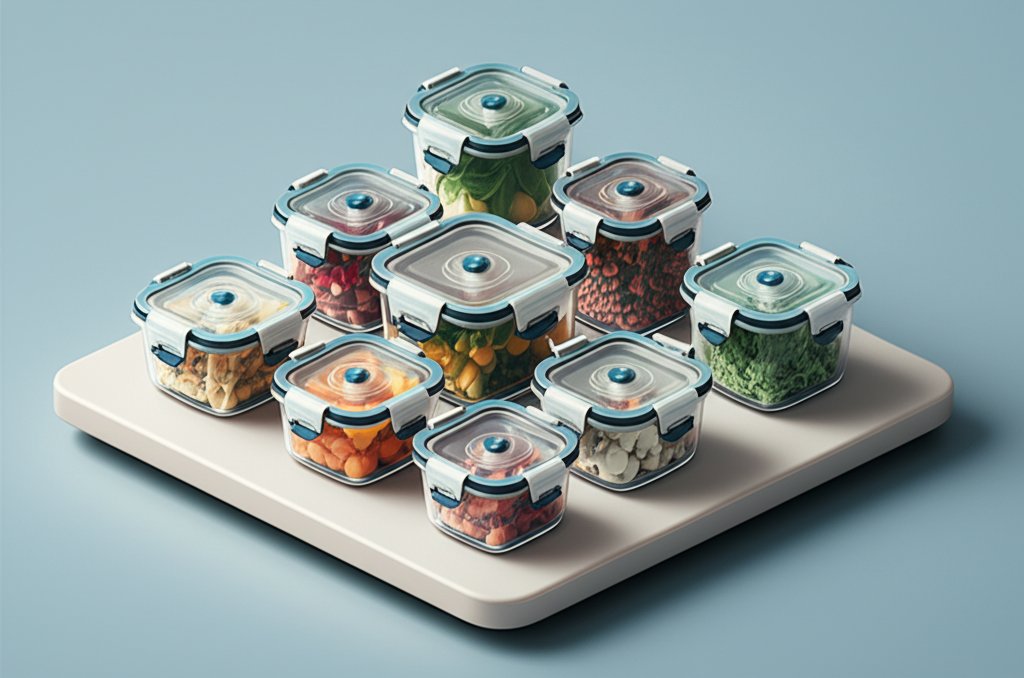
There’s nothing more frustrating than carefully packing a lunch only to find a soupy mess in your bag by midday. That’s the moment of truth when you realize your food container’s “seal” was more of a suggestion than a guarantee. For anyone tired of spills, stains, and spoiled food, high-quality glass food containers with locking lids are a game-changer, offering a truly reliable solution for keeping meals contained and fresh.
At a Glance: Your Takeaways
- Discover the two key components of a genuinely leak-proof seal: the silicone gasket and the four-sided locking mechanism.
- Learn the correct way to clean and care for your lids and gaskets to prevent warping, mold, and premature failure.
- Understand why the type of glass—borosilicate vs. soda-lime—is just as crucial as the lid for durability and safety.
- Get a simple, step-by-step guide for testing your containers at home to ensure they’re still 100% leak-proof.
- Find clear, expert answers to common questions about microwave safety, staining, and proper storage.
Beyond the ‘Snap’: What Makes a Locking Lid Airtight and Leak-Proof
The satisfying click of a locking lid is reassuring, but the real magic is in the engineering behind it. Unlike a simple press-on lid that can pop off when jostled or when pressure builds from temperature changes, a locking system creates a powerful and consistent seal. It’s a combination of two critical elements working in perfect harmony.
The Unsung Hero: The Silicone Gasket
Tucked into a groove on the underside of the lid is a thin, flexible ring—the silicone gasket. This is the single most important part of the leak-proof equation. When you press the lid down, the gasket compresses against the smooth glass rim, creating a formidable barrier.
Think of it like the weatherstripping around a car door. It fills every microscopic gap to block air and moisture from getting in or out. A well-designed gasket is:
- Made of Food-Grade Silicone: It’s inert, BPA-free, and won’t leach chemicals into your food.
- Removable: This is non-negotiable for proper hygiene. Food particles and moisture can get trapped underneath, leading to mold and unpleasant odors. Being able to pop it out for a thorough cleaning is essential.
- Precisely Shaped: It’s engineered to fit its specific lid channel perfectly, ensuring it doesn’t stretch or fall out easily but provides consistent pressure along the entire rim.
The Four-Sided Locking System
The hinged flaps, or “wings,” on each side of the lid are the force-multipliers. Their job is to apply strong, even pressure to the lid, which in turn compresses the silicone gasket.
This four-sided approach is far superior to lids with only two locks or a simple friction fit. By clamping down on all four sides, the system prevents any one area from lifting.
Case Snippet: Imagine you’ve packed a vibrant salad with a vinaigrette dressing. You toss it in your bag for work. A container with a press-on lid is a gamble; one good bump could pop a corner open, leaking oily dressing everywhere. With a four-sided locking lid, each flap acts as a security checkpoint, holding the seal firm no matter how much your bag gets jostled on the commute.
The Foundation for a Perfect Seal: High-Quality Borosilicate Glass

A brilliant lid is only half the story. The container itself must provide a perfect surface for the gasket to seal against. This is where the type of glass becomes critical.
The container itself needs to be as robust as the lid. High-quality glass, particularly borosilicate, resists warping and cracking from dramatic temperature swings. This resilience is a core component of overall Borosilicate glass durability and safety, ensuring the rim where the gasket seals remains perfectly flat and true, from freezer to microwave.
Unlike standard soda-lime glass (the kind used for drinking glasses), borosilicate glass is engineered for thermal shock resistance. This means you can take a container from the fridge and place it in a preheated oven (without the lid) with a much lower risk of it shattering. This durability ensures the container’s rim—the critical sealing surface—won’t develop micro-cracks or warp over time, which would compromise the lid’s ability to form a perfect seal.
Furthermore, borosilicate glass is non-porous. It won’t absorb food odors, flavors, or stains. Your container won’t smell like last night’s curry when you use it for today’s fruit salad, guaranteeing a fresh, clean taste every time.
A Practical Playbook for Everyday Use
Owning a great set of glass food containers with locking lids is the first step. Using and caring for them correctly will ensure they perform flawlessly for years.
The Right Way to Seal for Maximum Freshness
It’s more than just snapping the locks. Following these steps creates a slight vacuum effect for an even better seal.
- Start Clean and Dry: Wipe the glass rim and the silicone gasket to remove any food particles or moisture. A single crumb can break the seal.
- Place It Squarely: Set the lid evenly on top of the container. Don’t try to attach it at an angle.
- Press and Expel Air: Gently press down on the center of the lid with your palm. You might hear a small “whoosh” as excess air is pushed out.
- Lock Opposing Sides: While still applying light pressure, snap the two short-side flaps shut simultaneously. Then, snap the two long-side flaps. This distributes the pressure evenly.
A Cleaning Regimen That Prevents Gasket Gunk and Lid Warping
Proper cleaning is the key to longevity and hygiene. A dirty gasket is the number one cause of a failing seal.
| Component | Best Cleaning Practice |
|---|---|
| Glass Base | Dishwasher safe. Can be washed at high temperatures without issue. Handles tough, baked-on food easily. |
| Plastic Lid | Top-rack dishwasher safe is standard. Avoid high-heat “sanitize” or “steam” dry cycles, which can cause the plastic to warp over time, weakening the seal. Handwashing is always the gentlest method. |
| Silicone Gasket | Remove for every wash. Use a thin, blunt object like a toothpick or the handle of a teaspoon to gently pry it out. Wash by hand or place it in the dishwasher’s utensil basket. Ensure it is 100% dry before re-inserting it into the lid’s groove. |
Smart Storage: Stacking and Nesting for a Tidy Kitchen
These container sets are designed for modern convenience. The research on products from brands like Bakken shows that a typical 16-piece set (8 containers, 8 lids) includes a variety of stackable shapes and sizes, from a 10.5oz square perfect for snacks to a 35.2oz rectangle ideal for a main course.
To maximize space and the life of your lids:
- Stack bases with a piece of paper towel between each to prevent scuffing.
- Nest smaller containers inside larger ones of the same shape.
- Store lids separately or place them lightly on top of their bases without snapping them shut. Storing them locked can keep the gasket compressed for long periods, causing it to lose its elasticity faster.
Is Your Container Still Leak-Proof? A Quick Home Test

Over time, gaskets can wear out and lids can get damaged. Don’t wait for a spill to find out your seal has failed. Perform this simple test every few months.
- Fill and Color: Fill a container about halfway with water. Add a drop of dark food coloring to make any potential leaks highly visible.
- Seal It Tight: Secure the lid using the proper technique described earlier.
- Shake Vigorously: Hold the container over a sink and shake it firmly in all directions—up and down, side to side.
- The Pressure Test: Turn it completely upside down and give it a gentle squeeze.
- The Patience Test: Lay the container on its side on a clean paper towel and leave it for 10-15 minutes.
If your paper towel is dry and you see no colored droplets after these steps, your seal is solid. If you see a leak, it’s time to troubleshoot. Most often, the culprit is a dirty or improperly seated gasket. Remove it, clean both the gasket and the lid’s groove, reseat it, and test again.
Quick Questions, Expert Answers
Q: Can I put the plastic locking lids in the microwave or oven?
A: Never in the oven. The high, dry heat will melt or warp the plastic lid and destroy the seal. For the microwave, it depends. Most lids are microwave-safe for reheating, but you must unlatch the flaps to allow steam to vent. Keeping it latched can cause a dangerous pressure buildup. Always check the manufacturer’s guidelines; when in doubt, use a paper towel to cover the food instead.
Q: Are all glass food containers with locking lids made from borosilicate glass?
A: No, and it’s a critical distinction. Less expensive sets often use tempered soda-lime glass. While stronger than regular glass, it does not have the same elite thermal shock resistance as borosilicate. This makes it more vulnerable to shattering when moving between extreme temperatures (e.g., freezer to microwave). For maximum safety and versatility, borosilicate is the gold standard.
Q: Why is my lid’s gasket stained orange after storing spaghetti sauce?
A: The borosilicate glass base is completely non-porous and stain-proof, but the food-grade silicone gasket is slightly porous. It can absorb pigments from potent foods like tomato, curry, or turmeric. This is usually just a cosmetic issue and doesn’t affect performance. To minimize it, rinse the gasket immediately after use. For stubborn stains, making a paste of baking soda and water and gently scrubbing the gasket can help.
Q: What does “BPA-free” on the lid actually mean?
A: It certifies that the plastic and silicone components are made without Bisphenol A, an industrial chemical that has raised health concerns about its potential to seep into food. It is a fundamental safety feature you should always look for, ensuring peace of mind, especially when your containers hold food for your family.
Q: How do these containers contribute to sustainability?
A: Their primary benefit is reusability, which drastically cuts down on single-use plastics from takeout containers and plastic wrap. Beyond that, some brands are taking extra steps. For example, products with certifications from organizations like ClimeCo show a commitment to sustainability. This means the company has measured the carbon footprint of the product’s entire lifecycle—from raw materials and manufacturing to shipping—and has taken steps to reduce and offset those emissions.
Your Next Step: Choosing the Right Set for Your Kitchen
Making the switch to glass food containers with locking lids is an investment in a more organized, less wasteful, and far more reliable food storage system. To pick the perfect set, think about how you eat.
- For the Daily Meal Prepper: You’ll benefit most from a set with multiple medium-sized (20-35oz) rectangular containers. They pack efficiently into lunch bags and are perfectly portioned for individual meals.
- For the Leftover Lover: A variety pack is your best bet. Look for a mix of shapes and sizes, from small 10oz squares for sauces or sides to large 50oz+ containers for storing a whole roast chicken or a big batch of soup.
- For the Batch Freezer: Prioritize sets that explicitly state they are made from borosilicate glass. Its ability to handle the extreme cold of the freezer without becoming brittle is key for long-term storage and safe reheating.
Stop tolerating leaks and flimsy lids. A quality set of glass containers isn’t just about storage; it’s about confidence. It’s the confidence of knowing your lunch is secure, your leftovers are fresh, and your food is safe. Choose the set that fits your life, and enjoy the simple, profound satisfaction of a perfect seal.

- Master Vegan Freezer Meal Prep to Simplify Your Busy Schedule - June 18, 2026
- Vegan Freezer Cooking Simplifies Healthy Meals on Busy Nights - June 17, 2026
- Vegetarian Freezer Recipes for Effortless Meal Prep and Delicious Dinners - June 16, 2026