That lingering tomato sauce stain on your plastic container isn’t just an eyesore—it’s a reminder of the microscopic baggage our food storage can carry. We’ve all been there: warped lids, strange smells that won’t wash out, and a nagging question about what’s leaching into our meals. Making the switch to stainless steel food storage isn’t just about a cleaner, more organized kitchen; it’s a decisive step toward healthier eating and a lighter environmental footprint.
This isn’t about chasing a trend. It’s about fundamentally changing your relationship with how you store the food that fuels you and your family, moving from disposable convenience to lasting quality.
At a Glance: Your Takeaways
- Protect Your Health: Understand how food-grade stainless steel prevents exposure to harmful chemicals like BPA, PFAS, and microplastics that can leach from plastic containers.
- Make a Sustainable Choice: Discover why steel’s infinite recyclability makes it a powerful eco-friendly alternative to single-use and short-lived plastics.
- Unlock Practical Versatility: Learn which types of stainless steel containers—from bento boxes to insulated jars—are best for your specific meal prep needs.
- Master the Care: Get simple, effective tips for using and maintaining your containers to ensure they last a lifetime.
- Invest with Confidence: See why the upfront cost of stainless steel is a long-term investment in durability, health, and a zero-waste lifestyle.
The Hidden Health Costs of Plastic Containers
For decades, plastic has been the default for food storage. It’s cheap and lightweight, but that convenience comes with a cost that isn’t on the price tag. Plastic containers, even those labeled “BPA-free,” can be a source of chemical exposure.
The core issue is leaching. Over time, and especially when exposed to heat (like in a microwave or dishwasher) or acidic foods, plastics can release synthetic chemicals into your food. Studies have shown that BPA (bisphenol-A), a known endocrine disruptor, can leach from plastic 55 times faster than from inert materials like steel. This means chemicals that can interfere with your body’s hormones are getting a direct pathway into your meals.
Food-grade stainless steel, typically 304 (18/8) or 316 grade, is fundamentally different. It’s a stable, non-reactive alloy. Think of it like a vault for your food. It has no plasticizers, dyes, or synthetic linings, so there’s nothing to transfer. This means:
- No BPA, PFAS, or Phthalates: Your food remains pure, free from endocrine-disrupting chemicals.
- No Microplastics: You avoid ingesting tiny plastic particles that shed from worn or heated containers.
- No Ghost Flavors: Steel doesn’t absorb odors or flavors from past meals, so yesterday’s curry won’t haunt today’s fruit salad.
By choosing stainless steel, you’re not just organizing your fridge—you’re creating a clean barrier between your food and unwanted chemicals.
An Eco-Friendly Choice That Actually Lasts

The environmental argument for stainless steel food storage is just as compelling. We’ve all seen the staggering statistics about plastic pollution. The fact is, a staggering 91% of all plastic is never recycled, and it can take up to 1,000 years to decompose in a landfill or ocean.
Every time a plastic container cracks, warps, or becomes permanently stained, it enters that waste stream. Stainless steel breaks this cycle of “buy, use, and toss.”
- Built for a Lifetime: A well-made steel container can withstand drops, dings, and countless cycles through the dishwasher without degrading. It won’t become brittle or cloudy over time.
- Infinitely Recyclable: If a steel container ever reaches the end of its very long life, it can be melted down and reformed into a new high-quality product without any loss of its original properties. This “closed-loop” recycling process is far more efficient than the “downcycling” of most plastics.
Making this switch is a practical way to reduce your household waste. You stop contributing to the mountain of discarded plastic and invest in a solution that’s designed for reuse, not refusal. When you start thinking about the different ways to organize your meal prep, having a durable, reliable system is key. Our comprehensive Stainless containers food storage guide provides a fantastic overview of all the options available to build your perfect set.
Your Practical Playbook for Stainless Steel Success

Ready to make the switch? The key is matching the right container to the right task. The world of stainless steel food storage is rich with options designed for specific needs.
For Daily Lunches: The Modern Bento Box
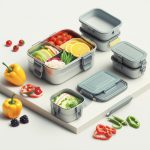
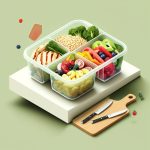
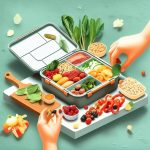
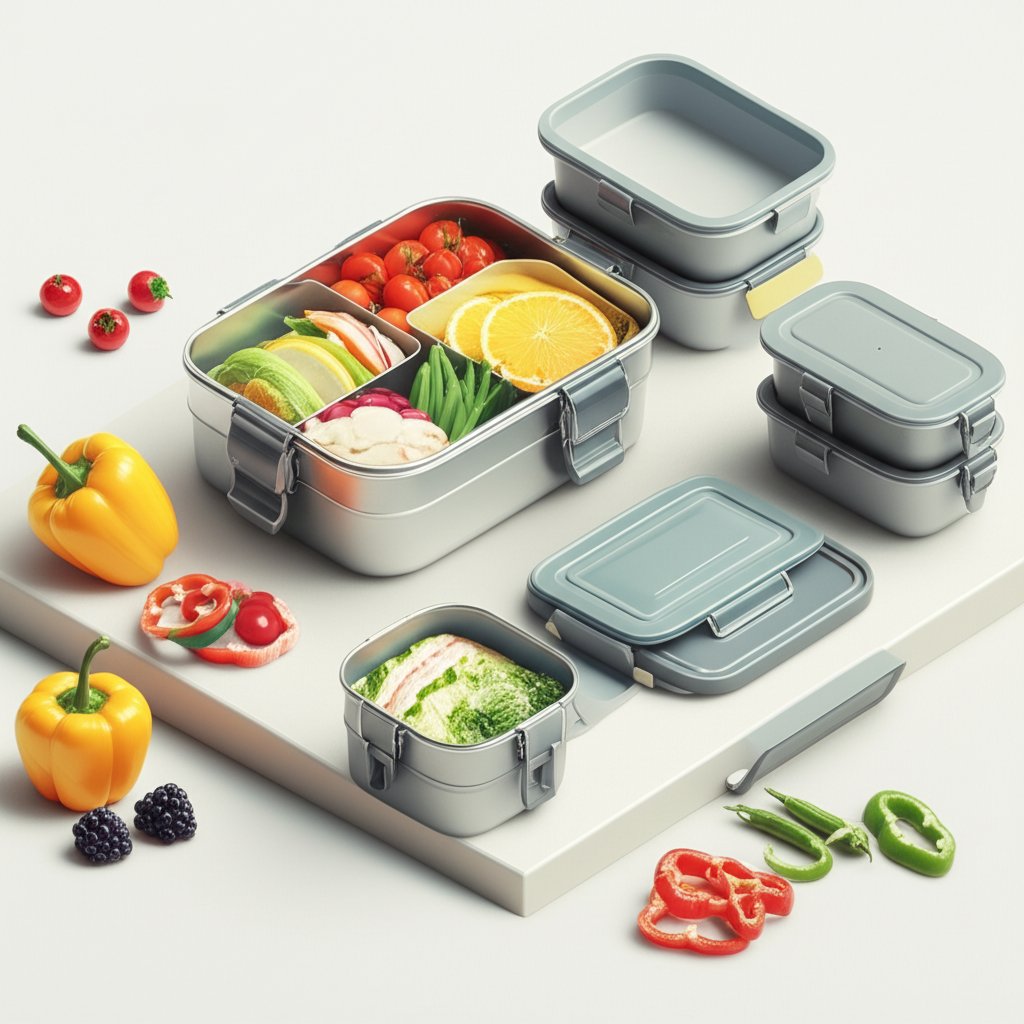
The stainless steel bento box is the ultimate workhorse for packed lunches. With built-in dividers, it keeps your main course, side, and snack separate and pristine. No more soggy sandwiches or mixed-up flavors.
- Scenario: You’re packing a lunch with grilled chicken, a quinoa salad, and some fresh berries. A three-compartment bento box keeps the wet salad from making the chicken soggy and protects the delicate berries from being crushed.
- What to Look For: Lids with secure locking clips and a silicone seal are essential for preventing leaks, especially if you’re carrying dressings or sauces.
For Weekend Meal Prepping: Stackable & Nesting Sets
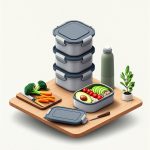
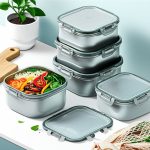
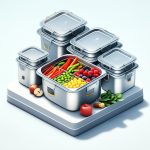
If you cook in batches on Sunday for the week ahead, a set of stackable containers is a game-changer for fridge organization. They create neat, stable towers, maximizing vertical space.
- Scenario: You’ve prepped roasted vegetables, marinated tofu, and cooked brown rice for three days’ worth of meals. A set of uniform, stackable containers keeps everything orderly and easy to grab.
- What to Look For: Nesting sets are a great space-saver for storage when not in use. Look for sets with interchangeable lids to reduce kitchen clutter.
| Feature Comparison for Meal Prep Sets | Benefit | Best For |
| :— | :— | :— |
| Stackable Design | Maximizes fridge space, keeps things organized. | Batch cooking, family meal prep. |
| Nesting Design | Saves significant cupboard space when empty. | Kitchens with limited storage. |
| Oven-Safe Base | Allows you to reheat food directly in the container. | “Cook once, eat twice” meals. |
| Freezer-Safe | Perfect for long-term storage of soups, stews, etc. | Storing leftovers, bulk cooking. |
For Soups, Yogurts, and Hot Meals: The Insulated Food Jar
An insulated, vacuum-sealed food jar is your best friend for taking hot or cold liquids on the go. Double-wall vacuum insulation can keep soup steaming hot or yogurt perfectly chilled for hours.
- Scenario: You want to pack a hot chili for lunch on a cold day. Pre-heat the jar by filling it with boiling water for 5 minutes, then empty it and add your hot chili. It will still be wonderfully warm by lunchtime.
- What to Look For: A wide mouth makes for easy filling, eating, and cleaning. A high-quality, leak-proof lid is non-negotiable.
For Dry Goods and Snacks: Airtight Canisters
From coffee beans to kids’ snacks, stainless steel canisters provide an airtight, light-proof seal that preserves freshness far better than a simple bag clip.
- Scenario: You buy your favorite coffee in bulk. Storing the beans in an airtight stainless steel canister protects them from oxygen and light, preserving the rich flavor and aroma for weeks.
- What to Look For: Canisters with a clamping lid and silicone gasket offer the most secure, airtight seal for maximum freshness.
Clearing Up Common Questions About Stainless Steel Food Storage
As with any new tool, there are a few common questions that come up. Let’s tackle them head-on.
Q: Can you put stainless steel food storage in the microwave?
A: No, never put any metal in a microwave. It can cause dangerous sparks and damage the appliance. This is the single biggest habit change when switching from plastic. Instead, embrace safer reheating methods: transfer food to a microwave-safe plate, or better yet, gently reheat it on the stovetop or in a toaster oven. Many stainless steel container bases (check the manufacturer’s instructions!) are oven-safe, allowing you to reheat food in the same dish you stored it in.
Q: Will my food taste like metal?
A: This is a common misconception. High-quality, food-grade stainless steel (like 304 or 316) is non-porous and non-reactive. It will not impart any taste or odor to your food. If you ever perceive a metallic taste, it’s often due to residue from manufacturing and can be solved with a one-time wash with vinegar and baking soda before first use.
Q: Are the lids also plastic-free and safe?
A: Most high-quality stainless steel containers come with lids made from food-grade silicone. Silicone is a stable, non-reactive polymer that is generally considered much safer than plastic. It contains no BPA or phthalates, is highly durable, and creates an excellent airtight and leak-proof seal. Some lids may have plastic clips, but the part that touches your food is almost always silicone.
Q: Stainless steel containers are more expensive. Are they really worth it?
A: Yes, the initial investment is higher, but the long-term value is undeniable. Consider it a “buy it once, use it for life” purchase. You’ll stop spending money replacing stained, warped, or cracked plastic containers every year. When you factor in the benefits to your health and the environment, the cost-per-use of a stainless steel container plummets over its lifetime, making it the more economical and responsible choice.
Your Quick-Start Decision Guide
Feeling ready to begin? Don’t get overwhelmed by the options. Start with the one change that will have the biggest impact on your daily routine.
- If you pack a lunch every day…
- Your first purchase: A single, high-quality stainless steel bento box with at least two dividers. This will immediately elevate your lunch game.
- If you are a dedicated weekend meal prepper…
- Your first purchase: A set of three to five medium-sized (24–32 oz) stackable containers. This gives you a solid foundation for portioning meals for the week ahead.
- If you love taking hot soup or a hearty stew for lunch…
- Your first purchase: A 16 oz insulated food jar. It’s a simple swap that delivers a much more satisfying meal experience.
- If you’re tired of stale snacks and coffee…
- Your first purchase: One or two airtight canisters for your most-used dry goods. You’ll notice the difference in freshness immediately.
Choosing stainless steel food storage is more than an organizational hack. It’s an intentional choice for purity, longevity, and sustainability. You’re not just buying a container; you’re investing in a healthier system for yourself and a cleaner planet for everyone.

- Stainless Steel Food Storage for Healthier, Eco-Friendly Meal Prep - February 27, 2026
- Stainless Food Containers Offer Durable Storage for Everyday Meals - February 26, 2026
- Stainless Steel Containers Offer Superior Food Preservation and Durability - February 25, 2026