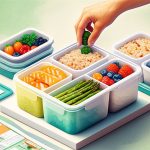
The sheer convenience of a plastic bento box is undeniable. Whether it’s a 20-pack of black-bottomed containers for a week of meal prepping or a brightly colored, kid-friendly box, plastic has become the default material for portable lunches. But as we look closer at our consumption habits, the lifecycle of that simple plastic bento—from its creation to its disposal—is raising critical questions about its true environmental cost.
This isn’t about shaming a practical choice. It’s about understanding the trade-offs and making an informed decision that aligns with both your lifestyle and your values.
At a Glance: What You’ll Learn
- The crucial difference between single-use and genuinely reusable plastic bento boxes.
- How to identify safer, more durable plastics by their recycling codes (like #5 PP).
- The real story of a plastic container’s journey, from production to the recycling bin or landfill.
- Practical strategies to drastically extend the life of your reusable plastic containers.
- A clear framework to decide if a plastic bento is the most sustainable option for you.
The Two Faces of Plastic: Reusable vs. Disposable
The term “plastic bento” covers a massive range of products, from flimsy takeout containers to robust, long-lasting lunch boxes. The most significant sustainability factor isn’t the material itself, but how we are intended to use it. Understanding this distinction is the first step toward making a more responsible choice.
The Allure of Disposables and Their Hidden Costs
Walk into any big-box store or search online, and you’ll find stacks of “disposable” or “meal prep” bento boxes, often sold in bulk. They are cheap, lightweight, and offer a tantalizingly easy solution for planning a week’s worth of meals. The problem is, their design prioritizes low cost over longevity.
These containers are typically made from thin #1 PET or #6 PS plastic. While technically recyclable in some areas, they are often treated as single-use items. They crack easily, warp in the dishwasher, and can stain permanently from a single serving of tomato sauce.
Case Snippet: A fitness enthusiast buys a 50-pack of disposable bento boxes for their weekly meal prep. They diligently rinse and place them in their recycling bin each week. However, their local recycling facility doesn’t accept that specific type of black plastic container because optical sorting machines can’t detect it. For months, their well-intentioned efforts have unfortunately led directly to the landfill.
This scenario highlights the gap between what is theoretically recyclable and what is actually recycled. The environmental cost of producing, shipping, and disposing of a container used only a handful of times is substantial.
The Promise of Reusability: Making Plastic Last
A genuinely reusable plastic bento is a different beast altogether. These are designed for the long haul, often crafted from thick, durable #5 Polypropylene (PP) or specialized copolyesters like Tritan. They are engineered to withstand hundreds of cycles in the dishwasher and microwave without degrading.
The key concept here is the “break-even point.” Every reusable item has an upfront environmental cost from manufacturing and transportation. A high-quality reusable plastic bento becomes the more sustainable option only after it has been used enough times to offset the impact of all the single-use containers it has replaced. While it is just one of many materials available, it represents a significant step up from disposables. To explore other options like stainless steel or glass, you can Find your ideal bento box and compare the pros and cons of each. The goal is to choose a container and commit to using it for years, not weeks.
Not All Plastics Are Created Equal: A Practical Guide
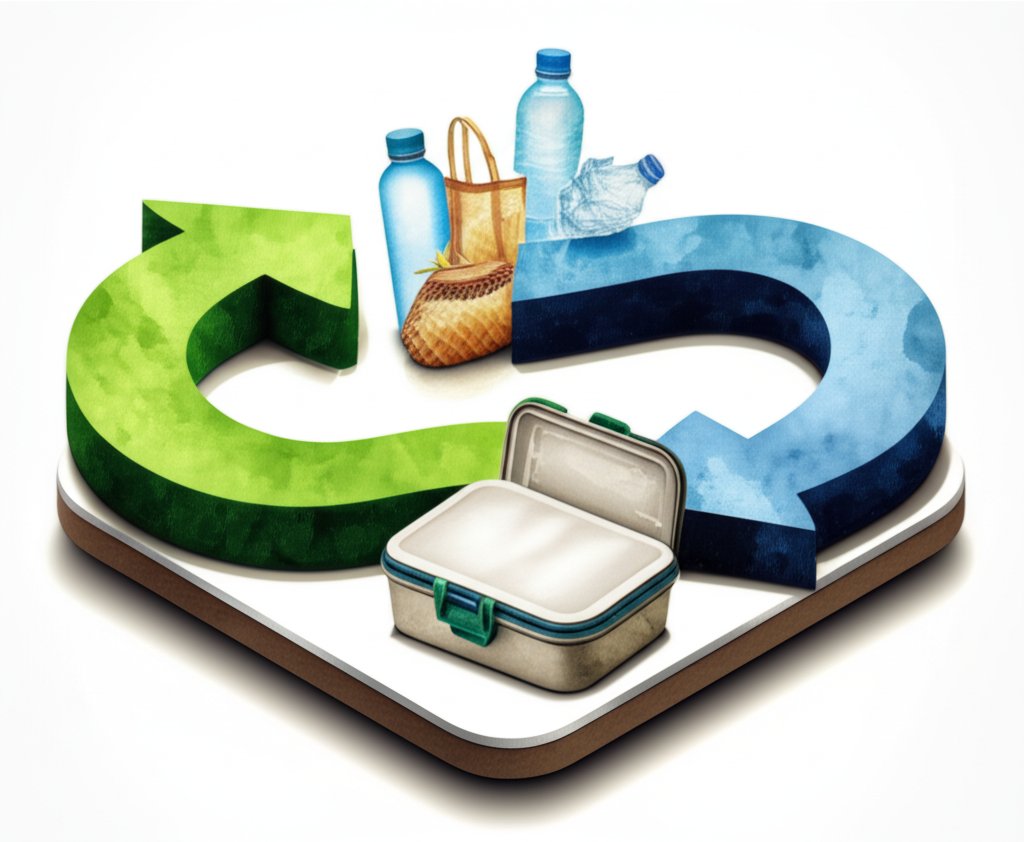
Flipping over a container to find a number inside a triangle of arrows can feel like deciphering a secret code. But understanding these symbols is crucial for choosing a safer, more durable plastic bento.
Decoding the Numbers: What Recycling Symbols Really Mean
That number is a Resin Identification Code, and it tells you what kind of plastic you’re holding. It is not a guarantee that the item is recyclable in your area.
Here’s a quick guide to plastics commonly used for bento boxes:
| Code | Plastic Name | Common Uses & Characteristics |
|---|---|---|
| #1 PETE/PET | Polyethylene Terephthalate | Mostly in disposable drink bottles and food trays. Not designed for reuse or heat; can break down and leach chemicals. |
| #5 PP | Polypropylene | The workhorse of reusable food containers. Strong, heat-resistant, and generally safe for microwaves and dishwashers. |
| #6 PS | Polystyrene | Used in styrofoam and brittle, clear disposable containers. It can leach styrene when heated and is rarely recycled. |
| #7 OTHER | Miscellaneous | A catch-all category. Includes excellent materials like BPA-free Tritan, but also less desirable plastics like polycarbonate (which may contain BPA). |
| For a reusable plastic bento, your best bet is almost always #5 PP. It strikes the best balance of safety, durability, and recyclability. If you choose a #7 plastic, ensure it is explicitly labeled as “BPA-free” and comes from a reputable brand. |
The BPA and Phthalate Question
Bisphenol A (BPA) and phthalates are industrial chemicals that have been used to make certain plastics. Health concerns have linked them to potential hormonal disruptions. In response, most food container manufacturers have moved away from them, especially in reusable products.
Always check for a “BPA-Free” label on any plastic bento box you intend to reuse. This is a non-negotiable standard for modern food containers. While “BPA-free” doesn’t mean a product is free of all plasticizers, it eliminates the most well-known chemical of concern.
The Full Lifecycle: From Oil Well to Landfill
To truly gauge the impact of a plastic bento, we need to look beyond our kitchen counter. The story begins long before we buy it and continues long after we throw it away.
The Upstream Impact: Production and Energy
Virtually all plastic is derived from fossil fuels. The process of extracting oil or natural gas, refining it, and polymerizing it into plastic pellets is energy- and water-intensive. This initial “carbon footprint” is significant. When you buy a durable, reusable bento, you are amortizing that upfront environmental cost over hundreds or even thousands of uses. With a disposable container, you bear that full cost for a single meal.
The Downstream Challenge: What Happens After You’re Done?
This is where the plastic story often turns grim. Despite decades of public awareness campaigns, global plastic recycling rates remain troublingly low—the OECD reports that only about 9% of plastic waste is successfully recycled.
There are several reasons for this:
- Contamination: Food residue on a container can render it unrecyclable.
- Sorting Limitations: As noted earlier, dark plastics or certain material types cannot be processed by all facilities.
- Downcycling: Most plastic is not truly recycled; it’s downcycled. A #5 PP bento box won’t become a new bento box. It might become a shipping pallet, a park bench, or carpet fiber. This is better than a landfill, but it’s not a closed-loop system. The world still needs new virgin plastic to make new food containers.
Ultimately, a huge portion of plastic waste ends up in landfills, where it can take centuries to break down, or worse, in our oceans, where it fragments into microplastics.
A Practical Playbook for Responsible Ownership

If you choose a plastic bento, you can drastically minimize its environmental footprint by treating it as a long-term investment.
Your Checklist for Sustainable Use
- Purchase with Intent: Don’t grab the cheapest 10-pack. Invest in a single, high-quality bento made from thick-walled #5 PP or a trusted #7 Tritan. Look for sturdy clips and a solid build that feels like it can handle being dropped.
- Master the Maintenance: To prevent premature aging, hand-wash your bento when you can. If using a dishwasher, place it on the top rack, away from the heating element. Avoid abrasive scrubbers that create micro-scratches where bacteria and stains can hide.
- Rethink the Microwave: Even “microwave-safe” plastic can degrade with repeated, intense heating. This process, called thermal degradation, can weaken the plastic over time. For maximum longevity, transfer your food to a glass or ceramic dish before heating.
- Banish Stains and Odors: Fought a losing battle with curry or bolognese stains? Try making a paste of baking soda and water, applying it to the stain, and letting it sit for a day. For stubborn smells, leaving the open container out in direct sunlight can also work wonders.
- Plan for Its End-of-Life: When your trusted bento finally cracks or breaks after years of service, don’t just toss it in the blue bin. Look up your specific town or city’s recycling guidelines. Search for “#5 plastic” or “polypropylene.” If they don’t explicitly accept it, the most responsible (though unfortunate) destination is the trash, as wish-cycling can contaminate an entire batch of recyclables.
Quick Answers: Clearing Up Common Confusion
Let’s tackle some of the most frequent questions about the sustainability and safety of plastic bento boxes.
Frequently Asked Questions
Q: Are “BPA-Free” plastic bento boxes completely safe?
A: “BPA-Free” is a crucial safety standard, but it doesn’t mean the plastic is inert. It simply means a specific, well-studied chemical isn’t present. To minimize any potential for chemical migration, avoid storing highly acidic or oily foods in plastic for very long periods and, as mentioned, avoid microwaving directly in the container. The safest plastics for food use remain #5 PP and #2 HDPE.
Q: How many times do I need to reuse a plastic bento for it to be better than disposable?
A: There isn’t one universal number, as it depends on the specific materials being compared. However, various lifecycle analyses suggest the break-even point for a reusable container is often met within 10 to 20 uses compared to its single-use counterparts. If you use your plastic bento hundreds of times, its per-use environmental impact becomes incredibly small.
Q: Can I recycle any plastic bento box?
A: Absolutely not. This is one of the biggest misconceptions. Recyclability is determined by your local waste management provider, not the symbol on the product. Many communities lack the infrastructure to process anything beyond #1 and #2 plastics. Always check your local rules.
Q: Isn’t a plastic bento better than a glass or stainless steel one because it’s lighter?
A: It’s a valid trade-off. Plastic has a lower manufacturing and transportation footprint than glass or steel due to its lower weight and the lower temperatures needed to mold it. However, glass and steel are far superior at the end of their life. They are nearly infinitely recyclable without loss of quality. The choice comes down to which part of the lifecycle you prioritize: upstream (production) or downstream (disposal).
Your Final Decision: Is a Plastic Bento the Right Choice for You?
The plastic bento box sits at a crossroads of convenience and conscience. It offers an affordable, lightweight, and versatile way to carry food, but it comes with an undeniable environmental burden tied to its fossil fuel origins and end-of-life challenges.
Making a sustainable choice isn’t about finding a “perfect” product; it’s about choosing the right product for your needs and committing to using it responsibly.
Consider this simple framework:
- If your top priorities are affordability, low weight, and leak-proof performance for kids’ lunches… a high-quality, BPA-free plastic bento that you commit to using for years can be a very responsible choice.
- If your primary concerns are maximum durability, zero chemical leaching, and end-of-life recyclability… investing in a stainless steel or glass bento might be a better long-term fit, despite the higher initial cost and weight.
- If you’re planning a one-time event or need a disposable solution… look for BPI-certified compostable containers made from materials like bagasse (sugarcane fiber) as an alternative to single-use plastic.
Ultimately, the most sustainable bento box is the one you already own or the one you will use consistently for the longest possible time. Whether it’s plastic, steel, or glass, mindful ownership is what makes the difference.

- Easy Meal Prep Ideas for College Students for a Budget - March 16, 2026
- Easy College Meal Prep Ideas to Save Time and Money - March 15, 2026
- Easy College Student Meal Prep Ideas for Healthy Budget-Friendly Meals - March 14, 2026