Here is the detailed cluster article, crafted according to your specifications.
That dreaded 5 PM question hits like a ton of bricks: “What’s for dinner?” For busy professionals, this daily scramble often leads to expensive takeout, processed freezer meals, or a sad bowl of cereal. The solution isn’t more willpower; it’s a smarter system, and effective meal plans for busy schedules are the ultimate framework for reclaiming your evenings and your health.
This isn’t about rigid, boring diets. It’s about creating a flexible blueprint that works with your chaotic calendar, not against it.
At a Glance: Your Takeaways
- Find Your Planning Style: Discover whether you’re a Batch Cooker, a Component Prepper, or an Assembler to build a plan you’ll actually stick with.
- The “Cook Once, Eat Thrice” Method: Learn a simple framework for repurposing core ingredients to save hours of cooking time.
- Build a Flexible Template: Create a reusable weekly structure that eliminates daily decision fatigue.
- Troubleshoot Like a Pro: Get ahead of common pitfalls like food boredom and last-minute schedule changes.
- A 5-Day Sample Plan: See exactly how these principles come together in a practical, real-world example.
Beyond the Recipe List: Find Your Meal Plan Personality
Most meal plans fail because they’re one-size-fits-all. A plan that works for a single person with a predictable 9-to-5 will crumble for a parent juggling school pickups and late-night calls. The first step is to identify your natural tendency. Which of these sounds most like you?
1. The Batch Cooker: The Efficiency Expert
You love maximizing your time. The idea of cooking once and having complete, ready-to-heat meals for days is your version of heaven. You don’t mind eating the same lunch a few times if it means zero midday effort.
- How it works: You dedicate a 2-3 hour block on the weekend to cook large quantities of full recipes. Think big pots of chili, turkey meatloaf, lentil soup, or a huge sheet pan of roasted chicken and vegetables.
- Best for: People with predictable schedules who value convenience above all else.
- Pro-Tip: Freeze half of your batch-cooked meals in individual portions. In two weeks, you’ll have a library of “homemade freezer meals” to choose from.
2. The Component Prepper: The Flexible Foodie
You want healthy options, but you crave variety. The thought of eating the exact same pre-portioned meal three days in a row makes you want to order a pizza. You like having the building blocks ready so you can create different meals on the fly.
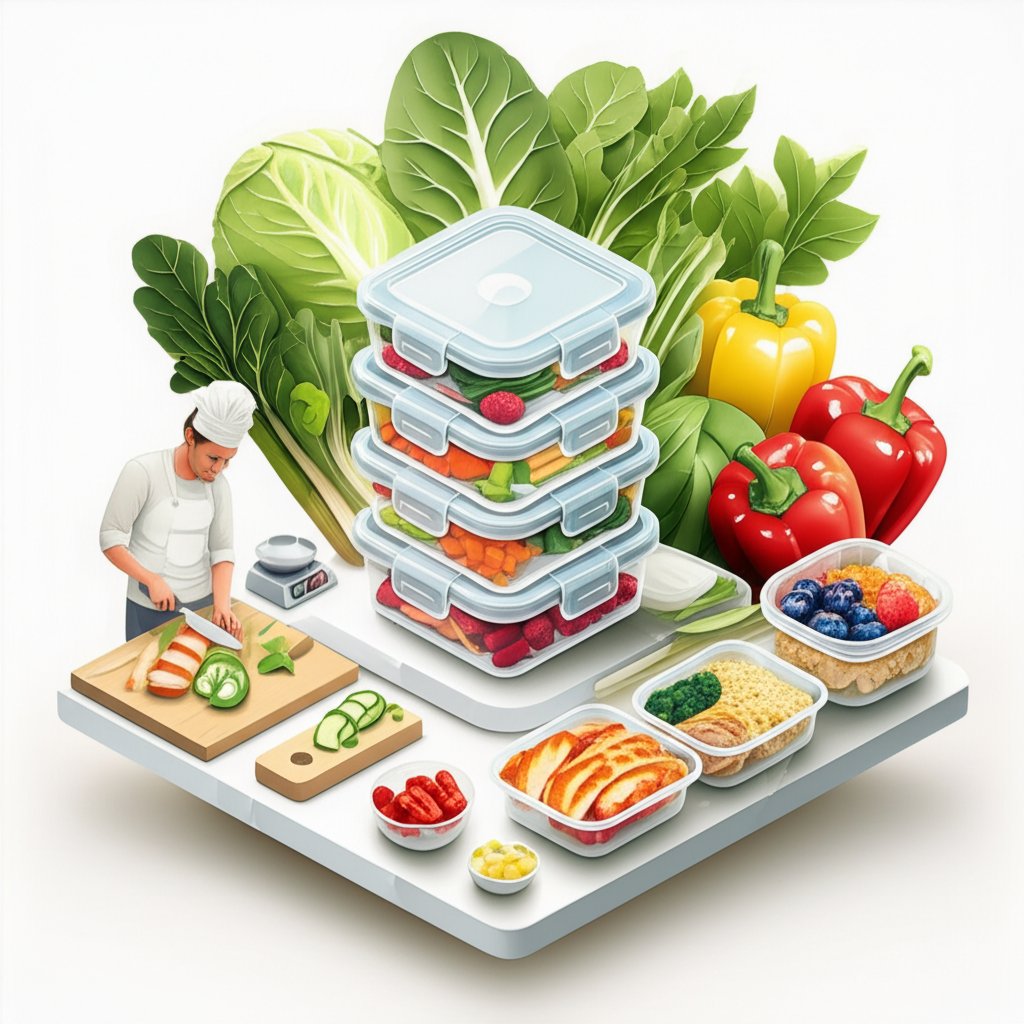
- How it works: Instead of full meals, you prep individual ingredients. On Sunday, you might grill a pack of chicken breasts, cook a large batch of quinoa, roast a tray of broccoli and bell peppers, and whip up a vinaigrette.
- Best for: Creative cooks, people with dietary restrictions in the family, or anyone who gets bored easily.
- Case Snippet: Sarah, a marketing manager, preps components. On Monday, she has a quinoa bowl with chicken and roasted veggies. On Tuesday, she uses the same chicken and veggies in a wrap with hummus. For Wednesday’s lunch, she adds the chicken to a fresh green salad. Same core ingredients, three different experiences.
3. The Assembler: The Ultimate Time-Saver
You have almost zero time or desire to cook. Your goal is to get a healthy, balanced meal on the plate in 10 minutes or less. You rely heavily on smart, pre-prepared grocery store shortcuts.
- How it works: Your “prep” is more about strategic shopping. Your list includes rotisserie chicken, pre-washed salad greens, canned beans, frozen steam-in-bag vegetables, and quick-cooking grains like couscous.
- Best for: Extremely busy professionals, non-cooks, or during exceptionally hectic weeks.
- Pro-Tip: Create a “10-Minute Bowl” formula: 1 part protein (rotisserie chicken/canned tuna), 1 part grain/base (microwavable rice/salad greens), 2 parts veg (canned corn/frozen peas), and 1 part flavor (store-bought salsa/dressing).
The 4-Step Framework for a Bulletproof Weekly Plan
Once you know your style, you can build your plan. This simple process turns a vague goal (“eat healthier”) into a concrete, actionable weekly system.
Step 1: Audit Your Week, Not Just Your Pantry
Before you even think about food, open your calendar. Be brutally honest about your schedule.
- Which nights are you working late? (Plan for a 15-minute Assembler meal or a prepped Batch meal).
- When do you have social plans? (Don’t plan a meal for that night).
- Which day has the most energy for a little cooking? (Maybe you prep components on Sunday and do a fresh 30-minute meal on Wednesday).
This reality check prevents the #1 cause of failure: creating an idealistic plan that your actual life can’t support.
Step 2: Create Your Themed Template
To slash decision fatigue, don’t pick seven unique meals from scratch each week. Instead, create themed nights. This gives you structure without being rigid.
Your template might look like this:
- Monday: Meatless Monday (e.g., Lentil Soup, Black Bean Burgers)
- Tuesday: Taco Tuesday (e.g., Ground Turkey Tacos, Shrimp Fajitas)
- Wednesday: Pasta Night (e.g., Chicken Sausage & Broccoli Pasta)
- Thursday: Sheet Pan Supper (e.g., Salmon & Asparagus, Sausage & Peppers)
- Friday: Flexible/Takeout Night
Now, your weekly decision isn’t “What should I make?” but rather, “What kind of sheet pan supper do I want?” The mental load is instantly lighter.
Step 3: Master the “Cook Once, Eat Thrice” Method
This is where the real magic happens. It’s about making one core ingredient the star of several meals. This reduces waste, saves money, and drastically cuts down on active cooking time.
Example: The Roasted Chicken
- Prep: On Sunday, roast a whole chicken and a big pan of root vegetables (carrots, potatoes, onions).
- Meal 1 (Dinner): Serve a classic meal of sliced roasted chicken with the vegetables.
- Meal 2 (Lunch): Shred leftover chicken and mix with Greek yogurt, celery, and herbs for a healthy chicken salad. Serve with whole-grain crackers or in a lettuce wrap.
- Meal 3 (Dinner): Use the remaining shredded chicken for quick chicken quesadillas with black beans and cheese on a Tuesday night.
This single prep session powered three different meals. This framework is the cornerstone of so many great meal prep ideas. For even more inspiration for every meal of the day, Conquer your week with meal prep.
Step 4: Write a “Store-Layout” Shopping List
A disorganized list leads to wandering aisles and impulse buys. After you’ve planned your meals, rewrite your list organized by store section:
- Produce (onions, bell peppers, spinach, apples)
- Protein (chicken breast, ground turkey, eggs, canned tuna)
- Pantry/Dry Goods (quinoa, canned beans, whole-wheat pasta, olive oil)
- Dairy & Refrigerated (Greek yogurt, cheese, almond milk)
- Frozen (berries, edamame, broccoli florets)
This tactical approach gets you in and out of the store in record time, ensuring you buy only what you need for your weekly plan.
Your Practical Playbook: A Sample 5-Day Plan

Here’s how these concepts come together in a sample meal plan for busy schedules, designed for a “Component Prepper” personality.
Weekend Prep (1.5 hours):
- Grill 4 chicken breasts, slice.
- Cook 2 cups of quinoa.
- Roast 1 head of broccoli and 2 bell peppers.
- Hard-boil 6 eggs.
- Wash and chop romaine lettuce.
- Make a batch of lemon-tahini dressing.
| Day | Breakfast | Lunch | Dinner |
| :– | :— | :— | :— |
| Monday | 2 hard-boiled eggs + apple slices | Quinoa Power Bowl: quinoa, sliced chicken, roasted veggies, lemon-tahini dressing. | 15-Min Black Bean Soup: Sauté onion/garlic, add canned black beans, veggie broth. Top with avocado. |
| Tuesday | Greek yogurt with frozen berries | Chicken Salad Wrap: Leftover chicken, romaine, and veggies in a whole-wheat tortilla. | Taco Tuesday: Ground turkey sautéed with taco seasoning. Serve with corn, salsa, and Greek yogurt. |
| Wednesday | Overnight oats (prepped Tuesday night) | Leftover turkey taco meat over a bed of fresh romaine for a Taco Salad. | Sheet Pan Salmon & Asparagus: Toss salmon and asparagus with olive oil and herbs. Bake at 400°F for 12-15 min. |
| Thursday| Smoothie with spinach, protein powder | Salmon Salad: Flake leftover salmon and mix into a salad with remaining quinoa and roasted veggies. | “Brinner”: Scrambled eggs with leftover veggies and a side of whole-wheat toast. |
| Friday | 2 hard-boiled eggs + orange | Leftovers from any previous meal | Flexible: Order in, go out, or assemble a quick “kitchen sink” bowl. |
Quick Answers to Common Questions
Got hesitations? Let’s clear up the most common roadblocks with some straight answers.
Q: “What if I get bored eating the same thing?”
This is the biggest fear, and it’s why the “Component Prepper” style is so popular. You’re not eating the same meal, just using the same core ingredients. The secret weapon against boredom is flavor. Prep a few different sauces or dressings on Sunday—a vinaigrette, a peanut sauce, a yogurt-dill sauce. A simple sauce can completely transform a meal of chicken and quinoa.
Q: “I don’t have 2-3 hours to cook on a Sunday!”
You don’t need a huge block of time. Try “split prepping.”
- Saturday (30 mins): Plan your meals and make your grocery list while you’re drinking your morning coffee.
- Post-Groceries (30 mins): Wash and chop all your vegetables for the week as soon as you get home. This is called “Mise en Place” and professional chefs swear by it.
- Sunday (60 mins): Cook your grains and one or two proteins.
You can also try “15-minute daily prep,” where you just prep the next day’s lunch while your dinner is cooking.
Q: “Isn’t meal planning expensive with all those fresh ingredients?”
While your initial grocery bill might seem higher, studies from institutions like the Johns Hopkins School of Public Health consistently show that people who cook at home consume fewer calories and spend less money on food overall. A meal plan for a busy schedule drastically reduces expensive impulse takeout, mid-week grocery runs for forgotten items, and, most importantly, food waste. Using your leftover chicken for tacos instead of letting it go bad is a direct win for your wallet.
Q: “My schedule is too unpredictable. What if a meeting runs late?”
This is where your “Plan B” comes in. Your freezer is your best friend.
- The Freezer Stash: Always have 2-3 single-serving, homemade freezer meals ready to go (like that chili you batch-cooked last month).
- The 5-Minute Pantry Meal: Keep ingredients on hand for an emergency meal you can make with your eyes closed. For many, this is pasta with jarred sauce, or eggs on toast.
A plan provides structure, but flexibility is what makes it sustainable.
Your First-Week Game Plan
Feeling motivated? Don’t get overwhelmed trying to plan every meal for a month. Start small and build momentum. Here’s your mission for this weekend.
- Choose Your Style: Pick one personality that feels right for you this week. You can always change it later.
- Plan Just Three Dinners: Look at your calendar and plan three simple, realistic dinners for your busiest nights.
- Prep One Thing: Based on those dinners, prep just one component in advance. Cook a batch of rice. Chop the onions. Grill the chicken.
That’s it. By taking these small steps, you’ll prove to yourself that a calmer, healthier week is within reach. You’re not just planning meals; you’re buying back your time and peace of mind, one delicious, prepped meal at a time.

- Borosilicate Containers Keep Food Fresh and Your Kitchen Organized - January 24, 2026
- Borosilicate Glass Storage Containers Handle Extreme Temperatures Safely - January 23, 2026
- Borosilicate Glass Food Storage Containers Bring Durable Safety To Your Kitchen - January 22, 2026