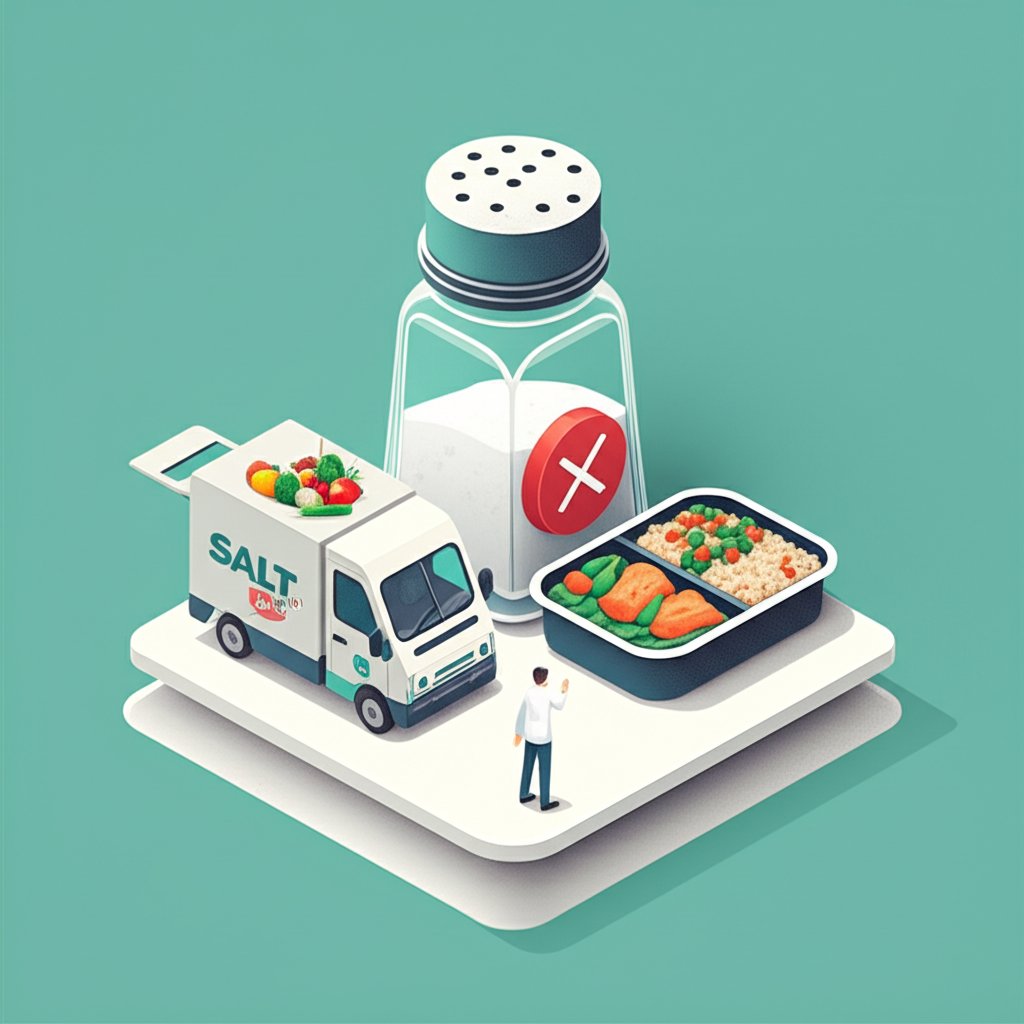
Your doctor hands you the directive: “You need to seriously cut back on sodium.” Suddenly, the grocery store feels like a minefield of confusing labels, and your kitchen becomes a source of stress. Calculating milligrams, avoiding hidden salts in sauces, and finding the time to cook from scratch can feel overwhelming. This is where low sodium meal plans delivered to your door shift from a convenience to a critical tool for managing your health, giving you back control without the daily guesswork.
It’s not just about shaking less salt on your food; it’s about fundamentally changing how your meals are built. These services do the hard work—the planning, shopping, and precise portioning—so you can focus on feeling better.
At a Glance: What to Expect
- Decode the Numbers: Learn the difference between a “sodium-conscious” meal (under 800 mg) and a medically-necessary low-sodium meal (under 600 mg).
- Match Your Full Health Profile: Discover why looking beyond sodium to factors like saturated fat, potassium, or carbohydrates is crucial for conditions like heart disease, diabetes, or kidney issues.
- A Step-by-Step Selection Guide: Get a practical framework for choosing the right service based on your specific dietary targets, lifestyle (fresh vs. frozen), and budget.
- Avoid Common Pitfalls: Understand why a “healthy” label doesn’t always mean low sodium and how to verify a service’s claims before you commit.
- Quick-Compare Top Services: See a clear breakdown of leading services and who they’re best suited for, from bistroMD’s doctor-designed plans to Epicured’s ultra-low-sodium options.
Understanding the Sodium Guardrails
Before diving into meal plans, it’s essential to know your numbers. Vague advice to “eat less salt” isn’t actionable. Health experts provide clear targets.
The American Heart Association (AHA) recommends an ideal limit of 1,500 mg of sodium per day for most adults, especially those with high blood pressure. The 2020-2025 Dietary Guidelines for Americans suggest a more general limit of 2,300 mg per day.
To put that in perspective:
- 1,500 mg/day target: Each meal should be around 500 mg of sodium.
- 2,300 mg/day target: Each meal can be around 750 mg of sodium.
A single fast-food meal or frozen pizza can easily contain over 1,500 mg, blowing your entire day’s budget. This is why having pre-portioned, chef-prepared meals with clear nutritional labels is a game-changer for consistency.
Not All “Low Sodium” Plans Are Created Equal
The term “low sodium” can be interpreted differently by various meal delivery companies. One service’s “low sodium” option might be another’s standard meal. It’s crucial to look past the marketing and at the actual milligrams per serving.
Here’s a simple framework for categorizing what you’ll find:
- Sodium-Conscious (Under 800 mg/meal): These plans are a great starting point for generally healthy individuals looking to reduce their intake. Services like Sunbasket and Diet-to-Go often fall into this category. They focus on whole foods and smart seasoning but may not be suitable for strict medical diets.
- Medically-Supportive Low Sodium (300–600 mg/meal): This is the sweet spot for people managing hypertension, heart conditions, or diabetes. These meals are specifically designed to meet clinical guidelines. bistroMD, Mom’s Meals, and Eat Clean excel here, often keeping sodium between 300-600 mg per meal.
- Clinically-Strict Low Sodium (Under 500 mg/meal): These plans are often tailored for more acute conditions. CookUnity offers a filter for meals under 500 mg, and Trifecta Nutrition‘s plans average in this range.
- Specialty Ultra-Low Sodium (Under 140 mg/meal): Reserved for very specific needs, often related to kidney disease or severe heart failure. Epicured stands out with its “very low sodium” filter that caps meals at 140 mg per serving.
Matching a Service to Your Complete Health Picture
A low sodium diet rarely exists in a vacuum. Your doctor’s orders likely include other considerations, making it vital to choose a service that addresses your entire health profile.
Scenario 1: Managing High Blood Pressure
- Your Focus: Sodium is the primary target. You need consistent meals under 600 mg.
- What to Look For: Services with dedicated “Heart-Healthy” or “Lower Sodium” menus are ideal. They handle the main variable for you.
- Good Fits: bistroMD’s Heart-Healthy plan (under 600 mg sodium and 3.5g saturated fat), Eat Clean (300-500 mg sodium), and Mom’s Meals’ Lower Sodium plan (under 600 mg sodium).
Scenario 2: Broader Heart Health (Post-Heart Attack, High Cholesterol)
- Your Focus: Sodium and saturated fat. The AHA recommends limiting saturated fat to 5-6% of daily calories.
- What to Look For: A service that is transparent about both metrics. Check the full nutrition facts for every meal. Some low-sodium meals can still be high in saturated fat from cheese, cream sauces, or red meat.
- Good Fits: bistroMD is again a strong contender as its Heart-Healthy program is designed around both metrics. Splendid Spoon is plant-based, so most of its “lower sodium” options (under 600 mg) are also naturally low in saturated fat.
Scenario 3: Managing Diabetes
- Your Focus: Sodium and carbohydrates. You need to control blood sugar while also protecting your heart and kidneys, which are often affected by diabetes.
- What to Look For: Plans labeled “Diabetes-Friendly” that specify both sodium and net carb counts.
- Good Fits: bistroMD’s Diabetes-Friendly program is specifically designed for this, keeping sodium below 500 mg per meal. Sunbasket also has a Diabetes-Friendly filter that keeps meals under 700 mg of sodium and focuses on complex carbs.
Scenario 4: Chronic Kidney Disease (CKD)
- Your Focus: This is the most complex. You need to manage sodium, potassium, and phosphorus.
- What to Look For: Highly specialized services that cater to renal diets. General-purpose meal plans are not suitable here.
- Good Fits: Mom’s Meals and Magic Kitchen both offer dedicated “Renal-Friendly” menus that are carefully balanced for all three minerals. This level of specialization is non-negotiable for CKD.
Finding a service that aligns with these complex needs can feel daunting. To help, we’ve compiled a comprehensive review of the market’s top performers. Explore top low-sodium deliveries to compare their specific programs and find the one that best fits your medical and lifestyle needs.
A Practical Playbook for Choosing Your Plan
Ready to make a decision? Follow these simple steps to ensure you choose a service that works for you long-term.
- Get Your Numbers: First, ask your doctor or registered dietitian for your specific daily sodium target (e.g., 1,500 mg/day). This is your north star.
- Identify Co-Restrictions: List any other nutrients you need to limit, such as saturated fat, potassium, phosphorus, or carbohydrates.
- Decide on Lifestyle Fit: Fresh vs. Frozen:
- Fresh (e.g., CookUnity, Eat Clean): Offer a restaurant-quality taste and texture. However, they have a shorter shelf life and require you to plan your week more carefully.
- Frozen (e.g., bistroMD, Mom’s Meals, Splendid Spoon): Provide maximum convenience and a long shelf life. Perfect for stocking up and ensuring you always have a compliant meal on hand, especially on busy days.
- Do a Menu “Taste Test”: Before committing to a large order, browse the menus. Do the meals look appealing? Is there enough variety to keep you from getting bored? Many services offer introductory discounts, making it easy to try a week’s worth of food.
- Check the Fine Print: Look at the delivery area (most cover the continental US), the minimum order size, and the flexibility to pause, skip weeks, or cancel your subscription.
Quick Comparison of Low Sodium Meal Delivery Services
| Service | Sodium Range (per meal) | Best For | Key Co-Factors | Type |
|---|---|---|---|---|
| bistroMD | 500-600 mg | Medically-designed plans for heart health & diabetes | Low Saturated Fat, Carb-Conscious | Frozen |
| Mom’s Meals | < 600 mg (Lower Sodium) | Seniors & those with specific medical needs (renal, etc.) | Low Fat, Potassium & Phosphorus Control | Fresh |
| Eat Clean | 300-500 mg | Strict sodium control with fresh, whole-food ingredients | Paleo, Keto, Plant-Based options | Fresh |
| CookUnity | < 500 mg (with filter) | Gourmet flavor & variety for individuals | Varies widely; must check each meal | Fresh |
| Splendid Spoon | < 600 mg (with filter) | Plant-based diets, smoothies, soups, and grain bowls | Low Saturated Fat, Vegan | Frozen |
| Magic Kitchen | < 700 mg (most < 500) | Specialized diets, especially for seniors and renal needs | Portion Control, Renal, Diabetic | Frozen |
| Epicured | < 140 mg (with filter) | Ultra-strict sodium needs; Low FODMAP & Gluten-Free | Low FODMAP, Gluten-Free | Fresh |
Quick Answers to Common Questions
Q: Are frozen low sodium meal plans as healthy as fresh ones?
A: Absolutely. The nutritional value is locked in through flash-freezing. For many people, the convenience of a frozen meal is a huge benefit, as it prevents them from ordering high-sodium takeout on a busy night. The key is the quality of the ingredients going in, not whether it’s fresh or frozen.
Q: How can I trust that a service’s meals are actually low in sodium?
A: Trust but verify. Reputable services provide full, transparent nutritional information for every single meal on their menu before you add it to your cart. Look for a “Nutrition Facts” link or popup. If a service hides this information, that’s a major red flag.
Q: Can I get low sodium meal plans delivered and covered by my insurance?
A: Sometimes. It’s becoming more common for Medicare Advantage and certain Medicaid plans to cover medically-tailored meals as a benefit, especially for individuals recently discharged from the hospital or managing chronic conditions. Mom’s Meals is a leading provider in this space. You’ll need to check directly with your insurance provider to see if you qualify.
Q: What’s worse: one high-sodium “cheat meal” or consistently eating meals that are slightly over my limit?
A: For managing conditions like high blood pressure, consistency is king. Your body responds to your overall dietary pattern. A single salty meal will cause a temporary spike in blood pressure and water retention, but consistently consuming 800 mg of sodium per meal when your target is 500 mg will prevent you from ever reaching your health goals. A reliable meal service is your best tool for maintaining that day-in, day-out consistency.
Your First Step to Effortless Healthy Eating
Switching to a low sodium diet is one of the most powerful changes you can make for your long-term health. But it doesn’t have to be a journey of deprivation or constant work. By leveraging low sodium meal plans delivered to your home, you are essentially outsourcing the most difficult parts of dietary management—the planning, measuring, and label-reading.
This frees you up to simply heat, eat, and enjoy your food, confident that you are perfectly aligned with your health goals.
Your first step today is simple: Confirm your daily sodium target with your healthcare provider. Once you have that single number, you can use the guidance above to find a service that perfectly matches your needs and finally makes healthy eating feel easy.

- Stainless Steel Food Storage for Healthier, Eco-Friendly Meal Prep - February 27, 2026
- Stainless Food Containers Offer Durable Storage for Everyday Meals - February 26, 2026
- Stainless Steel Containers Offer Superior Food Preservation and Durability - February 25, 2026