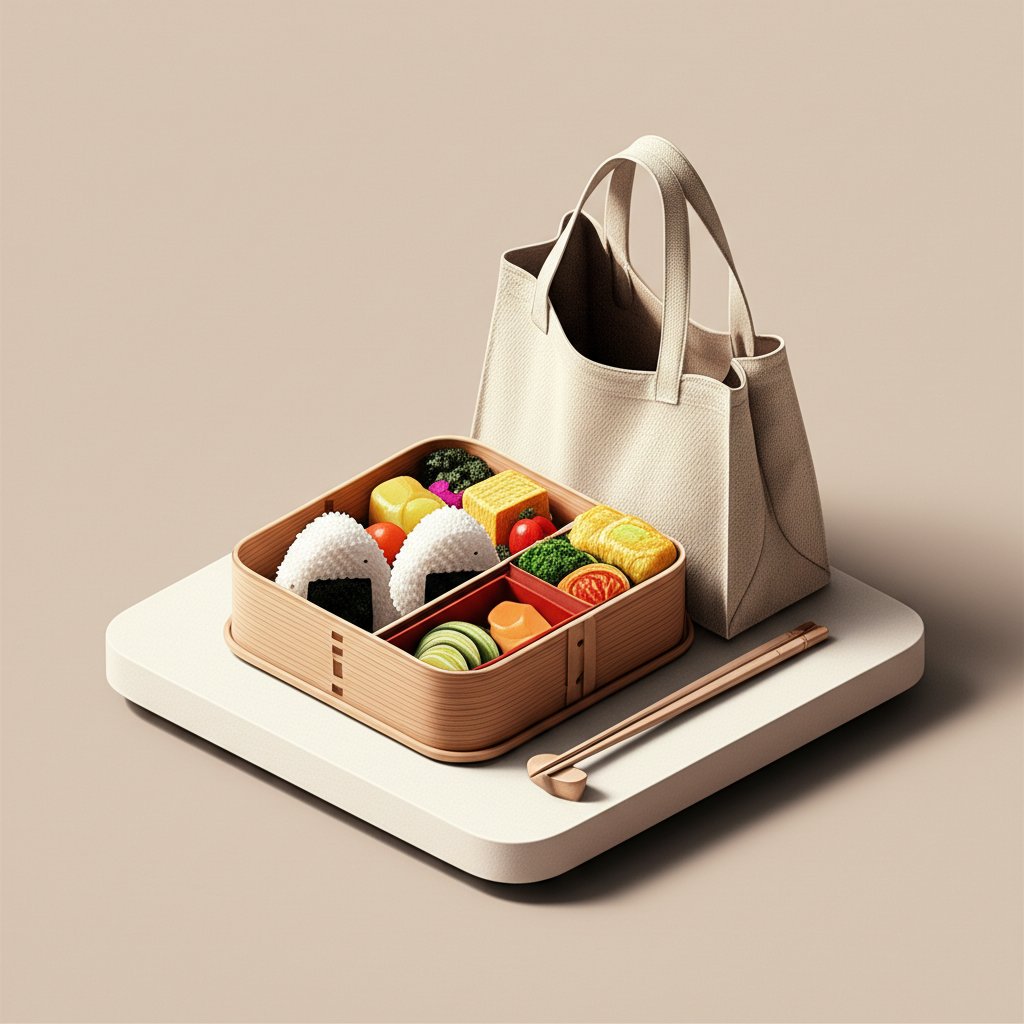
Tired of bulky, uninspired lunch coolers that scream “office breakroom”? The traditional japanese lunch bag offers an elegant and practical alternative, transforming your midday meal into a more thoughtful ritual. These bags are more than just a way to get your food from A to B; they are a stylish accessory designed with the art of bento in mind, capable of pulling double duty as a chic mini-tote for your daily essentials.
It’s an approach that values form as much as function. Instead of zippers and plastic, you get beautiful fabrics and simple, clever closures that secure your meal with a quiet grace. Whether you’re a seasoned bento enthusiast or just looking for a better way to carry your lunch, this is a solution that feels both timeless and perfectly modern.
At a Glance: What You’ll Learn
- The Two Core Styles: Differentiate between the flexible Kinchaku (drawstring) and the structured Mini-Tote to find your ideal match.
- Fabric and Craftsmanship: Discover which materials, from sturdy cotton canvas to elegant chirimen crepe, suit your needs for durability and style.
- Packing with Purpose: Learn the right way to pack each type of bag to keep your bento box level and secure.
- Beyond the Bento: See how these bags seamlessly transition from a lunch carrier to a versatile handbag for errands or casual outings.
- Proper Care: Get simple, actionable tips for cleaning and maintaining your bag to ensure it lasts for years.
- The Furoshiki Alternative: Master a simple, traditional wrapping technique using a single cloth for ultimate flexibility.
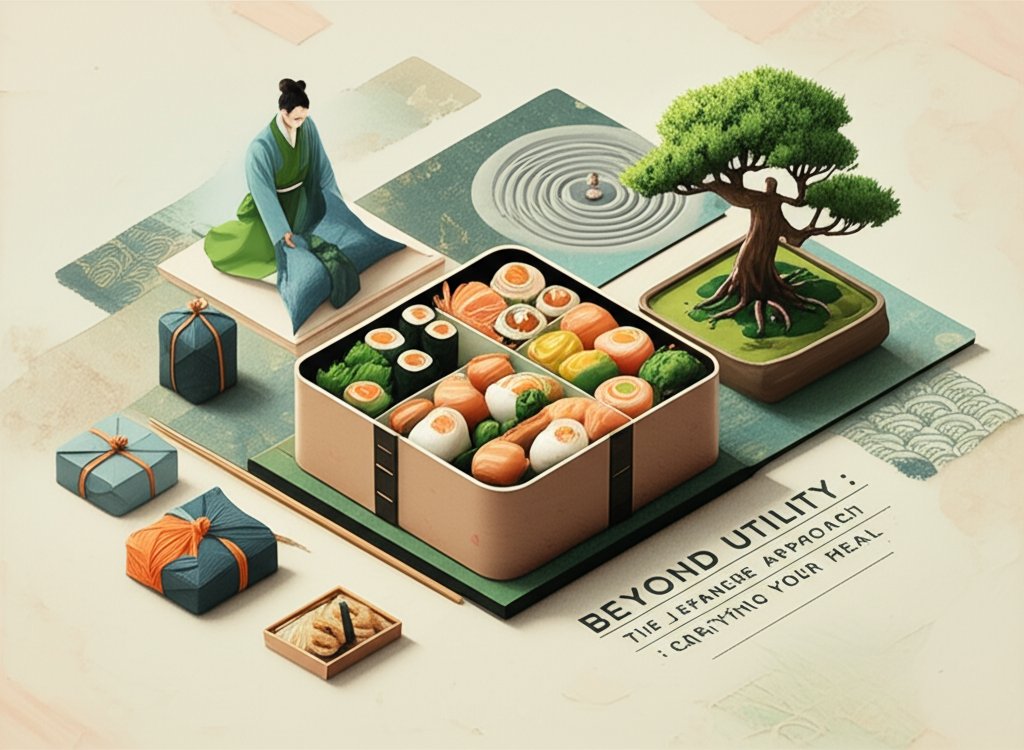
Beyond Utility: The Japanese Approach to Carrying Your Meal
In Japan, the way you carry your meal is an extension of the care put into preparing it. This isn’t just about transport; it’s about presentation and mindfulness. A Japanese lunch bag, or bento bukuro, isn’t designed to be hidden away. It’s crafted from carefully selected fabrics with meaningful patterns, reflecting a culture that finds beauty in everyday objects.
This philosophy is why these bags feel so different from standard Western lunch boxes. They are soft, tactile, and designed to cradle their contents. The focus is on keeping your bento box upright and secure within a beautiful package, turning the simple act of carrying lunch into a small, pleasant experience.
Choosing Your Style: The Drawstring Kinchaku vs. The Structured Mini-Tote
While there are many variations, Japanese lunch bags generally fall into two beloved categories: the traditional drawstring kinchaku and the modern mini-tote. Each offers distinct benefits depending on your daily routine and what you typically pack.
While both the kinchaku and mini-tote are fantastic options, understanding the full landscape of meal carriers can help you make the best choice. Discover your perfect bento bag to see how these Japanese styles compare to insulated coolers and other modern options.
The Kinchaku Bag: Traditional Charm and Flexible Form
The kinchaku is the quintessential Japanese drawstring pouch. Its design is beautifully simple: a fabric bag that cinches shut at the top with a cord. This style has been used for centuries to carry small personal items and, of course, bento boxes.
- How it Works: You place your bento box inside, pull the drawstrings, and tie them. The fabric gathers snugly around your container, creating a secure, self-contained bundle. The tied drawstrings often form a convenient handle.
- Pros:
- Adaptable: Conforms perfectly to the shape of your bento box, whether it’s square, round, or two-tiered.
- Compact: When empty, it folds down to almost nothing, making it easy to tuck into a larger purse or backpack after lunch.
- Aesthetic: It has a timeless, traditional charm that is distinctly Japanese.
- Cons:
- Less Protection: The soft fabric offers minimal protection against hard bumps.
- Limited Structure: Most kinchaku bags won’t stand upright on their own, and they typically lack internal pockets.
A kinchaku is ideal for the purist—someone who usually carries just a bento box and maybe a pair of chopsticks. It’s perfect if you value minimalism and the simple elegance of a traditional design.
The Mini-Tote: Modern Convenience and Everyday Versatility
The mini-tote style takes the core concept of a bento bukuro and gives it a more contemporary, structured form. It looks and functions like a small handbag but is specifically proportioned to carry a meal.
- How it Works: This bag features a flat, often wide, bottom that prevents your bento box from tipping over. It has sturdy handles and an open top, sometimes with a snap or tie closure.
- Pros:
- Stable and Structured: The flat base is a game-changer for keeping stacked bento boxes, drinks, and snacks organized and upright.
- Extra Space: Easily accommodates a bento box, a small thermos or water bottle, a piece of fruit, and utensils.
- Organizational Features: Many include an internal pocket for keys, a phone, or napkins.
- Cons:
- Bulkier: It doesn’t fold down as compactly as a kinchaku.
- Less Conforming: Its rigid shape is less forgiving for oddly shaped containers.
The mini-tote is the perfect choice for someone who wants a multifunctional bag. It’s practical for carrying a complete lunch to the office and stylish enough to be used on its own for a quick coffee run or a trip to the farmers market.
| Feature | Kinchaku (Drawstring) Bag | Mini-Tote Bag |
| :— | :— | :— |
| Primary Function | Securely bundling a bento box | Carrying a full meal and extras |
| Structure | Soft, flexible, form-fitting | Structured with a flat base |
| Capacity | Best for a single bento box | Bento, drink, snacks, utensils |
| Portability | Folds flat when empty | Holds its shape, bulkier |
| Best For | Minimalists, traditionalists | Multitaskers, those who pack more |
| Secondary Use | Small pouch for essentials | Stylish small handbag |
What to Look For: Fabric and Construction Details That Matter
The soul of a Japanese lunch bag lies in its fabric. The material not only dictates the bag’s appearance and feel but also its durability and how you care for it.
Decoding the Fabric: From Cotton to Chirimen Crepe
- Cotton & Cotton Canvas: This is the most common and practical choice. It’s durable, breathable, and easy to wash. Cotton canvas is a heavier-weight version, offering more structure and longevity. It holds prints beautifully, making it the perfect canvas for both modern and traditional patterns.
- Linen & Linen Blends: Linen offers a sophisticated, slightly rustic aesthetic. It’s incredibly strong and gets softer with each wash. It’s naturally breathable, which is great for carrying food.
- Chirimen (Rayon Crepe): This is a luxury fabric with a distinctive crinkled texture. Chirimen is often used for kimonos and other formal accessories. A lunch bag made from this material is a statement piece, but it requires more delicate care (spot cleaning or gentle handwashing).
A small but important detail is the lining. An unlined bag is simpler and more traditional, while a lined bag (usually with plain cotton) adds a layer of durability and can help contain minor spills.
The Meaning in the Motifs: Choosing a Pattern with a Story
Japanese fabric patterns are rich with symbolism. Choosing a pattern isn’t just about color; it can be about carrying a piece of culture with you.
- Asanoha (Hemp Leaf): This geometric star pattern represents growth, resilience, and good health. It’s a classic and popular motif for items used daily.
- Seigaiha (Waves): Composed of layered concentric circles, this pattern symbolizes waves of the ocean. It represents peace, good fortune, and strength.
- Shibori (Tie-Dye): This is a traditional resist-dyeing technique that creates beautiful, often intricate patterns. Each shibori piece is unique, making your bag one-of-a-kind.
- Sakura (Cherry Blossoms): A beloved symbol of spring and renewal, representing the beautiful but fleeting nature of life.
A Practical Guide to Using Your Japanese Lunch Bag

Getting the most out of your bag is easy once you know a few simple techniques for packing and care.
Step 1: Packing Like a Pro
The goal is to keep your bento box flat to prevent the carefully arranged food from shifting.
- For a Kinchaku: Place your bento box flat on the bottom of the bag. If you have chopsticks or utensils in a case, lay them alongside the box. Pull the drawstrings taut and tie them in a secure bow. For a cleaner look, you can tuck the ends of the cord under the knot.
- For a Mini-Tote: The wide, flat bottom is your best friend. Place your bento box in first. Stand your drink bottle or thermos upright next to it. Add any loose items like fruit or a small snack on top or to the side. Use the internal pocket for non-food items.
Step 2: The Art of the Furoshiki (A Kinchaku Alternative)
Before drawstring bags, there was the furoshiki—a single square of decorative cloth used for wrapping and carrying everything from gifts to bento boxes. It’s the ultimate minimalist lunch bag.
How to Wrap a Bento with a Furoshiki:
- Center It: Lay your furoshiki (a 50cm or 20-inch square is a good size for most bento boxes) flat in a diamond shape. Place your bento in the center.
- First Tie: Take the corner closest to you and the corner farthest from you. Bring them together over the top of the bento box and tie a simple, secure knot.
- Final Tie & Handle: Take the remaining two corners (left and right), bring them up, and tie them in another knot over the top of the first one. This second knot creates a convenient carrying handle.
Step 3: Care and Cleaning for Longevity
Most Japanese lunch bags are designed to be used and loved for a long time. Proper care is simple.
- Check the Tag: If there is a care label, always follow its instructions.
- Cotton and Canvas: These are the easiest to care for. Machine wash on a gentle cycle with cold water to prevent shrinking and fading. Always air dry. Lay it flat or hang it up.
- Linen: Linen can also be machine washed on a gentle, cold cycle. It will get softer over time. Air dry is best.
- Chirimen and Silks: These are delicate. Spot clean any stains with a damp cloth and mild detergent. If you must wash it, do so by hand in cold water and never wring it out. Gently squeeze out excess water and lay it flat to dry on a towel.
Quick Answers to Common Questions
Is a japanese lunch bag insulated?
Typically, no. The traditional design prioritizes aesthetics, breathability, and portability over thermal insulation. They are intended for carrying meals that are either enjoyed at room temperature (a common practice for bento in Japan) or will be reheated. However, some modern mini-tote styles are now available with a thin insulated lining.
Can it fit more than just a bento box?
Definitely. A standard-sized mini-tote can comfortably hold a bento box, a 16-oz water bottle or thermos, a piece of fruit, and utensils. The capacity of a kinchaku depends on its size, but most are designed with enough room for a bento and a small side item or snack.
Is the drawstring on a kinchaku bag secure?
Yes, very. When you pull the cords and tie them, the fabric gathers tightly around the opening, creating a surprisingly secure closure. Your contents are safely bundled inside and won’t fall out, even if the bag is jostled.
How is this different from a simple tote bag?
The key difference is the proportion. A Japanese lunch tote is specifically designed with a wide, flat base to keep a bento box level. A standard tote bag is usually taller and narrower, causing lunch containers to tip over and spill. The design is purpose-built for carrying a meal with care.
Find Your Perfect Match: Kinchaku or Mini-Tote?
Choosing between the two main styles comes down to your daily needs and personal taste. Use this quick guide to decide.
Choose a Kinchaku (Drawstring Bag) if…
- You prioritize traditional aesthetics and a minimalist approach.
- You typically pack a single, standard-sized bento box.
- You want a bag that takes up virtually no space when not in use.
- You appreciate the flexible, form-fitting nature of a soft pouch.
Choose a Mini-Tote Bag if… - You need a stable, structured bag that stands up on its own.
- You regularly pack a bento box plus a drink, snacks, and other essentials.
- You love the idea of a dual-purpose bag that works as both a lunch carrier and a stylish handbag.
- You prefer the convenience of sturdy handles and an internal pocket.
Whichever path you take, adopting a Japanese lunch bag is about more than just convenience. It’s a small way to bring intention, beauty, and a moment of calm to your daily routine, proving that even a simple lunch can be an opportunity for delight.

- Cold Meal Prep Makes Healthy, Stress-Free Lunches Easy - March 9, 2026
- Meal Prep Ideas for Healthy Eating Throughout Your Busy Week - March 8, 2026
- Sectioned Tupperware for Organized Meals and Snacks on the Go - March 7, 2026