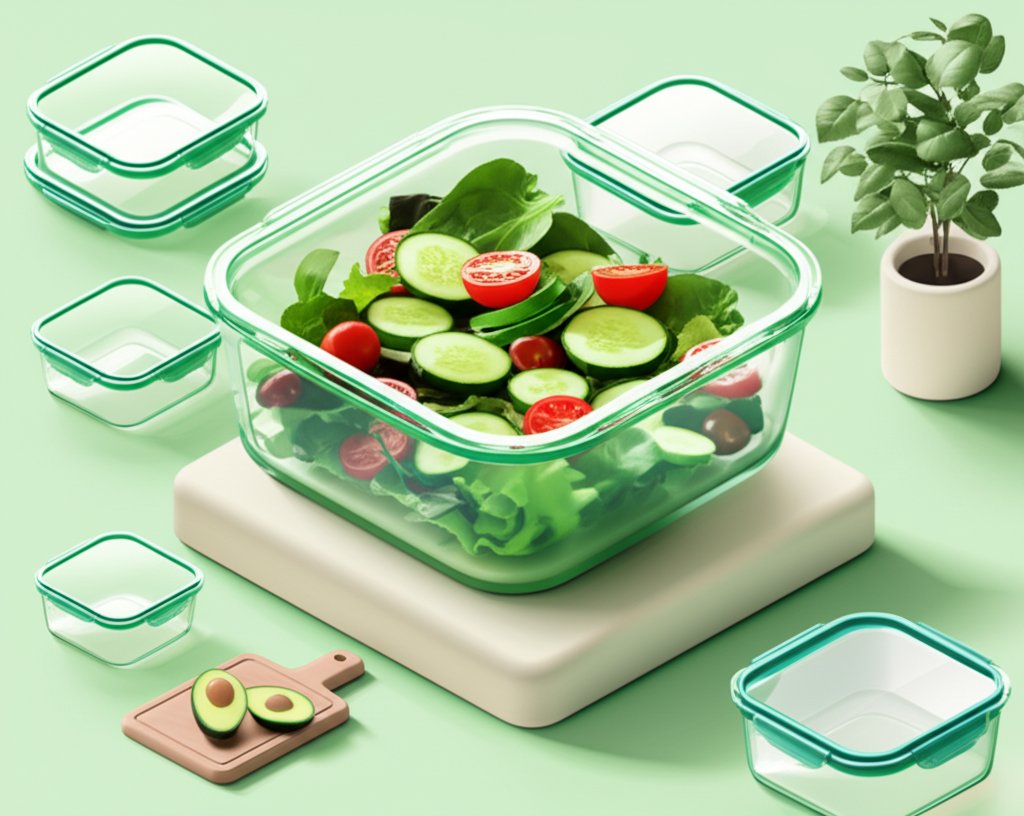
That moment of dread when you pull a glass dish from a hot dishwasher and a drop of cold water causes a spiderweb of cracks. Or when last night’s spaghetti permanently stains your favorite plastic container a dull orange. These small kitchen frustrations point to a bigger problem: not all food storage is created equal. This is precisely where borosilicate glass food storage containers change the game, offering a level of thermal resilience and pure, non-porous safety that standard containers simply can’t match.
At a Glance: Your Quick Guide
- Understand the Difference: Learn why borosilicate glass withstands rapid temperature changes (thermal shock) that would shatter normal glass.
- Choose with Confidence: Get a step-by-step framework for selecting the right shapes, sizes, and lid types for your specific needs—from meal prepping to storing leftovers.
- Master Best Practices: Discover simple care techniques to ensure your containers last for years, from proper cleaning to smart stacking.
- Avoid Common Pitfalls: Learn how to handle lids, gaskets, and temperature transitions to prevent damage and maximize performance.
- Get Clear Answers: Find straightforward solutions to common questions about safety, durability, and identifying genuine borosilicate glass.
The Science of Strength: What Puts the “Boro” in Borosilicate?
When you hear “borosilicate,” it’s easy to dismiss it as marketing jargon. But the difference is rooted in chemistry and delivers a very practical, real-world benefit: durability under stress.
Standard glass, known as soda-lime glass, is what most drinking glasses and jars are made from. When heated, it expands significantly. When cooled, it contracts. If this happens too quickly, the stress becomes too much, and it cracks or shatters.
Borosilicate glass is different because boron trioxide is added to the silica mix during manufacturing. This special ingredient dramatically lowers the glass’s coefficient ofthermal expansion (CTE). Think of it like adding flexible rebar to concrete; the boron gives the glass an internal structure that can handle expansion and contraction without failing. This is why the same material trusted for laboratory beakers and high-end cookware is now the gold standard for your kitchen storage. For a deeper dive into the material’s unique properties, you can Explore borosilicate glass storage.
This resilience means you can take a container of leftovers from the refrigerator and place it directly into the microwave or a preheated oven without a second thought. That seamless transition is the core of borosilicate’s convenience and safety.
The Kitchen Showdown: Borosilicate vs. Soda-Lime Glass vs. Plastic

Choosing the right container material has a daily impact on your food’s freshness, your health, and your wallet. Here’s how borosilicate glass food storage containers stack up against the common alternatives.
| Feature | Borosilicate Glass | Soda-Lime Glass (Standard Glass) | Food-Grade Plastic |
|---|---|---|---|
| Thermal Shock | Excellent. Handles rapid temperature changes (e.g., fridge to oven). | Poor. Prone to shattering with sudden temperature shifts. | Good. Generally microwave-safe, but can warp over time. |
| Staining & Odors | Impermeable. Resists stains and does not absorb food odors. | Impermeable. Also resists stains and odors effectively. | Porous. Stains easily (tomato sauce, turmeric) and retains odors. |
| Chemical Leaching | Inert. Does not leach chemicals into food, even when heated. | Inert. Also considered very safe and non-leaching. | Can leach chemicals (like BPA or BPS) when heated or scratched. |
| Durability | High resistance to chipping and scratching. Very hard surface. | More brittle. More susceptible to chipping and breaking on impact. | Scratches easily, creating havens for bacteria. Can warp. |
| Oven Safe | Yes, typically up to 450-500°F (check manufacturer specs). | No. Not designed for oven use and is a major safety risk. | No. Will melt in the oven. |
| Clarity | Remains crystal clear over its lifetime. | Remains clear, but less durable overall. | Can become cloudy or hazy with repeated washing and use. |
| The takeaway is clear: while soda-lime glass is non-porous, it lacks the thermal durability for true multi-function use. Plastic, while lightweight, comes with compromises in staining, longevity, and potential chemical leaching. Borosilicate glass occupies the sweet spot, offering the purity of glass with the robust versatility modern kitchens demand. |
Choosing Your Perfect Set: A Practical Buying Guide
Walking into a store or browsing online, the sheer number of options can be overwhelming. To find the right borosilicate glass food storage containers, focus on your actual habits, not just a pretty picture on a box.
Step 1: Assess Your Kitchen Workflow
How you use your containers determines the ideal set. Be honest about your primary needs.
- The Weekly Meal Prepper: You cook in batches and need consistency. Look for sets with multiple containers of the same size (e.g., five to seven 30-ounce rectangular containers). This makes portioning simple and stacking in the fridge a breeze. Rectangular shapes are the most space-efficient.
- The Leftover Aficionado: Your fridge is a rotating cast of last night’s dinner. You need flexibility. A variety pack with small, medium, and large containers (both round and rectangular) is your best bet. A small round one is perfect for a side of soup, while a large rectangle can hold a few slices of lasagna.
- The Bake-and-Store Chef: You love making a casserole, lasagna, or baked dish that you can store in the same vessel. Prioritize larger, casserole-style borosilicate dishes (2-3 quarts) that come with lids. This eliminates the need to transfer food, saving you a dish to wash.
Step 2: Scrutinize the Lids—They’re Half the Battle
A great glass base is useless without a high-quality lid. The lid is responsible for being airtight, leak-proof, and easy to use.
- Lid Material:
- Plastic (BPA-Free): The most common. Look for sturdy, BPA-free plastic with four locking tabs. These provide the most secure, leak-proof seal. The downside is they can’t go in the oven.
- Silicone: Offers a good seal and is often oven-safe to a lower temperature. They are flexible but can sometimes be harder to press on securely compared to locking lids.
- Wood/Bamboo: Aesthetically pleasing for countertop storage, but not airtight or leak-proof. These are best for dry goods like pasta, nuts, or coffee beans.
- The Gasket: This is the silicone ring inside the lid that creates the seal. A good gasket is thick, fits snugly in its groove, and is removable for easy cleaning. A cheap, thin gasket will compress, warp, and eventually fail, leading to leaks.
- Venting: Many modern lids include a small silicone vent. This allows you to microwave food with the lid on (but the vent open), preventing messy splatters while allowing steam to escape.
Pro Tip: Check the Fine Print
Always verify if the lids are top-rack dishwasher-safe and microwave-safe. Tossing a non-safe lid in the bottom rack of a dishwasher can cause it to warp, ruining the seal forever.
Step 3: Check for the Details That Matter
Beyond the basics, a few small features separate a good set from a great one.
- Stackability and Nesting: Do the containers of the same shape stack securely on top of each other? Do smaller containers nest inside larger ones to save precious cabinet space? Look for slight lips or indented lids that help with stable stacking.
- Clarity and Markings: The glass should be perfectly clear to let you see the contents without opening the lid. Volume markings etched or molded into the glass are a fantastic bonus for portion control and recipe prep.
- Rim and Edge: A slightly thicker, rounded rim can help prevent chipping if the container is accidentally knocked against a granite countertop or another dish.
Getting the Most from Your Borosilicate Containers
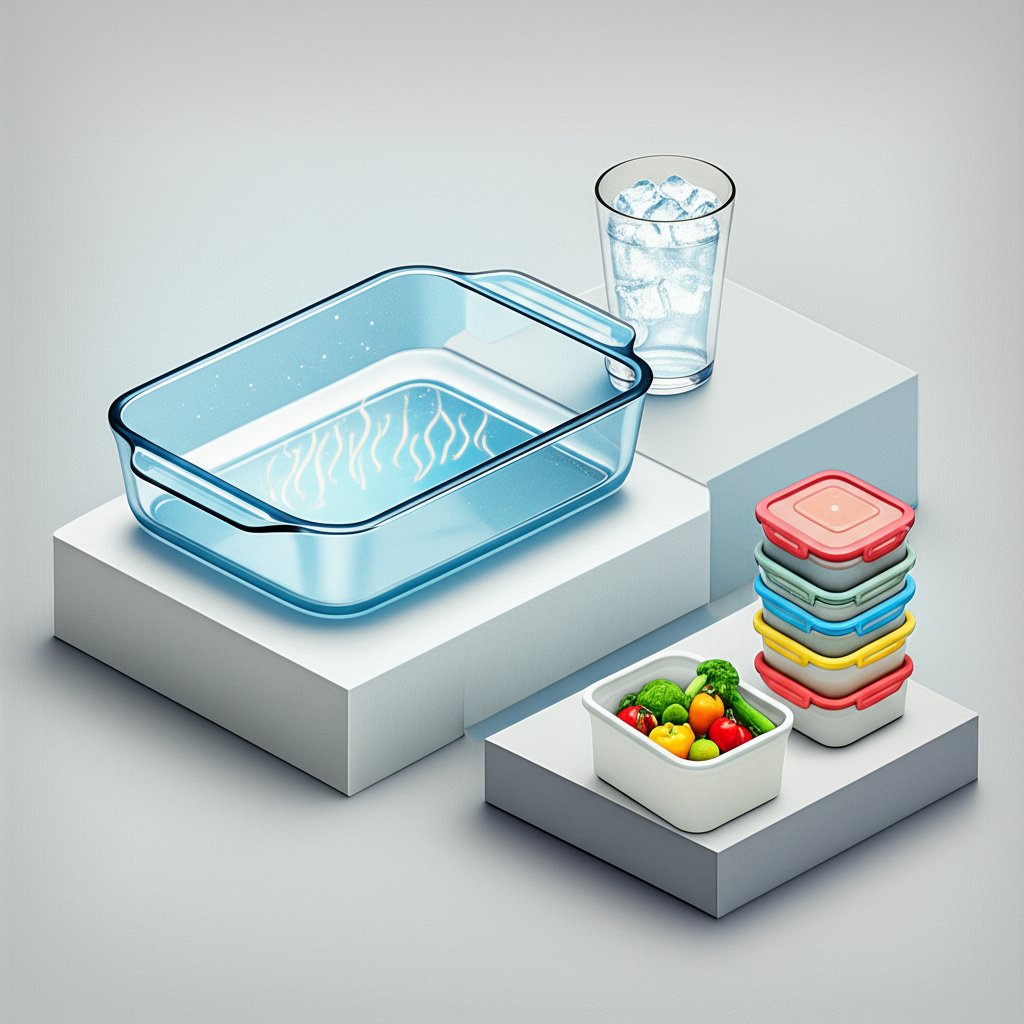
Your borosilicate set is an investment. With proper care, it can serve your kitchen for a decade or more.
- Respect the Temperature Transition. While borosilicate glass is incredibly resilient, it’s not invincible. Avoid extreme, instantaneous temperature shocks. Don’t take a piping hot dish from the oven and immediately run it under cold water. Similarly, if pulling a container from the deep freezer, let it sit on the counter for 5-10 minutes before placing it in a hot oven. This small buffer allows the glass to acclimate and drastically reduces any risk of breakage.
- Lid Care is Non-Negotiable. The lid’s gasket is its most vulnerable part. To prevent it from stretching or warping, consider hand-washing it. If you use the dishwasher, always use the top rack. Never microwave a container with the locking tabs sealed shut—either remove the lid or open the vent to allow steam to escape.
- Clean Smart, Not Hard. The glass itself is dishwasher-safe. Its non-porous surface releases food easily. If you encounter baked-on food, soak it in warm, soapy water rather than attacking it with steel wool or highly abrasive scourers, which can create microscopic scratches over time.
- Stack with a Buffer. To prevent chipping during storage, especially when nesting containers of the same size, place a small paper towel or a thin felt liner between each glass piece. This tiny bit of cushioning goes a long way.
Quick Answers to Common Borosilicate Questions
Let’s clear up a few common points of confusion and misconceptions.
Can borosilicate glass food storage containers go directly from the freezer to the oven?
Mostly, yes, but with a caveat. Most manufacturers recommend against going from one temperature extreme directly to the other (e.g., from a 0°F freezer into a preheated 450°F oven). A brief resting period on the countertop allows the glass to warm up slightly, providing a safety margin and ensuring longevity.
Are all glass containers borosilicate? How can I tell?
No, most food storage containers on the market are standard soda-lime glass. To be sure, look for the term “borosilicate” explicitly stated on the packaging or in the product description. Reputable brands like Pyrex (though some of their newer lines are soda-lime), OXO, and Glasslock often specify the material. If it doesn’t say borosilicate, it’s safest to assume it’s soda-lime and should not be used in the oven or subjected to rapid temperature changes.
Do borosilicate containers ever break?
Yes, but it’s much harder. Their weakness is not thermal shock but direct, hard impact. Dropping a borosilicate container on a tile floor will likely still cause it to break. However, when it does break, it tends to fracture into larger, duller pieces rather than shattering into tiny, sharp shards like tempered soda-lime glass, making cleanup a bit safer.
Are the plastic lids truly safe to use?
As long as you purchase from a reputable brand, the lids should be made from BPA-free, food-grade plastic. The key is to avoid heating food with the lids in direct contact. For microwaving, it’s best to remove the lid and cover the container with a paper towel, or use a vented lid. Never put plastic lids in the oven.
Making the Switch: Your First Steps to a Safer Kitchen
Upgrading to borosilicate glass food storage containers is more than just buying new Tupperware; it’s an investment in durability, safety, and convenience. You get one container that can reliably prep, store, freeze, reheat, bake, and serve. No more transferring food from one dish to another, and no more worrying about stained plastic or cracked glass.
Ready to make a change? Here’s a simple way to start:
- For Leftovers & General Use: Begin with a 5-to-10 piece variety set. This will give you a mix of shapes and sizes to handle most daily needs and let you discover which ones you reach for most often.
- For Serious Meal Prep: Go straight for a 10-piece set of identical, stackable rectangular containers. The uniformity will revolutionize your fridge organization and prep-day efficiency.
By choosing the right set and caring for it properly, you equip your kitchen with a tool that is as practical and hardworking as you are, ready for whatever meal you create next.

- Cold Meal Prep Makes Healthy, Stress-Free Lunches Easy - March 9, 2026
- Meal Prep Ideas for Healthy Eating Throughout Your Busy Week - March 8, 2026
- Sectioned Tupperware for Organized Meals and Snacks on the Go - March 7, 2026