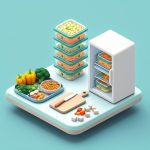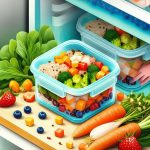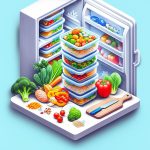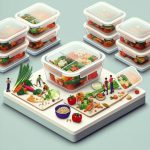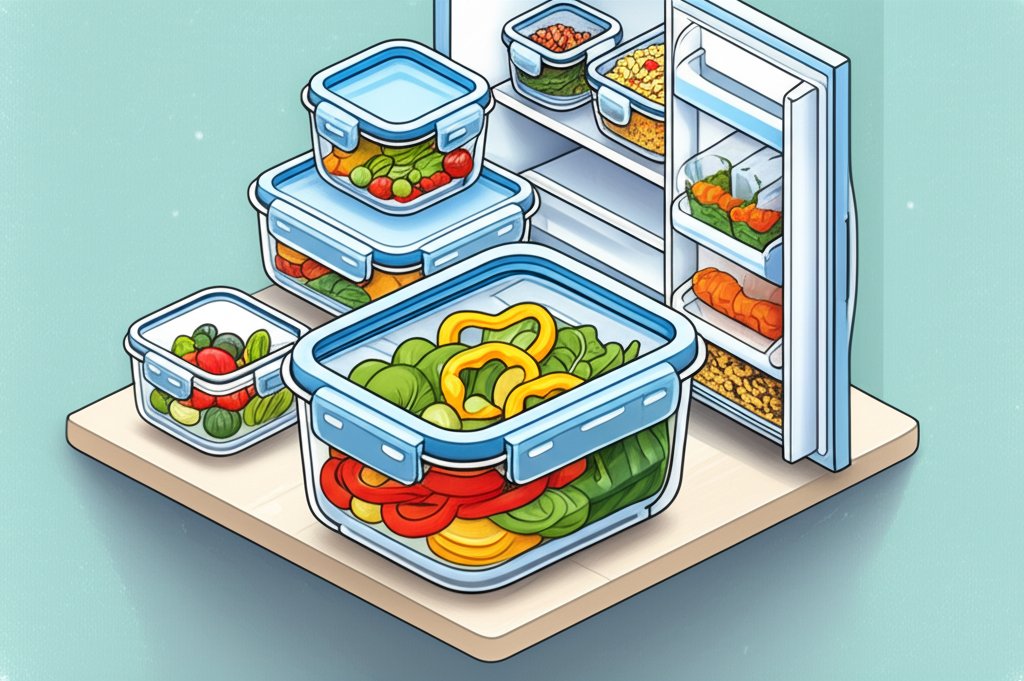
That sinking feeling when you open the fridge to find last night’s delicious leftovers are now a soggy, unappealing mess is all too common. It’s a cycle of wasted food, cluttered shelves, and meal prep plans that fall apart by midweek. The solution isn’t just more containers; it’s a smarter system built around high-performance borosilicate glass food storage, which masters the twin challenges of keeping food fresh and your kitchen impeccably organized.
At a Glance: Your Path to an Organized Kitchen
- Master Stacking: Learn how uniform container shapes can instantly double your usable fridge and pantry space.
- Choose the Right Seal: Understand the difference between snap-lock and press-on lids to guarantee airtight freshness for every type of food.
- Implement “Fridge Zoning”: Create a simple, visual system for meal prep, leftovers, and grab-and-go snacks that saves you time and reduces food waste.
- Leverage Glass Clarity: Use the crystal-clear nature of borosilicate glass to see exactly what you have, preventing forgotten food from spoiling in the back.
- Adopt a Simple Labeling System: Discover the two-second labeling trick that makes identifying meals and leftovers effortless.
Beyond Strength: The Organizational Edge of Borosilicate Glass
We often choose borosilicate glass for its brawn—its incredible resistance to thermal shock and its durable, non-porous surface. But these same qualities are secret weapons for organization. Because this material can go from the freezer to a cold oven to the table, you streamline your entire cooking and storage process, using one container instead of three. This reduces dish clutter and simplifies your workflow.
Its non-porous nature means it will never stain or hold onto the ghost of last week’s curry. Your containers remain crystal clear and uniform, which is a subtle but powerful psychological boost for maintaining an organized space. When everything looks clean and consistent, you’re more motivated to keep it that way. While the fundamental benefits of this material are its resilience and safety, its organizational advantages are just as compelling. To understand why this material is a top choice for health-conscious kitchens, you can Discover durable, safe meal storage.
Locking in Freshness: Decoding Lid and Seal Technology

A glass container is only as good as its lid. The seal is your primary defense against air and moisture—the enemies of freshness. Storing food properly is essential for keeping it safe to eat, and an airtight container is non-negotiable for foods prone to spoilage.
Snap-Lock vs. Press-On: What’s Best for Your Needs?
Not all lids are created equal. The two most common types for borosilicate glass food storage have distinct jobs:
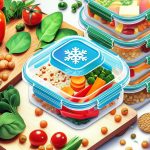
- Snap-Lock Lids: These are the workhorses. Featuring four locking tabs and a flexible silicone gasket, they create a truly airtight and leakproof seal. This is your go-to for soups, stews, marinated meats, and anything you plan to transport.
- Press-On Lids: Often made of bamboo, wood, or silicone, these lids create a firm seal by pressing into place. They are excellent for dry goods like pasta, coffee, or cookies, and for storing non-liquid leftovers in the fridge. They often provide a sleeker, more aesthetic look for pantry organization.
| Lid Type | Best For | Leakproof? | Key Advantage |
| :— | :— | :— | :— |
| Snap-Lock | Liquids, meal prep, transport | Yes, fully leakproof | Maximum freshness and security |
| Press-On | Dry goods, solid leftovers | No, not for liquids | Aesthetic appeal, great for pantry |
The “Whoosh” Test: A Simple Check for a True Airtight Seal
How can you be sure your container is truly sealed? Listen for the “whoosh.” When you press down on the center of a snap-lock lid before closing the final tab, you should feel or hear a small rush of air being forced out. This indicates that you’re creating a slight vacuum, which is the hallmark of a high-quality, freshness-preserving seal.
Case Snippet: A meal prepper was frustrated that their pre-cut salads were wilting by Wednesday. They switched from containers with loose-fitting lids to a set of borosilicate containers with four-sided snap-lock lids. By performing the “whoosh test,” they ensured a proper seal every time. The result: crisp, fresh salads that lasted through Friday, saving them money and making their healthy eating goals easier to stick to.
From Kitchen Chaos to Curated Calm: Stacking & Zoning
An organized kitchen saves you time and mental energy. Borosilicate glass containers are the building blocks of a calm, efficient system, especially when you focus on two key principles: stacking and zoning.
The Art of the Stack: Uniformity is Your Ally
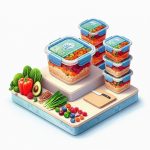
The secret to stable, space-saving stacking is a consistent footprint. When buying containers, look for sets where different capacity containers share the same length and width. This allows you to stack a 3-cup container perfectly on top of an 8-cup container, creating a stable, vertical tower in your fridge or cabinet.
This approach transforms a jumble of mismatched containers into neat, accessible blocks of food. It’s the single most effective way to maximize vertical space, a strategy frequently highlighted by organizational experts for creating compact, efficient storage.
Fridge Zoning: A System That Saves Time and Food
Instead of randomly placing containers in the fridge, create dedicated “zones.” This visual map tells you where everything is at a glance, making it easy to grab what you need and preventing items from getting lost in the back.
Here is a simple and effective zoning framework:
- Top Shelf – “Grab & Go”: Use smaller, uniform containers for snacks like chopped veggies, fruit salads, hard-boiled eggs, and portioned nuts. This is also the perfect spot for pre-packed lunches for school or work.
- Middle Shelf – “Meal Components”: This is your prep zone. Use medium-to-large containers to store washed greens, cooked grains (quinoa, rice), and grilled proteins (chicken, fish). When it’s time to assemble a meal, you can just pull out the components.
- Bottom Shelf – “Leftovers & Thawing”: This is the coldest part of the fridge. Use it for dinner leftovers and for safely thawing frozen items. The leakproof nature of borosilicate containers with snap-lock lids makes this a mess-free process.
Your Practical Playbook for an Organized Fridge
- Audit & Purge: Take everything out. Recycle stained, warped, or lidless plastic containers.
- Invest in a Foundation: Start with a core set of 8-10 rectangular borosilicate glass containers with a consistent footprint and snap-lock lids.
- Wash & Prep: Wash your new containers and do a “component prep” session for the week ahead (e.g., cook a batch of rice, chop onions).
- Implement Zones: Arrange your fridge according to the Grab & Go, Meal Components, and Leftovers zones.
- Maintain: At the end of the week, quickly wipe down shelves and reset your zones for the next week’s prep.
Streamline Your Week: Borosilicate for Efficient Meal Prepping
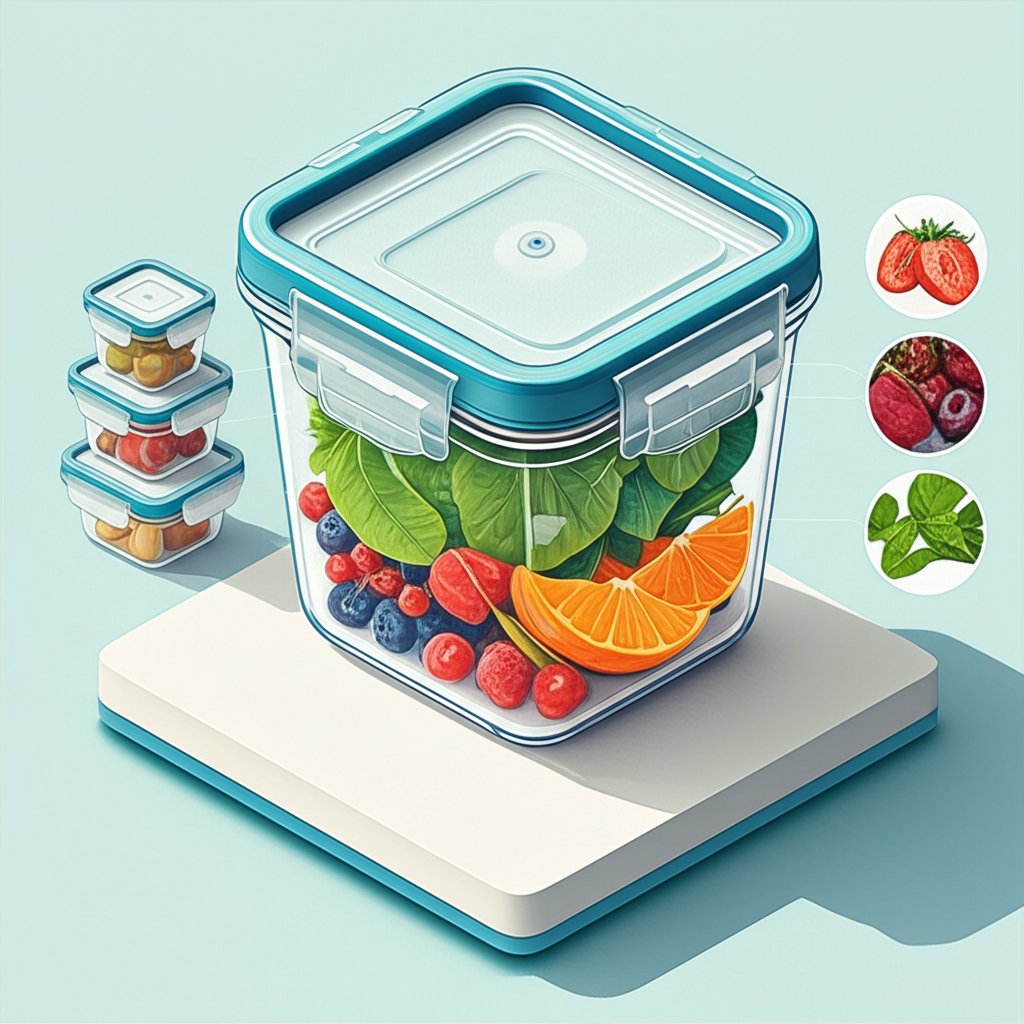
Borosilicate glass is the ultimate meal prep partner. Its versatility allows you to prep, store, reheat, and serve all in the same dish, dramatically cutting down on cleanup.
Batch Cooking, Component Prepping, and Portion Control
A smart set of containers with varied sizes makes any meal prep style easier.
- Large Containers (8-12 cups): Perfect for batch cooking a large chili, marinating a family-sized portion of chicken, or storing a big salad to be used over several days.
- Medium Containers (3-5 cups): These are your go-to for perfectly portioned individual meals. Think a serving of salmon with roasted asparagus or a hearty grain bowl.
- Small Containers (1-2 cups): Ideal for dressings, sauces, dips, or small snacks. Pre-portioning salad dressing prevents soggy greens and keeps flavors fresh.
The Labeling System That Sticks (and Washes Off)
Don’t rely on your memory. A simple label can be the difference between eating a delicious meal and throwing out a mystery container. The best system is one you’ll actually use.
Forget fancy labels. Simply use a wet-erase or chalk marker directly on the glass or lid. Write two things:
- What it is.
- The date it was made.
Example: “Lentil Soup – 10/26.” This information helps you rotate your food properly and make quick decisions at dinnertime. The marker stays put in the fridge or freezer but wipes away instantly with a damp cloth.
Your Borosilicate Questions, Answered
Q: Can borosilicate glass go directly from the freezer to the oven?
A: While it is exceptionally resistant to thermal shock, the safest practice is to avoid extreme temperature swings. A great method is to place the frozen glass dish into a cold oven and let them heat up together. Never put a frozen glass container into a fully preheated oven.
Q: Are the plastic lids safe to microwave or put in the dishwasher?
A: Always check the manufacturer’s guidance. Most high-quality lids are top-rack dishwasher safe. However, to preserve the integrity of the silicone seal and prevent warping over time, it’s best to avoid microwaving the lids. The glass base is always microwave safe.
Q: How do I prevent chipping on the rims of my glass containers?
A: Chipping often happens during storage. Avoid nesting the glass bases inside each other without protection. The best way to store them is with the lids on but unlatched to allow airflow and protect the gasket. If you must nest them, place a paper towel or a thin cloth napkin between each glass base.
Q: Is borosilicate glass really that much better than regular glass for food storage?
A: For a complete prep-store-reheat system, yes. Standard soda-lime glass (like a drinking glass or Mason jar) can shatter when exposed to rapid temperature changes. The thermal resilience of borosilicate glass is what makes it uniquely suited for the freezer-to-oven-to-table workflow that defines modern meal prep and leftover management.
Your Next Step: Building a System for Lasting Freshness
Switching to borosilicate glass food storage is more than just an upgrade in materials; it’s an opportunity to adopt a system that brings order, efficiency, and freshness to your kitchen. By choosing uniform sets for stacking, leveraging airtight seals, and implementing simple zones, you turn your containers into an active tool for a less stressful, more delicious week.
Not sure where to start? Use this simple guide:
- If you are a serious weekly meal prepper: Your best bet is a 10-piece set of rectangular containers in varied sizes (e.g., 2x 1-cup, 2x 3-cup, 1x 8-cup) with snap-lock lids.
- If you mainly store dinner leftovers: A 4- or 6-piece set of medium round or square containers will cover your needs perfectly.
- If you want to organize your pantry: Look for a set of borosilicate canisters with aesthetic press-on lids (like bamboo or glass) to store dry goods in style.
Embrace the clarity and durability of borosilicate glass, and you won’t just be storing food—you’ll be creating a lasting system for a more organized and flavorful life.

- Master Vegan Freezer Meal Prep to Simplify Your Busy Schedule - June 18, 2026
- Vegan Freezer Cooking Simplifies Healthy Meals on Busy Nights - June 17, 2026
- Vegetarian Freezer Recipes for Effortless Meal Prep and Delicious Dinners - June 16, 2026